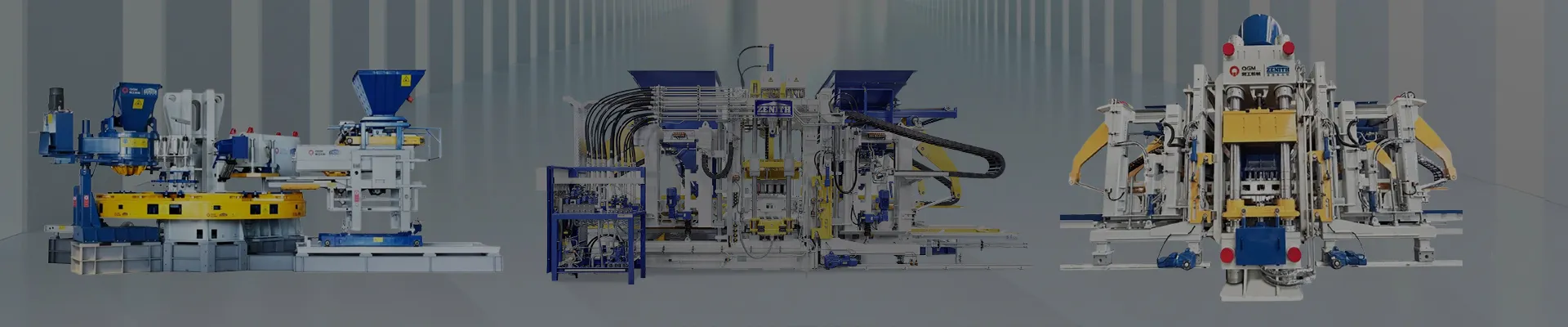
News

Why Is Your Block Making Machine Producing Inconsistent Blocks?

2026-09-08 0 Leave me a message

In concrete block manufacturing, production consistency is one of the most important indicators of equipment performance and process control.

A block making machine may achieve excellent results during an individual production cycle, but that does not necessarily mean the overall production process is stable. For manufacturers, the real challenge is maintaining consistent block dimensions, density, compressive strength, surface quality, and appearance from one cycle to the next.

When concrete blocks show variations in size, strength, density, or surface finish, the problem is rarely caused by the block machine alone. In most cases, production instability results from a combination of factors involving raw materials, concrete mixing, material feeding, vibration, hydraulic forming, mold condition, curing, and process control.

Understanding these factors is essential for improving the performance of a concrete block making machine and achieving reliable, repeatable production.

QGM Automatic Block Machines: Successful Applications in Global Markets

△QGM Automatic Block Machines: Successful Applications in Global Markets

1. Unstable Raw Materials Can Affect Block Quality

The production process begins with the concrete mix. If the characteristics of the raw materials change significantly, even a high-performance automatic block making machine may struggle to maintain consistent product quality.

Aggregate grading, cement properties, moisture content, and the proportion of different materials can all influence the workability and compactability of the concrete mixture.

Common causes include:

●Variations in aggregate particle size and grading

●Unstable moisture content

●Inconsistent cement quality

●Incorrect material proportions

●Changes in the water-cement ratio

Among these factors, moisture variation is particularly important in vibro-compaction concrete block production. Excess moisture can change concrete workability and reduce the effectiveness of compaction, while insufficient moisture may prevent the mixture from forming properly.

How to improve raw material consistency

Manufacturers should establish standardized procedures for incoming material inspection and mix preparation. Moisture content should be monitored regularly, and the mix design should be adjusted according to actual material conditions.

A stable mix is the foundation for stable operation of a concrete block machine.

2. Uneven Vibration Can Lead to Density and Strength Variations

Vibration is one of the core technologies in modern concrete block manufacturing machines.

During the forming process, vibration works together with material feeding and hydraulic pressure to compact the concrete mixture inside the mold. If vibration energy is insufficient, excessive, or unevenly distributed, air voids may remain inside the products, resulting in variations in density and compressive strength.

Typical vibration-related problems include:

● Incorrect vibration frequency

● Inappropriate vibration duration

● Uneven vibration energy distribution

● Worn vibration components

● Mechanical looseness or abnormal vibration

For this reason, a reliable block making machine manufacturer must pay close attention to the design and control of the vibration system.

QGM integrates advanced vibration technology into its block making equipment to provide controlled and stable compaction performance. Proper vibration parameter adjustment helps improve concrete density, product strength, and production consistency while supporting efficient cement utilization.

Regular inspection and maintenance of vibration components are equally important. Even a well-designed vibration system can lose performance when key mechanical components become worn or improperly adjusted.

3. Hydraulic Instability Can Affect Forming Accuracy

The hydraulic system plays a critical role in the forming process of a hydraulic block making machine.

Hydraulic pressure controls important machine movements and forming actions. If pressure fluctuates significantly during production, the forming process may become unstable, affecting block density, dimensional accuracy, and overall product quality.

Common hydraulic problems include:

● Unstable hydraulic pressure

●Slow valve response

● Hydraulic oil contamination

● Internal or external leakage

● Worn hydraulic components

● Improper pressure settings

To maintain stable production, hydraulic pressure should be monitored and checked according to the machine manufacturer's maintenance requirements.

QGM block making machines utilize precision hydraulic control technology to support stable forming performance and accurate machine movements. Preventive maintenance of pumps, valves, pipelines, seals, and hydraulic oil systems is also essential for maintaining long-term equipment reliability.

4. Manual Parameter Adjustments Can Create Production Variations

A modern automatic concrete block making machine is not simply designed to reduce labor requirements. Intelligent control also plays an important role in reducing process variation.

When operators rely heavily on manual adjustments or individual operating experience, different shifts may use different machine parameters. Over time, these small differences can lead to noticeable variations in finished products.

An intelligent control system can help standardize key production parameters and improve repeatability.

QGM block making machines can integrate PLC-based intelligent control systems and operator interfaces that allow production parameters and machine operating conditions to be monitored and managed more systematically.

Advanced Siemens PLC Control Technology in QGM Automatic Block Machines

△Advanced Siemens PLC Control Technology in QGM Automatic Block Machines

Depending on the production configuration, operators can monitor:

●Machine operating status

● Production cycle parameters

● Vibration settings

● Hydraulic operation

● Production output

● Equipment alarms and operating conditions

The objective is not to eliminate the role of operators, but to reduce unnecessary human-induced variation and make the production process more measurable and repeatable.

5. Mold Wear and Improper Alignment Can Reduce Product Accuracy

The mold is one of the most important components affecting the final geometry and appearance of concrete products.

Even when the block making machine itself is operating normally, worn or incorrectly installed molds can cause dimensional deviations, uneven surfaces, damaged edges, or inconsistent product appearance.

Typical mold-related problems include:

●Worn mold cavities

●Damaged mold components

● Incorrect mold installation

● Misalignment between mold components

● Excessive clearance

● Insufficient mold maintenance

Mold condition should therefore be included in routine production inspections.

QGM provides mold solutions for different concrete product applications, allowing manufacturers to select appropriate mold configurations according to product dimensions, surface requirements, raw materials, and production conditions.

Regular inspection and timely replacement or refurbishment of worn mold components can help maintain product dimensional accuracy and extend mold service life.

6. Inconsistent Curing Can Affect Final Concrete Strength

The forming process is only one stage of concrete product manufacturing.

After blocks leave the concrete block production line, curing conditions have a significant influence on their final performance. Variations in temperature, humidity, curing duration, or handling procedures can result in differences in strength development.

Even if blocks are formed with identical dimensions and density, inconsistent curing can produce different final strength levels.

To improve curing consistency:

●Maintain stable curing temperature and humidity

● Standardize curing time

● Avoid premature handling or transportation

●Monitor curing conditions throughout the production process

● Match curing capacity with production output

For manufacturers operating high-capacity **block production lines**, curing should be considered as an integral part of the overall production process rather than an independent downstream operation.

7. Poor Coordination Between Production Processes Can Cause Systemic Variability

Sometimes, there is nothing fundamentally wrong with an individual component of the block production line. The real problem is that the different processes are not properly coordinated.

For example, irregular material feeding can affect vibration performance. Incorrect synchronization between material feeding, vibration, and hydraulic forming can influence product density. Similarly, production capacity that exceeds curing capacity can create downstream bottlenecks.

This is why troubleshooting a concrete block making machine should not always focus on a single component.

Manufacturers should evaluate the entire production system, including:

Raw material preparation → Mixing → Material feeding → Vibration → Hydraulic forming → Demolding → Curing → Handling and packaging

Each stage needs to work within the appropriate operating parameters for the next stage to perform correctly.

How to Improve the Consistency of a Block Making Machine

When inconsistent concrete blocks occur, manufacturers should avoid changing multiple parameters simultaneously without identifying the underlying cause.

A more effective approach is to establish a systematic troubleshooting procedure.

Step 1: Check the raw materials

Verify aggregate grading, moisture content, cement quality, and mix proportions.

Step 2: Inspect the concrete mixture

Check whether the mixture has stable workability and whether moisture variations require mix adjustments.

Step 3: Check material feeding

Ensure that concrete is distributed evenly throughout the mold and that the feeding process remains consistent from cycle to cycle.

Step 4: Verify vibration parameters

Check vibration frequency, duration, synchronization, and the mechanical condition of the vibration system.

Step 5: Check hydraulic performance

Monitor pressure stability, valve response, oil condition, and possible leakage.

Step 6: Inspect the mold

Check mold wear, alignment, clearance, and installation accuracy.

Step 7: Review curing conditions

Confirm that temperature, humidity, curing time, and handling procedures remain consistent.

Step 8: Analyze production data

Use the machine's control and monitoring system to identify recurring deviations rather than relying solely on operator observations.

This systematic approach can help manufacturers distinguish between material-related problems, equipment-related problems, and process-related problems.

From Inconsistent Output to Repeatable Concrete Block Production

The goal of a modern block making machine is not simply to achieve high production capacity. More importantly, it must maintain stable performance throughout continuous operation.

For concrete products manufacturers, consistent production can translate into:

● More uniform product dimensions

● More stable compressive strength

● Better surface appearance

● Reduced material waste

● More predictable production output

● Improved production efficiency

● Lower risk of rejected products

● Better control of manufacturing costs

Achieving this level of consistency requires more than a high-performance machine. It requires the coordinated operation of the entire concrete block production line.

QGM approaches block manufacturing as an integrated production system, combining advanced vibration technology, precision hydraulic forming, intelligent PLC control, reliable material feeding, and application-specific mold solutions.

This integrated approach allows manufacturers to move beyond reactive troubleshooting and establish a more controlled and repeatable production process.

Why Production Consistency Matters in Modern Block Manufacturing

As construction projects become increasingly standardized, concrete product manufacturers are facing higher requirements for dimensional accuracy, appearance, strength, and production efficiency.

For this reason, the performance of a concrete block machine should not be judged only by its maximum theoretical output.

A more meaningful evaluation is whether the equipment can continuously produce qualified concrete products under real production conditions.

The true value of an automatic block making machine lies in its ability to deliver predictable results across thousands of production cycles while maintaining stable quality and efficient operation.

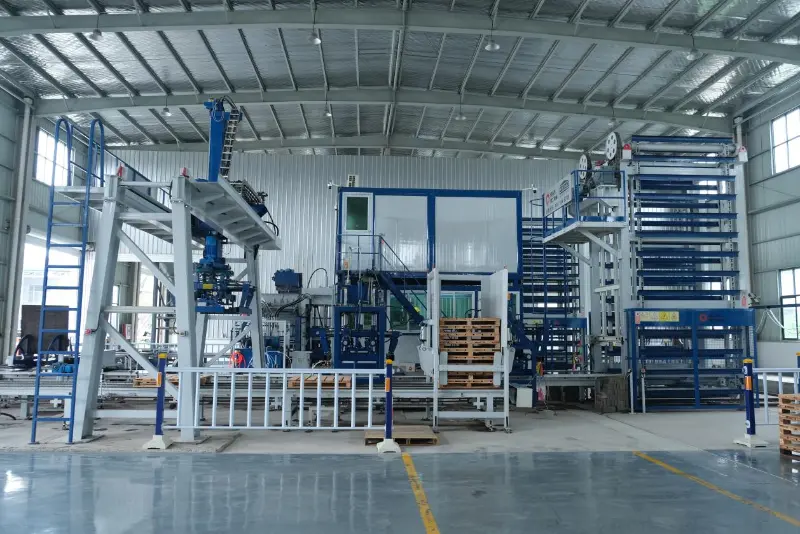
QGM Automatic Block Making Machines for Consistent Block Quality

△QGM Automatic Block Making Machines for Consistent Block Quality

Ultimately, consistent concrete block production is the result of engineering precision, reliable equipment, controlled materials, standardized operating procedures, and effective process management working together.

For manufacturers looking to upgrade an existing block production line or establish a new concrete products manufacturing plant, choosing the right equipment and production technology is therefore an important step toward achieving long-term production stability and competitiveness.

Build More Consistent Concrete Products with QGM

With extensive experience in concrete products manufacturing technology, QGM provides automatic block making machines, concrete block production lines, and complete solutions  for manufacturers producing paving blocks, concrete blocks, curbstones, hollow blocks, and other precast concrete products.

By combining advanced forming technology, intelligent control systems, flexible mold solutions, and comprehensive technical support, QGM helps customers build production systems designed for stable quality, efficient operation, and long-term development.

FAQ

1. Why is my concrete block making machine producing inconsistent blocks?

Inconsistent concrete blocks can result from variations in raw material moisture and grading, unstable material feeding, uneven vibration, hydraulic pressure fluctuations, mold wear, inconsistent curing conditions, or poor coordination between production processes. A systematic inspection of the entire concrete block production line is usually more effective than focusing on the machine alone.

2. How can I improve the consistency of concrete blocks produced by a block making machine?

To improve production consistency, manufacturers should stabilize the concrete mix, maintain consistent material feeding, calibrate vibration and hydraulic parameters, inspect molds regularly, control curing conditions, and use intelligent machine control systems to reduce operator-related variations.

3. Does vibration affect the strength and density of concrete blocks?

Yes. Vibration is a key part of the concrete block forming process because it helps compact the concrete mixture and reduce internal voids. Incorrect vibration frequency, duration, or uneven vibration energy can result in variations in block density, compressive strength, and surface quality.

4. How does mold condition affect concrete block quality?

Mold wear, deformation, improper installation, or misalignment can cause dimensional deviations, uneven surfaces, damaged edges, and inconsistent product appearance. Regular mold inspection, accurate alignment, and timely replacement or refurbishment of worn components are important for maintaining consistent concrete block quality.

5. What should I check when troubleshooting an automatic block making machine?

Start by checking the raw materials and concrete mix, followed by material feeding, vibration, hydraulic pressure, mold condition, curing, and machine control parameters. Evaluating these processes as an integrated system can help identify the root cause more accurately and restore stable production performance.

Related News
Leave me a message
X
We use cookies to offer you a better browsing experience, analyze site traffic and personalize content. By using this site, you agree to our use of cookies. Privacy Policy
RejectAccept