Automatic Block Moulding Machine
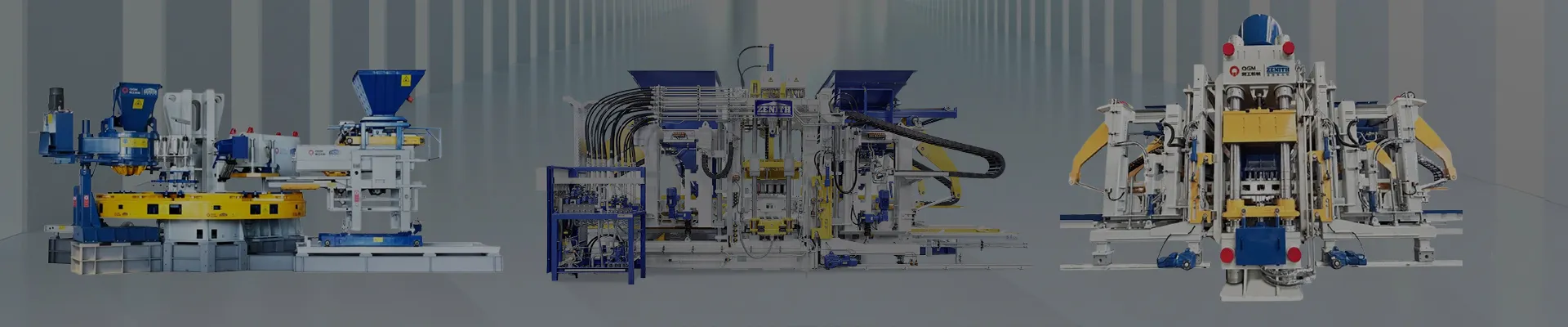
In modern construction and civil engineering projects, efficiency and consistency are critical, and that’s exactly what our automatic block moulding machine delivers. Falling within the extensive category of Block Moulding Machinery, this solution redefines how hollow blocks, solid bricks, and paving stones are produced. Designed as high-performance Block Moulding Machine equipment, it eliminates repetitive manual labor and drastically reduces cycle times. The system is a flagship example of Automatic Block Moulding Machinery, incorporating hydraulic compression, vibration, and material feeding into one synchronized workflow. More than just automation, it functions as an advanced Intelligent Block Moulding Machine, with a PLC control panel that monitors pressure, humidity, and cycle count in real time, enabling operators to fine-tune production without mechanical adjustments. Every component, from the heavy-duty steel frame to the wear-resistant mold boxes, is engineered for continuous three-shift operation, ensuring that output remains stable across large-scale projects and high-demand commercial yards.
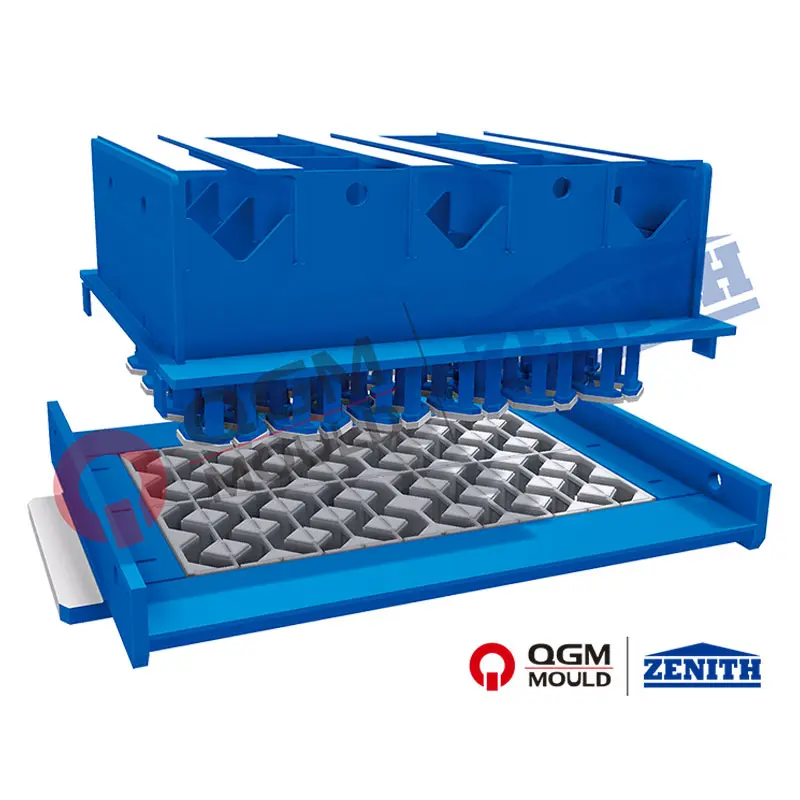
The Automatic Block Moulding Machine boasts a robust set of specifications that translate directly into superior block quality and operational savings. Its main hydraulic system delivers a maximum pressing force of 25 MPa, allowing the formation of dense, high-strength blocks with sharp edges and uniform dimensions. Vibration is powered by twin high-frequency motors running at 5,500 vibrations per minute, which spreads the concrete mix evenly inside the mold before compression. The machine supports a wide range of mold designs, making it possible to produce blocks with interlocking profiles, thermal insulation cores, or decorative faces. Key technical parameters are organized below for quick reference:
- Maximum production output: up to 9 standard hollow blocks (400×200×200 mm) per cycle, equating to 3,600–4,800 blocks per 8-hour shift depending on mix consistency
- Cycle time: adjustable from 15 to 25 seconds, governed by the PLC program
- Installed power: 37.5 kW total, including main motor, hydraulic pump, and vibrators
- Hydraulic system: variable displacement pump with 120 L tank capacity and integrated oil cooling
- Mold changing time: less than 15 minutes with the quick-lock clamping mechanism
- Material hopper capacity: 0.8 m³, fitted with a servo-controlled gate for precise dosing
- Control unit: 10-inch color touchscreen with multi-language interface and fault diagnostic logs
- Machine dimensions: 6,200 × 3,100 × 2,850 mm (L×W×H), designed for standard 40-foot container shipping
- Operating weight: approximately 8.2 tons, providing the stability required for high-frequency vibration
- Pallet size compatibility: accepts steel or hardwood pallets of 1,100×700 mm as standard
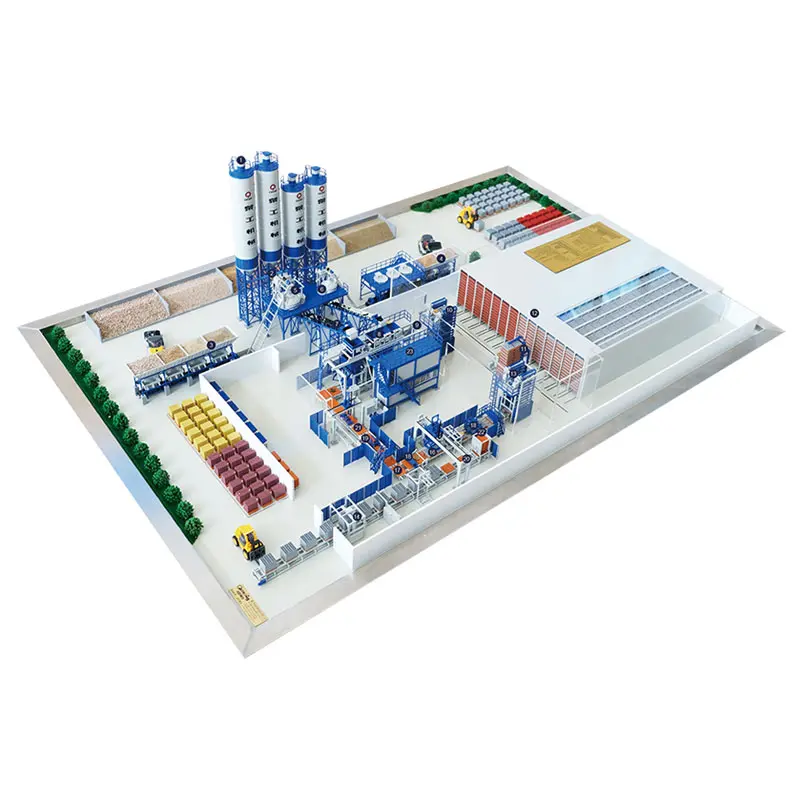
The Automatic Block Moulding Machine also features an intelligent batching interface that can be linked to an external concrete mixing plant, ensuring a steady supply of homogenous fresh concrete. A built-in weight sensor verifies the quantity of material entering the mold every cycle, rejecting under-filled batches before compression begins. This level of control significantly reduces raw material waste and rework. Below is a table summarizing key performance ranges across different block types:
| Block Type | Size (mm) | Blocks per Cycle | Estimated Hourly Output | Compressive Strength (after 28 days) |
|---|
| Hollow block | 400×200×200 | 9 | 540 – 720 | ≥ 10 MPa |
| Solid paver | 200×100×60 | 36 | 2,160 – 2,880 | ≥ 35 MPa |
| Interlocking block | 220×160×140 | 14 | 840 – 1,120 | ≥ 25 MPa |
| Thermal insulating block | 390×190×190 | 8 | 480 – 640 | ≥ 7.5 MPa |
Maintenance has been simplified through centralized lubrication points and wear-resistant steel liners inside the mold frame. The hydraulic power unit is equipped with a contamination indicator and bypass filtration, extending oil service life to over 4,000 operating hours. Combined with an energy recuperation circuit that captures braking energy from the vibration motors, the Automatic Block Moulding Machine reduces total electricity consumption by approximately 15% compared to conventional units running similar output volumes. Pallet feeding and block ejection are handled by servo-driven conveyors that synchronize perfectly with the press cycle, eliminating jam-ups and reducing the need for operator intervention. For operators, comprehensive safety features include light curtains, emergency stop bars on all sides, and a lockout-tagout system integrated into the main disconnect switch. With its balance of force, speed, and smart controls, this system remains adaptable to evolving block standards and market demands, making it a practical choice for both expansion of existing yards and establishment of new production facilities.