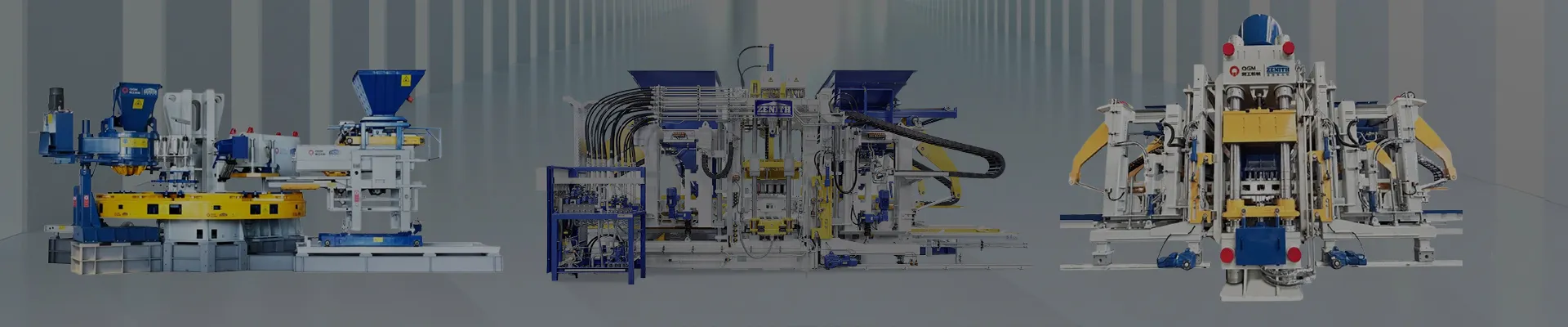
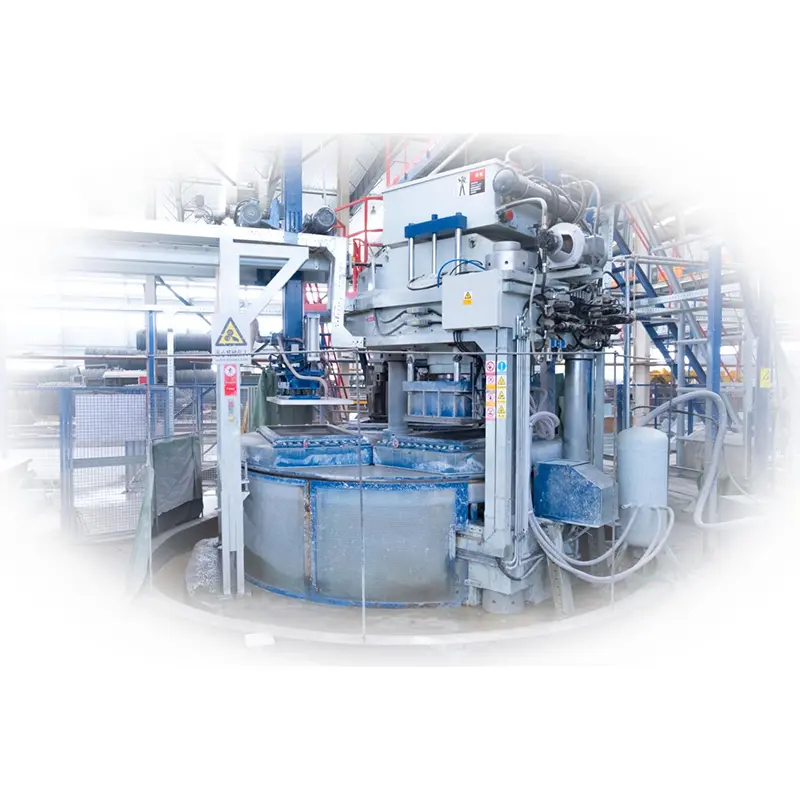
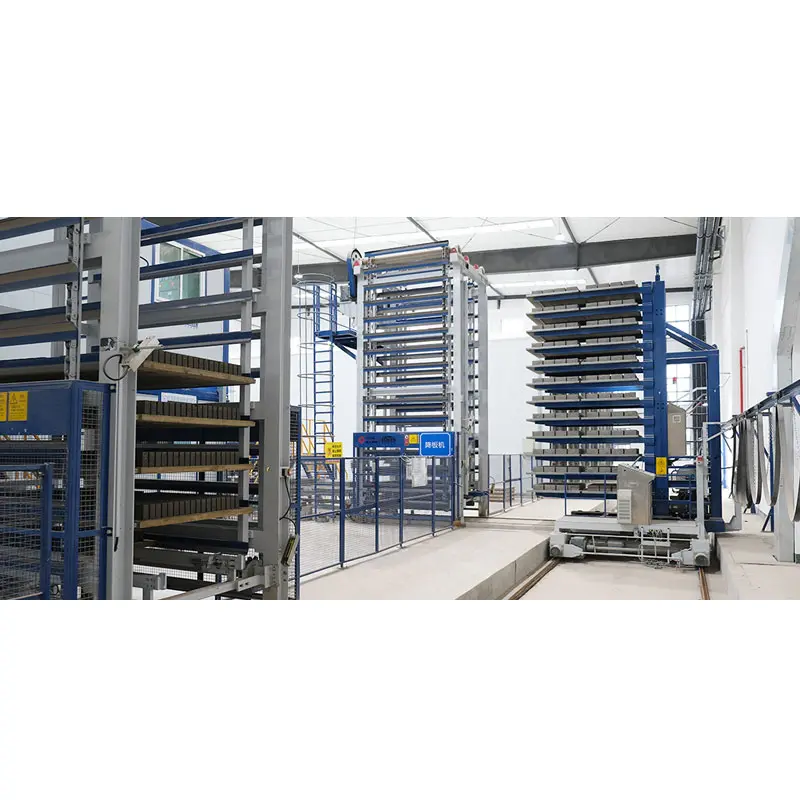
AAC block production line
A modern AAC manufacturing project requires more than individual equipment; it requires a fully coordinated production system where every process works together efficiently. Our AAC Block Production Line integrates raw material preparation, automatic batching, mixing, molding, cutting, autoclave curing, and finished product handling into one complete workflow, helping manufacturers achieve stable output, consistent quality, and lower operating costs.
Designed for medium and large-scale construction material producers, the production system combines automation technology with proven AAC manufacturing processes. From initial material feeding to final block packaging, each stage is optimized to improve productivity, reduce human errors, and maintain reliable performance during continuous operation.
Complete Production Workflow for Efficient AAC Manufacturing
The performance of an AAC factory depends on how efficiently each production stage is connected. Our integrated solution focuses on process coordination rather than isolated machine performance.
-
Raw Material Preparation: Automatic handling systems process sand or fly ash, cement, lime, gypsum, and aluminum powder to ensure accurate material ratios.
-
Automatic Batching and Mixing: Computer-controlled weighing and mixing technology creates uniform slurry quality for stable block structure.
-
Molding and Pre-Curing: The prepared mixture is poured into molds and pre-cured under controlled conditions before cutting.
-
Precision Cutting: Horizontal and vertical cutting systems ensure accurate dimensions and smooth block surfaces.
-
Autoclave Hardening: High-pressure steam curing improves mechanical strength, durability, and dimensional stability.
-
Automatic Handling and Packing: Finished products are transferred, stacked, and packaged efficiently for delivery.
Advantages of an Integrated AAC Production System
|
System Advantage
|
Production Value
|
|
Complete Process Integration
|
All production stages are connected to reduce waiting time and improve overall efficiency.
|
|
Higher Automation Level
|
Reduces dependence on manual operation and improves production consistency.
|
|
Optimized Material Usage
|
Precise dosing and recycling systems minimize raw material waste.
|
|
Stable Product Quality
|
Controlled production conditions ensure consistent density, strength, and dimensions.
|
|
Easy Capacity Expansion
|
Modular design allows future upgrades according to market growth.
|
Key Specifications of AAC Production Line
-
Annual production capacity: 50,000 – 300,000 m³
-
Applicable raw materials: sand/fly ash, cement, lime, gypsum, aluminum powder
-
Block density range: 400 – 700 kg/m³
-
Compressive strength: 2.5 – 7.5 MPa
-
Thermal conductivity: 0.08 – 0.21 W/(m·K)
-
Fire resistance: up to 4 hours depending on wall thickness
-
Cutting accuracy: length ±1 mm, width ±1 mm, height ±0.5 mm
-
Autoclave curing: 10–12 bar pressure, 180–200°C steam temperature
-
Control system: PLC automation with touch-screen HMI
-
Installed power: approximately 350 – 900 kW depending on configuration
Standard Technical Configuration (150,000 m³/year Production Line)
|
Production Section
|
Technical Specification
|
|
Raw Material Batching & Mixing
|
Automatic weighing system with high-efficiency twin-shaft mixer, approximately 4.5 m³ capacity
|
|
Molding & Pouring System
|
Hydraulic tilting mold system, standard mold size 6.0 × 1.2 × 0.6 m
|
|
Pre-Curing Chamber
|
Controlled temperature 40–50°C, curing time approximately 2–2.5 hours
|
|
Cutting Unit
|
Horizontal and vertical wire cutting system with approximately 0.8 mm wire precision
|
|
Autoclave System
|
Φ2.68 × 38 m autoclaves, 6 units, working pressure around 1.3 MPa
|
|
Finished Product Handling
|
Automatic palletizing and protective packaging system
|
|
Environmental Control
|
Bag filter dust collection system with emission control below 30 mg/m³
|
How to Select the Right AAC Production Line Configuration?
The ideal production configuration depends on several factors, including market demand, available investment budget, raw material conditions, energy supply, and expected product range.
|
Customer Requirement
|
Recommended Solution
|
|
New market entry
|
Compact production configuration with essential automation functions
|
|
Growing construction material supplier
|
Medium-capacity line with improved automation and expansion capability
|
|
Large industrial manufacturer
|
Fully automated production system with advanced control and high output
|
AAC Production Line vs Traditional Block Production Line
|
Comparison Item
|
Traditional Block Production Line
|
AAC Production Line
|
|
Production Process
|
Mainly forming and pressing operations
|
Complete process including aeration, cutting, and autoclave curing
|
|
Automation Level
|
More manual involvement required
|
Integrated automatic control throughout production
|
|
Product Performance
|
Standard concrete products
|
Lightweight blocks with insulation and fire resistance advantages
|
|
Material Efficiency
|
Higher material consumption
|
Optimized material utilization with recycling system
|
|
Production Management
|
Independent machine operation
|
Coordinated production monitoring and control
|
Frequently Asked Questions
1. What is an AAC Block Production Line used for?
It is a complete manufacturing system used to produce lightweight autoclaved aerated concrete blocks through a series of processes including mixing, molding, cutting, and steam curing.
2. What production capacity can this system achieve?
The capacity depends on the selected configuration. Standard solutions range from approximately 50,000 m³ to 300,000 m³ annually, with customized designs available for larger projects.
3. How much automation can be integrated?
The system can be configured from semi-automatic operation to fully automatic production with centralized PLC control, automatic material handling, and intelligent monitoring.
4. What materials can be used in AAC production?
Common materials include fly ash or sand, cement, lime, gypsum, aluminum powder, and water. The formula can be adjusted according to local resources.
5. How does the system reduce production costs?
Energy-efficient curing management, automated operation, accurate material dosing, and recycling technology help reduce labor costs, waste, and energy consumption.
6. Do you provide installation and commissioning support?
Yes. Professional technical support includes layout guidance, equipment installation assistance, commissioning, operator training, and production optimization.
Build a More Efficient AAC Manufacturing Facility
A successful AAC project requires a production system that delivers consistent quality, reliable operation, and long-term economic value. With customized engineering solutions and complete technical support, we help global manufacturers establish efficient lightweight concrete production facilities.