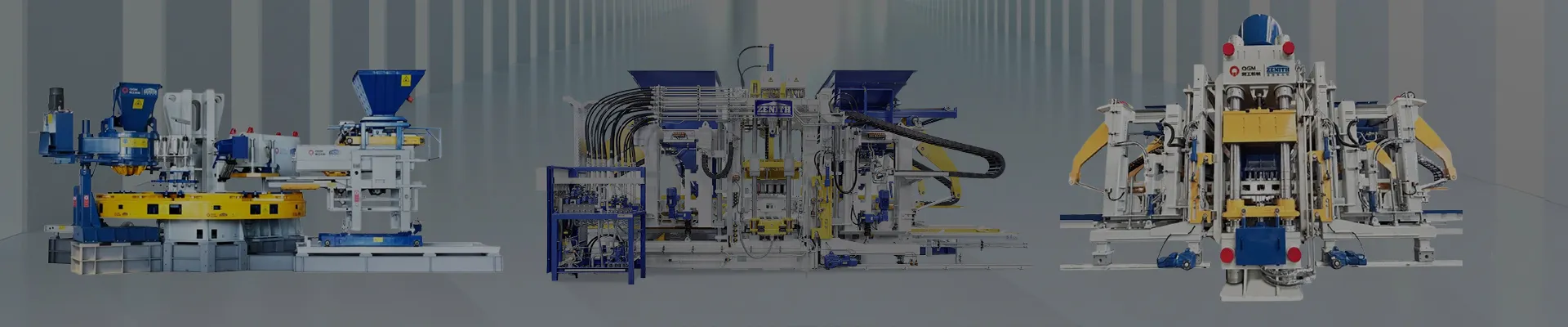
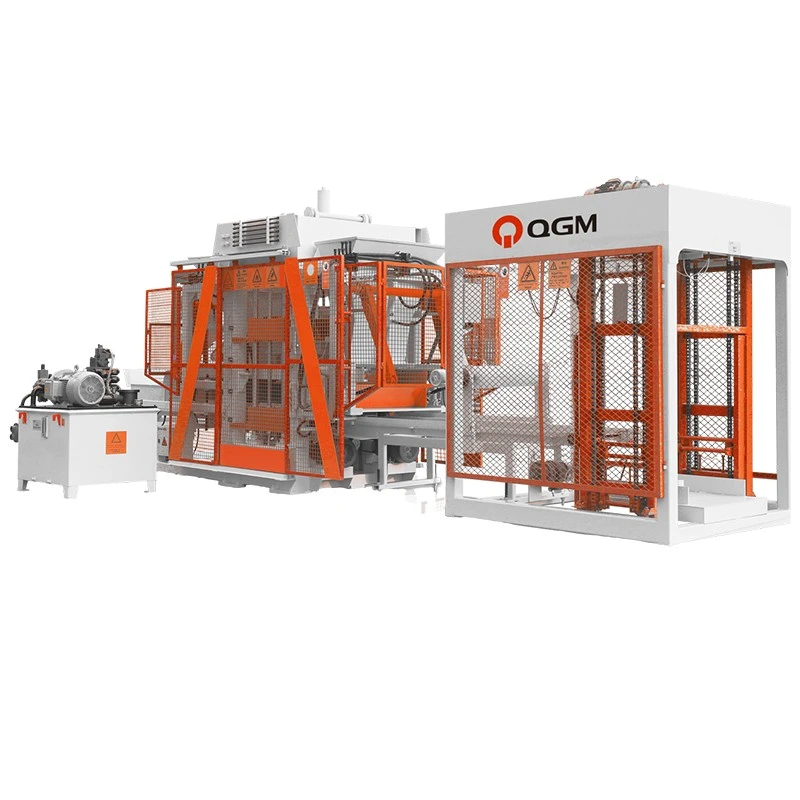
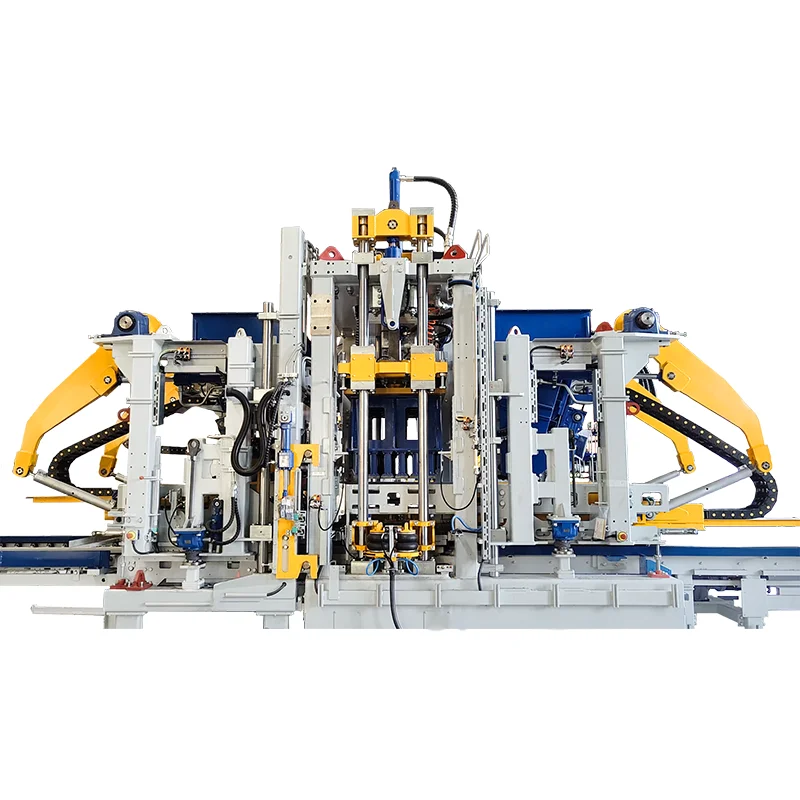
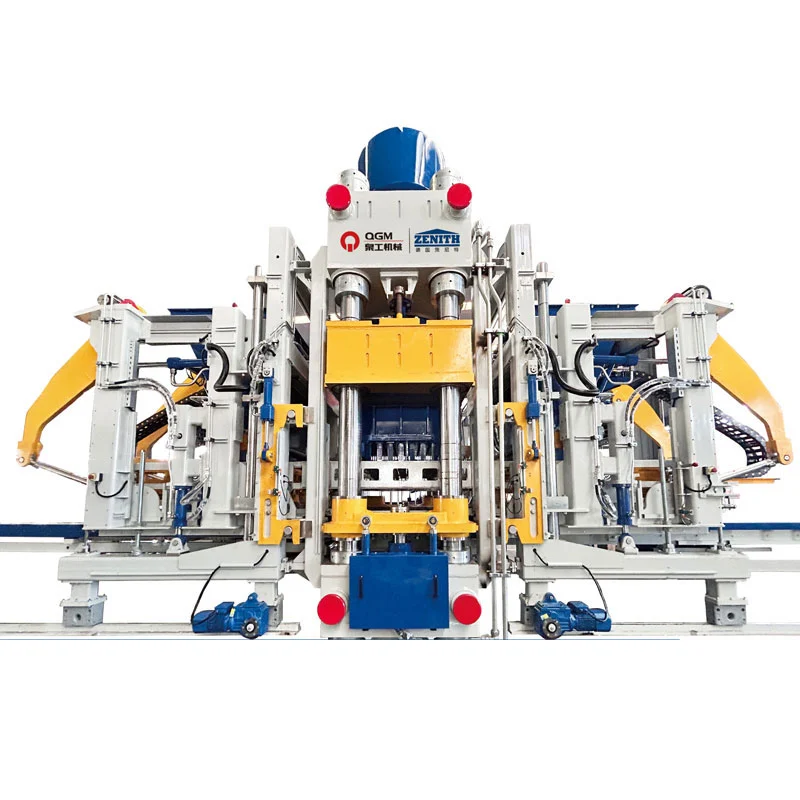
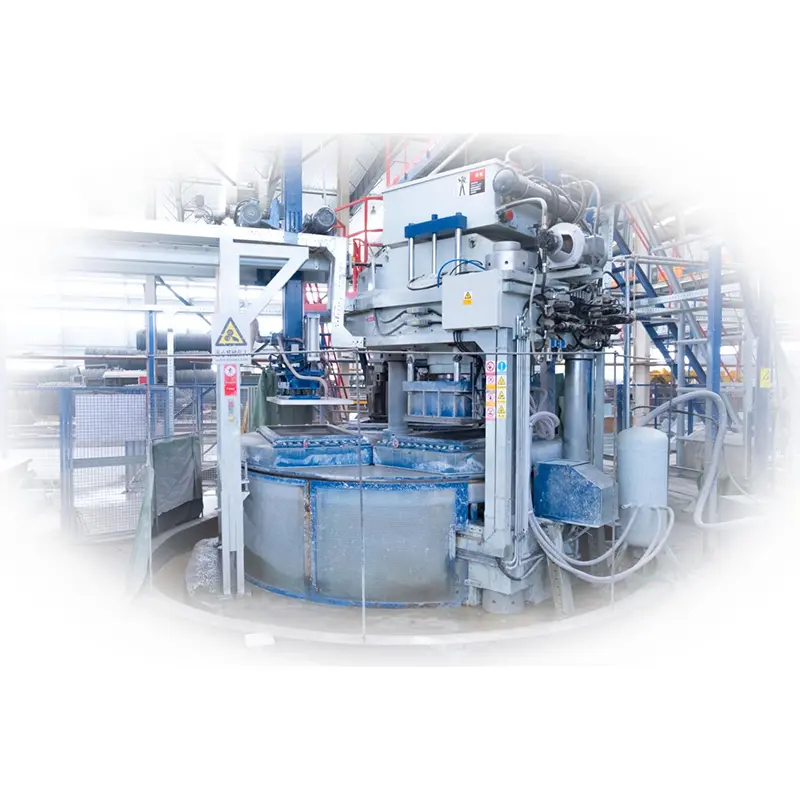
In the construction equipment landscape, automatic block production systems have become indispensable for contractors aiming to achieve precise dimensions and high output rates. The core of such systems often revolves around a Hollow Block Making Machine, engineered to deliver uniform hollow blocks with optimal cavity ratios that reduce raw material consumption while maintaining load-bearing strength. For operations scaling up to industrial levels, integrating full-scale Hollow Block Making Machinery brings together batching, mixing, molding, and stacking into one seamless workflow, drastically cutting labor costs. Where versatility is a priority, a Hollow Block Maker Machine proves to be a compact powerhouse, capable of switching between hollow blocks, solid bricks, and interlocking pavers with minimal changeover time. At the high end of customization, Hollow Block Maker Machinery incorporates advanced servo-driven vibration and hydraulic pressure control, allowing operators to fine-tune compaction energy for specialty products such as lightweight thermal blocks or high-density acoustic units. These automated lines typically feature real-time monitoring, recipe-based production presets, and predictive maintenance alerts that ensure consistent output regardless of shift changes or raw material variations.
Automatic Block machinery has been designed around a modular philosophy that simplifies both installation and future expansion. The frame is constructed from reinforced steel profiles, stress-relieved and normalized to eliminate distortion under repeated dynamic loads. A dedicated hydraulic power unit delivers 21 MPa of working pressure to the main ram and core-pulling cylinders, with a fast cycle time of 18–22 seconds depending on block height. The vibration table incorporates four rotary vibrators, each independently controlled via a variable-frequency drive, producing a total centrifugal force of 120 kN to achieve deep compaction even in dry-concrete mixes. The following parameters summarize the machine’s core capabilities:
- Production capacity: up to 10,800 hollow blocks (390×190×190 mm) per 8-hour shift, or 28,800 solid bricks (240×115×71 mm) per shift with a multi-drop pallet arrangement
- Pallet size: 900×680 mm, fabricated from tempered steel with a flatness tolerance of ±0.2 mm per meter, integrated with vibration isolation dampers
- Molding method: synchronous vibration and hydraulic pressing with a pressing stroke of 400 mm
- Vibration motor power: 4×5.5 kW, frequency range 40–65 Hz, adjustable in 0.5 Hz increments
- Main hydraulic motor: 22 kW, pump displacement 71 cc/rev, oil tank capacity 400 L with filtration down to 10 microns
- Control system: Siemens S7-1200 PLC with a 10-inch HMI touch panel, supporting Ethernet connectivity and remote diagnostics
- Batching options: aggregate hopper 1.2 m³, cement silo-mounted screw conveyor with 0.5 m³ weigh hopper, and additive dispenser accurate to ±1%
- Machine weight: approximately 8,700 kg (excluding mixer and conveyors)
- Overall dimensions: 3,400×2,300×2,900 mm (L×W×H) for the main molding station
- Noise level: ≤ 82 dB(A) at 1 meter from the enclosure
Output rates for typical block types are detailed in the table below, which assumes a uniform 20-second cycle and standard pallet layout:
| Block Type |
Dimensions (L×W×H, mm) |
Pieces per Cycle |
Approx. Output/Hour |
| Hollow Block |
390×190×190 |
12 |
1,800 |
| Solid Brick |
240×115×71 |
36 |
5,760 |
| Paver (60 mm) |
200×100×60 |
24 |
3,840 |
| Paver (80 mm) |
200×100×80 |
18 |
2,880 |
| Curbstone |
500×300×150 |
4 |
600 |
An automatic stacker, synchronized via encrypted wireless communication, collects freshly molded products from a steel finger car and places them onto curing racks with a stacking height of up to 400 mm per layer. The quick-change mold system relies on a hydraulic clamping mechanism and guide rails, allowing one operator to swap between block molds in under 12 minutes using a ceiling-mounted hoist. A centralized lubrication network automatically greases all main bearing points every 150 cycles, extending component life and reducing maintenance labor. Process data—including cycle counts, pressure trends, and fault logs—are recorded continuously and can be exported via USB or transmitted to a cloud platform for production analysis. Safety is addressed by dual-channel light curtains on both sides of the pressing area, emergency stop buttons located at all operator zones, and a pressure relief valve that instantly retracts the ram if an obstruction is detected. The entire system operates on a standard three-phase 380V/50Hz supply, with optional single-phase and 480V/60Hz configurations available. Thanks to its robust design and intelligent software, this Automatic Block machinery consistently delivers dimensional accuracy within ±0.5 mm and compressive strengths exceeding 28 MPa in properly cured hollow blocks, meeting the requirements of both residential and heavy commercial construction projects.