News

How to Choose a Reliable PC Stone-Look Paving Block Machine Supplier

2026-09-23 0 Leave me a message

Recently, more and more customers have been exploring projects for manufacturing concrete paving blocks, decorative paving blocks, and other concrete products. When evaluating paving block machine suppliers, many customers naturally start with the same questions: How much does the production line cost? How many square meters can it produce per day? How quickly can the investment be recovered?

These questions are certainly important. However, focusing only on purchase price and theoretical production capacity can leave significant risks unaddressed during equipment selection.

For projects involving concrete paving blocks, permeable pavers, pavement blocks, and other concrete products, factors such as raw material adaptability, automation level, equipment reliability, and after-sales support can have a much greater impact on long-term operating costs and production performance.

For manufacturers planning to operate their plants over the long term, purchasing a fully automatic block making machine is not simply about whether the equipment can produce blocks. Can the machine handle locally available raw materials? Can the automation system genuinely reduce labor requirements? Are key components easy to maintain? Can technical support be obtained quickly when a problem occurs?

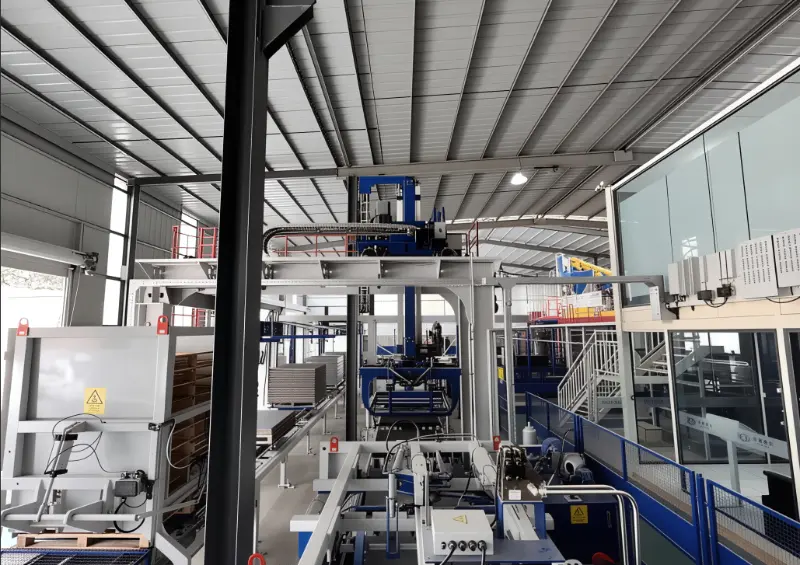
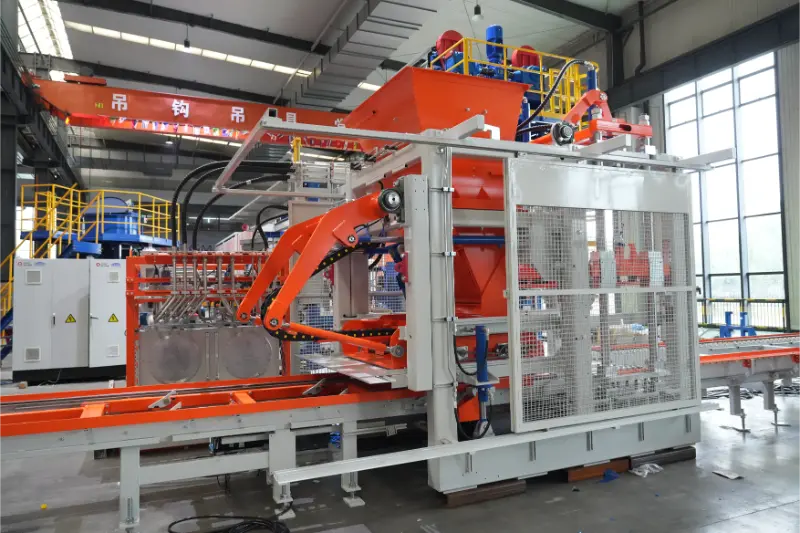
QGM Premium Stone-Look Paving Block Production Line Applications

△QGM Premium Stone-Look Paving Block Production Line Applications

Each of these questions eventually affects production costs.Rather than comparing supplier quotations alone, it is therefore more practical to establish a systematic set of criteria for evaluating block making machine suppliers.

1. What Key Capabilities Should You Look for in a PC Stone-Look Paving Block Machine Supplier?

Whether you are evaluating a paving block machine supplier in your local market or an international block making machine manufacturer, it is important to look beyond equipment price and headline production capacity. Six core capabilities can provide a more reliable basis for supplier evaluation: technical and manufacturing expertise, automation and intelligent control, raw material adaptability, and after-sales service with long-term lifecycle support.

These capabilities directly influence the reliability, production efficiency, operating costs, and long-term performance of an automatic block making machine and the overall concrete block production line.

1.1. Technical Expertise and Manufacturing Capability Build the Foundation for Reliability

A block making machine is a typical continuous-production industrial system. During long-term operation, it must repeatedly withstand vibration, forming pressure, mechanical movement, and demanding production environments.

For this reason, evaluating a paving block machine manufacturer should go beyond the specifications presented on a product page. customers should also examine the manufacturer's R&D capabilities, manufacturing processes, quality control systems, and experience with real-world applications.

Key areas to evaluate include:

* Independent R&D and engineering capabilities

* Long-term validation of core mechanical structures

* Technology used in hydraulic, vibration, and control systems

* Machining and assembly precision of critical components

* Proven projects and long-term operating experience, particularly in overseas markets

For large-scale concrete block production lines, manufacturing capability has a direct impact on long-term production stability.

QGM, for example, has focused on concrete products equipment for decades and has continued to improve the stability and productivity of its block making machines through technologies such as automated control, servo-driven systems, and intelligent equipment monitoring.

For manufacturers producing decorative paving blocks, permeable pavers, and other concrete products continuously, this type of technical experience is generally more meaningful than equipment appearance or headline specifications alone.

1.2.Automation Affects Both Labor Costs and Production Consistency

Many modern automatic block making machines are equipped with PLC control cabinets, touchscreens, automatic material feeding, and palletizing systems. However, a higher level of automation does not simply mean adding more automated components.

Effective automation should enable batching, mixing, material feeding, molding, conveying, handling, and palletizing to work together as a coordinated production system while reducing variations caused by manual operation.

This is particularly important for decorative concrete paving blocks and other appearance-sensitive products.

Such products often require consistent surface finish, color, dimensions, and density. If material ratios, feeding conditions, or molding parameters vary significantly between production cycles or shifts, product quality can fluctuate.

When evaluating an intelligent block production line, therefore, do not simply ask whether it has a PLC. Instead, examine whether the system can:

* Set production parameters digitally

* Save and recall different product recipes

* Record production data

* Automatically identify and report abnormal conditions

* Monitor key operating parameters in real time

* Support remote diagnostics and technical service

These capabilities are more useful indicators of genuine production intelligence than simply having a touchscreen interface.

1.3. Raw Material Adaptability Can Determine Whether a Paving Block Project Works in Practice

One issue that is often overlooked when selecting a paving block machine is the difference between theoretical production capacity and actual production performance.

Sand, stone powder, manufactured sand, industrial by-products, and other aggregates can vary considerably in particle size, moisture content, grading, and impurity levels from one region to another.

If a production line is highly sensitive to raw material variations, operators may need to adjust mix designs and production parameters frequently. In some cases, additional cement or other materials may also be required to maintain the desired strength and appearance, directly increasing production costs.

For this reason, it is advisable not to evaluate a machine solely through demonstrations using standardized materials.

A better approach is to bring representative samples of the actual raw materials available at your project site and conduct a material compatibility and production test.

Pay attention to:

●Aggregate particle size

● Raw material moisture content

● Aggregate grading

● Proportion of recycled or industrial solid waste materials

●Green-block density

●Finished product strength and surface quality

This is particularly important for manufacturers planning to incorporate construction waste, steel slag, coal gangue, tailings, or other industrial solid waste into their concrete products.

A machine that can accommodate a wider range of locally available materials can provide greater flexibility in production planning and raw material sourcing.

1.4. Do Not Evaluate the Machine Only by Purchase Price—Calculate Total Cost of Ownership

When comparing block making machines, many manufacturers focus directly on the initial quotations from different suppliers.

For example:

Supplier A: $1 million

Supplier B: $1.3 million

At first glance, Supplier A appears to save $300,000.

However, if the lower-cost equipment requires more operators, consumes more energy, has higher wear-part replacement costs, or provides slower technical support, the actual operating costs of the two production lines may be very different over several years.

This is why professional equipment selection should consider Total Cost of Ownership (TCO) rather than purchase price alone.

For a concrete block production line, TCO generally includes:

●Initial equipment investment

● Energy consumption

● Labor costs

●Wear-part costs

● Routine maintenance

●Spare parts

●Production losses caused by downtime

●Technical service costs

●Equipment upgrades

●Expected service life

For continuous-production block plants, downtime deserves particular attention.If equipment failures result in several hours of lost production every day, the accumulated production losses over time can easily exceed the initial difference in equipment prices.

The goal of equipment selection should therefore not be to find the machine with the lowest quotation, but to identify the production solution that provides a more competitive overall cost per unit of product.

1.5. After-Sales Service Is a Critical Measure of Supplier Reliability

For a complete automatic block production line, installation and commissioning, operator training, preventive maintenance, troubleshooting, spare-parts supply, and technical upgrades can all affect long-term production performance.

Before selecting a supplier, customers should clarify several practical questions:

●Is there a local or regional service team?

● How quickly will technical support respond to equipment problems?

● Are commonly required spare parts readily available?

● Is remote diagnosis supported?

● Can control software and systems be upgraded?

●Is long-term technical support available?

This becomes even more important for overseas projects.When equipment is installed far from the manufacturer's service center, even a relatively minor technical problem can lead to extended downtime if the customer has to wait for an engineer, spare parts, or a troubleshooting solution.

QGM has equipment operating across multiple countries and regions and continues to develop its international technical support and service capabilities.

For block manufacturers planning long-term production, this type of service infrastructure can provide additional support for equipment lifecycle management.

1.6. During a Site Visit, Do Not Just Ask Whether the Machine Can Produce Blocks—Check Whether It Can Produce Consistently Over Time

Many suppliers invite potential customers to watch their equipment operating during a demonstration. While this can confirm that the machine can complete the basic production process, a short demonstration does not necessarily reveal how the equipment performs under long-term operating conditions.

Whenever possible, customers should visit an actual production site where the equipment has already been operating.

Pay particular attention to:

● Equipment operating stability

●Consistency of finished products

● Actual level of production automation

● Number of operators required on the production floor

●Ease of routine maintenance

●Frequency of wear-part replacement

● Overall organization of the production area

●How abnormal conditions and equipment faults are handled

For PC stone-look paving block production project, it is also worth checking surface finish, color consistency, dimensional accuracy, and finished-product yield.

If the project involves solid waste recycling, customers should additionally examine the actual proportion of recycled materials used, raw material processing methods, and long-term production stability.

2. Three Common Mistakes to Avoid When Buying a Paving Block Machine

Mistake 1: Looking Only at the Initial Machine Price

A low purchase price does not necessarily mean a low production cost.If the equipment requires more labor, consumes more energy, or generates higher maintenance and downtime costs, the money saved during the initial purchase may simply be spent later.

For this reason, equipment should be evaluated over its expected service life rather than by purchase price alone.

Mistake 2: Choosing the Highest Production Capacity Without Considering Actual Requirements

Higher production capacity does not automatically mean a better solution.If the available raw materials are insufficient, market demand is limited, or the site and auxiliary equipment cannot support the production capacity, an oversized machine can result in unnecessary investment.

The appropriate equipment configuration should instead be determined by considering:Market demand + raw material availability + product types + site conditions + labor requirements + target production volume

This approach provides a more realistic basis for selecting the right block making machine.

Mistake 3: Relying on Verbal Promises Without Actual Verification

Claims regarding production capacity, recycled-material ratios, product strength, energy consumption, or automation should preferably be documented in formal technical specifications and contractual documents.

For critical performance indicators, actual material testing and visits to operating reference plants provide additional verification.

This is especially important when producing decorative concrete paving blocks, permeable pavers, and recycled-material concrete products, where laboratory results alone may not fully represent long-term factory performance.

Conclusion: A Reliable Paving Block Machine Supplier Provides More Than Equipment

Choosing a reliable paving block machine supplier is essentially a decision about selecting a long-term production solution.

Manufacturing capability establishes the foundation for equipment performance. Automation influences productivity and consistency. Raw material adaptability determines whether the proposed production process can work under actual local conditions. After-sales service affects the machine's long-term operating reliability.

For companies planning to invest in decorative paving blocks, permeable pavers, concrete paving blocks, or other concrete products, supplier evaluation should therefore cover technical capability, raw material adaptability, automation, Total Cost of Ownership, and after-sales support together.

A good automatic block making machine is not necessarily the machine with the lowest purchase price.

It is the production system that can maintain stable operation, control overall production costs, adapt to the manufacturer's real requirements, and continue creating value throughout its service life.

FAQ

1. What are the most important criteria when choosing a paving block machine supplier?

The key criteria include the supplier's technical and manufacturing capabilities, automation level, raw material adaptability, total cost of ownership, and after-sales service. customers should evaluate not only the machine price and production capacity but also long-term reliability, maintenance requirements, energy consumption, and technical support.

2. Why is raw material adaptability important for a paving block machine?

Raw materials can vary in particle size, moisture content, grading, and impurity levels depending on the project location. A machine that can adapt to locally available aggregates, recycled materials, or industrial solid waste can help reduce material costs, improve production flexibility, and maintain stable product quality. Conducting tests with actual local materials is recommended before purchase.

3. How should customers evaluate the automation level of a concrete block production line?

customers should look beyond the presence of a PLC or touchscreen. A reliable automated production line should coordinate batching, mixing, feeding, molding, conveying, handling, and palletizing. It should also support digital parameter settings, recipe management, production data recording, abnormal-condition alerts, real-time monitoring, and remote diagnostics.

4. Why should total cost of ownership be considered instead of purchase price alone?

The initial equipment quotation does not represent the full cost of operating a block production line. Total cost of ownership also includes energy consumption, labor, wear parts, maintenance, spare parts, downtime losses, technical service, upgrades, and expected service life. A machine with a higher purchase price may provide a lower overall cost per unit through better efficiency and reliability.

5. What after-sales services should a reliable paving block machine supplier provide?

A reliable supplier should provide installation and commissioning, operator training, preventive maintenance guidance, troubleshooting support, spare-parts supply, remote diagnosis, software upgrades, and long-term technical assistance. For overseas projects, customers should also confirm the supplier's regional service capabilities and expected response time when equipment problems occur.

Related News
Leave me a message
X
We use cookies to offer you a better browsing experience, analyze site traffic and personalize content. By using this site, you agree to our use of cookies. Privacy Policy
RejectAccept