Automatic Block Maker Machine Equipment
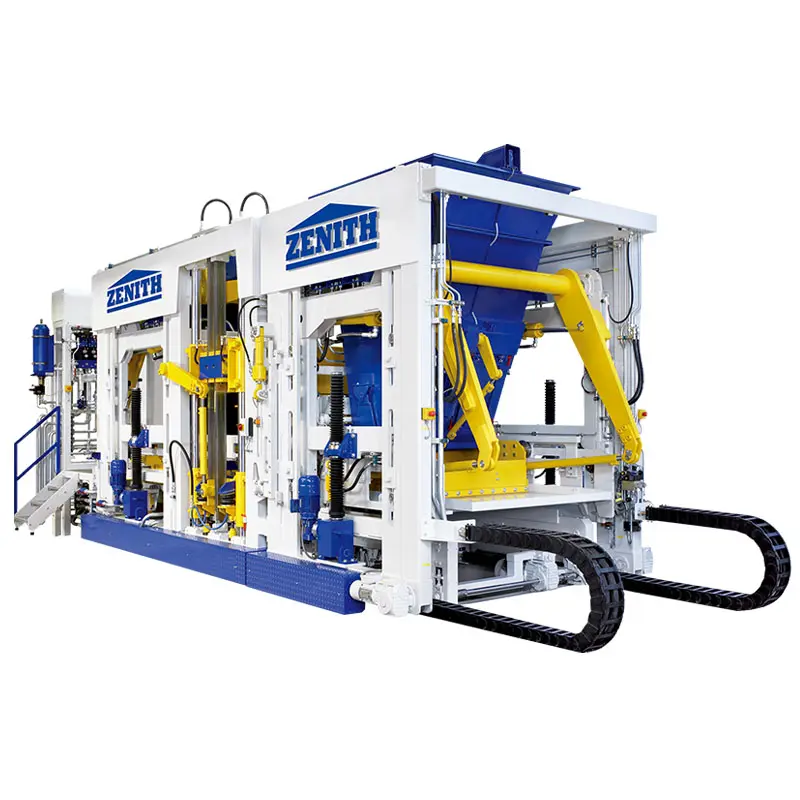
In the competitive construction materials sector, efficiency and durability drive every investment decision. Our advanced Automatic Block Maker Machine integrates hydraulic compaction and PLC-controlled cycles to deliver uniform high-density blocks with minimal human intervention. When scaling production, you need rugged Automatic Block Maker Machinery that maintains cycle times under 15 seconds while offering mold versatility for hollow blocks, solid bricks, pavers, and curbstones. This Block Maker Machine Equipment is engineered with a double-shake vibration table and synchronized feeding hopper, slashing raw material waste by up to 12% compared to semi-automatic alternatives. Each Block Maker Machine undergoes factory acceptance testing on medium-duty and heavy-duty cycles before dispatch, ensuring your line hits rated output from day one. The structural frame is constructed from hot-rolled Q345B steel with full-penetration welds, while the hydraulic system employs Bosch Rexroth pumps and CETOP-3 directional valves for repeatable pressing force above 20 MPa.
The BMM-8000 automatic block maker series redefines what operators expect from a stationary production cell. Built around a 37 kW main motor and a 2.2 kW vibration motor pair, the machine exerts 120 kN of compaction force across a 1,200 mm by 900 mm pallet area. Material feeding uses a frequency-controlled belt conveyor with an ultrasonic level sensor that maintains consistent hopper inventory, eliminating manual topping and reducing particle segregation in the mix. Mold changes take under eight minutes thanks to quick-release clamps and a hydraulic lifting cart that slides worn molds onto a service rail. The integrated Siemens S7-1200 PLC stores 50 recipe profiles, each recalling vibration time, feed delay, pre-compaction duration, and main pressing pressure with one tap on the 10-inch HMI. Real-time diagnostics stream through an Ethernet/IP port to a plant SCADA system, so supervisors receive alerts on motor temperature, oil filter status, and cycle count deviations before they cascade into downtime. Daily output reaches 38,400 standard 200 mm hollow blocks in an eight-hour shift when running a six-block mold, or 2,800 square meters of interlocking pavers using a 12-cavity paver tray. Power consumption averages 22 kWh per 1,000 blocks, making the machine compliant with ISO 50001 energy management benchmarks. Pallet feeding and stacking stations are available as plug-in modules that bolt to the main frame without foundation modifications, so you can phase automation upgrades according to budget cycles.
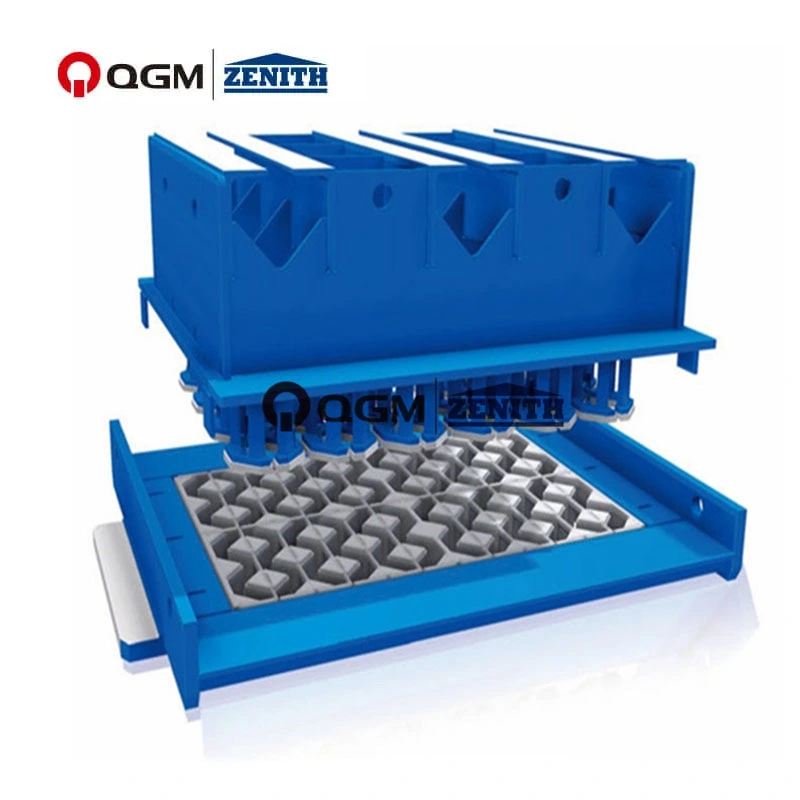
- Mold type: Hydraulically clamped quick-change molds with integrated circuit water heating for consistent curing quality
- Vibration system: Dual eccentric shaft with 4,500 kg excitation force, adjustable amplitude 0.5–1.8 mm via inverter
- Hydraulic power unit: 55 L/min variable-displacement piston pump, 200 L tank with air-oil cooler and 10 µm return filter
- Block height range: 50–300 mm, controlled by linear encoder feedback with ±0.5 mm repeatability
- Safety compliance: Category 3 safety circuit with light curtains, interlocked gates, and emergency stop marshalling
- Noise level: < 78 dB(A) at operator position under full production load
| Parameter |
Specification |
Unit |
| Rated output (200 mm hollow) |
4,800 |
blocks/hour |
| Pallet size |
1,200 × 900 × 40 |
mm |
| Installed power |
42.5 |
kW |
| Hydraulic working pressure |
21 |
MPa |
| Vibration frequency (adjustable) |
45–65 |
Hz |
| Mold change time |
< 8 |
minutes |
| Machine weight |
11,200 |
kg |
| Control system |
Siemens S7-1200 + 10" HMI |
- |
| Compaction force |
120 |
kN |
| Oil tank capacity |
200 |
L |
The modular architecture of the BMM-8000 supports future integration with automatic cubing robots and stretch-wrapping stations, ensuring your material handling keeps pace with rising order volumes. Concrete batching plants from various OEMs interface via dry-contact signals, while Profinet connectivity simplifies synchronization with existing twin-shaft mixers and skip hoists. Maintenance intervals extend to 500 hours for standard grease points, and all wear plates are manufactured from Hardox 450 for a service life exceeding three years under continuous duty. Remote access via a VPN-cached maintenance router lets factory technicians perform predictive diagnostics, examine vibration spectrum trends, and adjust timing maps without an on-site visit. Spare parts kits stocked in regional hubs include seal sets, proximity sensors, and V-belt assortments to reduce mean time to repair below four hours. The pallet transport lane features encoder-flagged indexing stops accurate to ±1 mm, preventing mold-pallet misalignment and eliminating the need for manual guiding bars. Cooling fan arrays are thermostatically gated, reducing dust accumulation in the electrical cabinet while keeping drive temperatures under 55 °C even in ambient heat exceeding 40 °C. Sound-dampening panels around the vibration unit limit acoustic spill, a feature welcomed on urban in-fill sites where construction noise ordinances cap permissible levels.