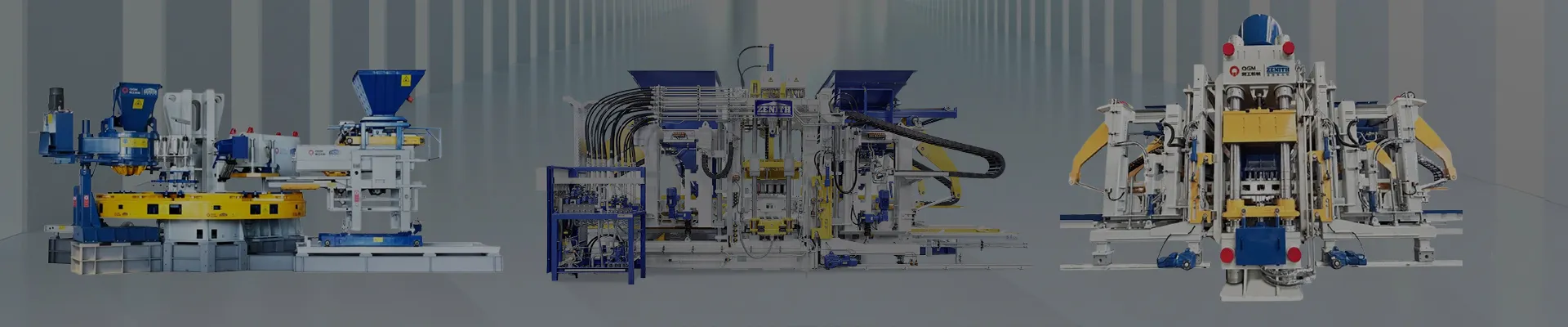
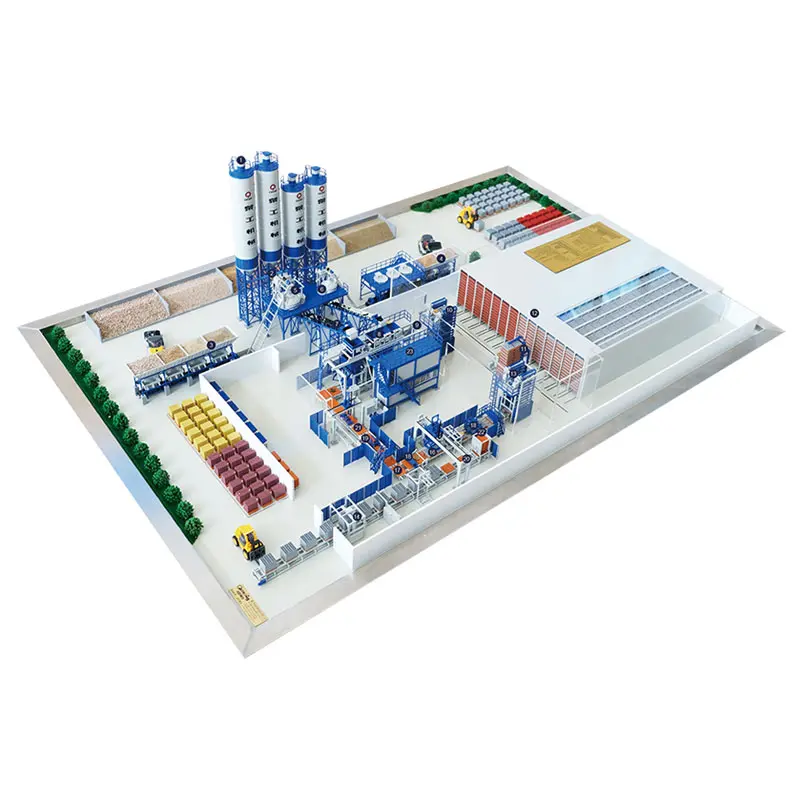
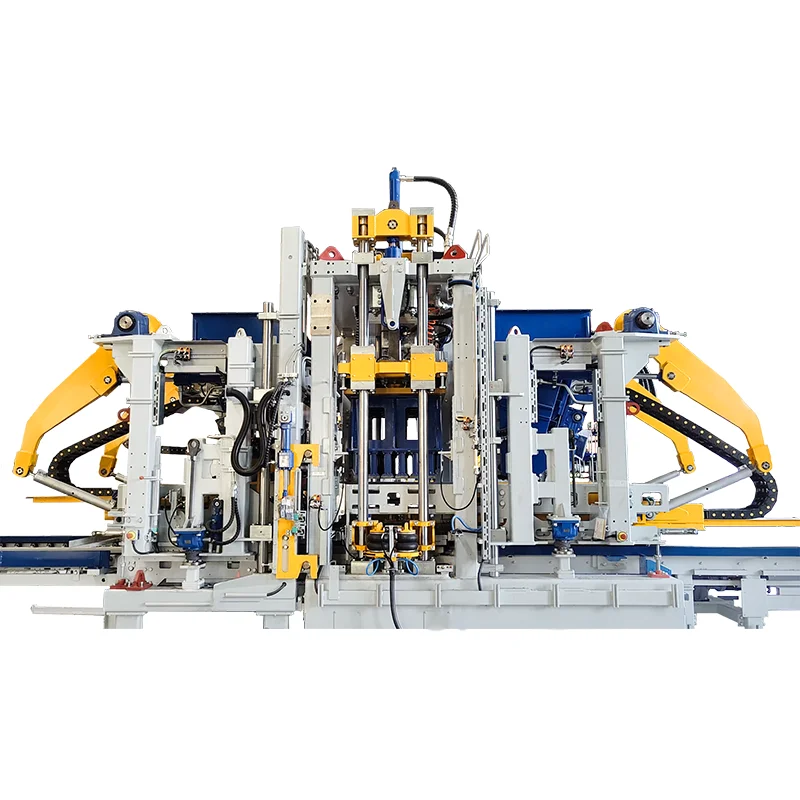
Investing in a fully automatic production line for brick making fundamentally shifts your manufacturing capacity, delivering end-to-end automation from raw material batching to cured block packaging. The brick making fully automatic production line we engineer incorporates closed-loop servo controls and vibration-assisted compaction to achieve dimensional accuracy within ±0.5 mm while maintaining cycle times under 12 seconds. For enterprises scaling their output, our brick making fully automatic production lines support parallel mold configurations, enabling simultaneous production of solid bricks, hollow blocks, and paving stones without cross-contamination. Modern brick making automatic production lines like these reduce labor dependency by over 80% and integrate real-time defect detection via laser sensors, ensuring only certified units proceed to the curing chamber. The system's adaptive recipe management stores over 200 mix designs, letting operators switch between products with a single tap on the HMI panel.
The BrickMax Ultra 9000 Series embodies an entirely rethought approach to automated brick fabrication, centering on a rigid welded frame that absorbs vibration harmonics and prolongs component life. Its core philosophy marries energy recovery hydraulics with intelligent mold heating to slash startup times and eliminate cold-weather curing delays. Every station—weighing, mixing, pressing, cubing—communicates through PROFINET, feeding a cloud dashboard that logs OEE metrics and issues predictive maintenance alerts. The line accepts a broad particle size distribution, from 0–8 mm sand to lightweight aggregates like expanded clay, giving producers flexibility in raw material sourcing. Safety interlocks, including light curtains and emergency stop zoning, comply with ISO 13849 PL e, while the stainless steel wet-side panels withstand high-pressure washdowns. Operators appreciate the ergonomic walkways and tool-less mold change trolleys, reducing changeover fatigue. Auxiliary modules such as automatic color dosing, vertical curing racks, and stretch-wrapping robots can be phased in without reprogramming the core logic. Below are the primary technical specifications that illustrate the line’s capability and integration depth:
| Parameter | Value |
|---|---|
| Maximum production rate | 16,000 standard bricks per hour (190×90×90 mm) |
| Supported products | Solid, hollow, perforated, interlocking, paver, kerbstone; height 40–250 mm |
| Mold change time | 8 minutes (quick-clamp hydraulic system) |
| Installed electrical power | 220 kW (380–480 V, 50/60 Hz) |
| Hydraulic system pressure | 21 MPa, oil volume 800 L, cooling capacity 40 kW |
| Compressed air consumption | 2.4 m³/min at 0.8 MPa |
| Curing method | In-line steam or hot-air chamber with programmable ramp/soak profiles |
| Footprint (basic configuration) | 48 m × 9 m × 7.5 m (expandable via modular segments) |
| Machine weight | 32,500 kg |
| Operator staffing | 1–2 per shift (supervisory role) |
| Certifications | CE, ISO 9001, ISO 45001, GOST-R optional |