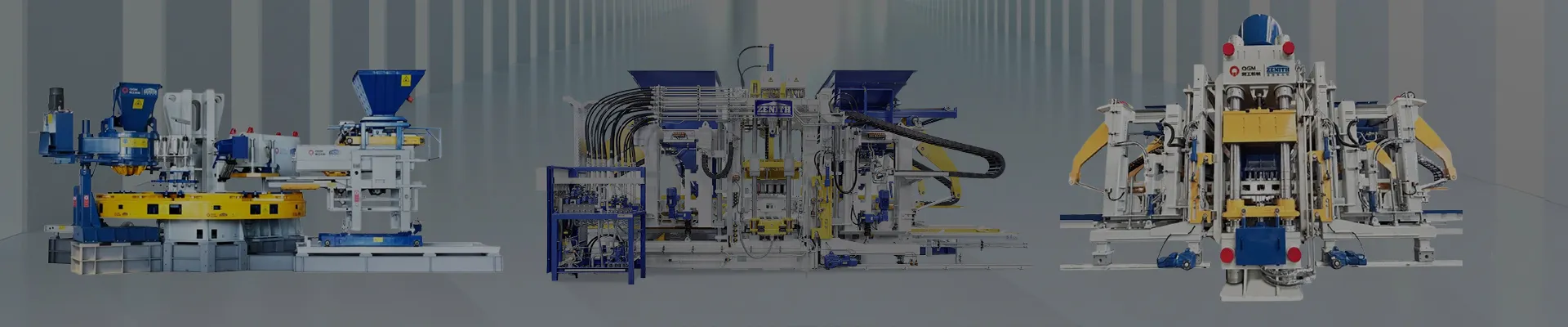
When evaluating modern solutions for construction material manufacturing, a fully automatic production line for brick making stands out as the core investment for high-throughput operations. Unlike semi-automatic alternatives, brick making fully automatic production lines integrate every stage from raw material batching, mixing, and molding to curing and cubing under a single control system. This integration dramatically reduces manual handling errors while pushing daily output to levels unattainable with conventional setups. For facilities aiming to scale, a properly engineered brick making automatic production line minimizes downtime through predictive maintenance alerts and synchronized conveying systems. The market has responded decisively to brick making automatic production lines that offer consistent block density, dimensional accuracy, and surface finish without subjecting the process to operator fatigue.
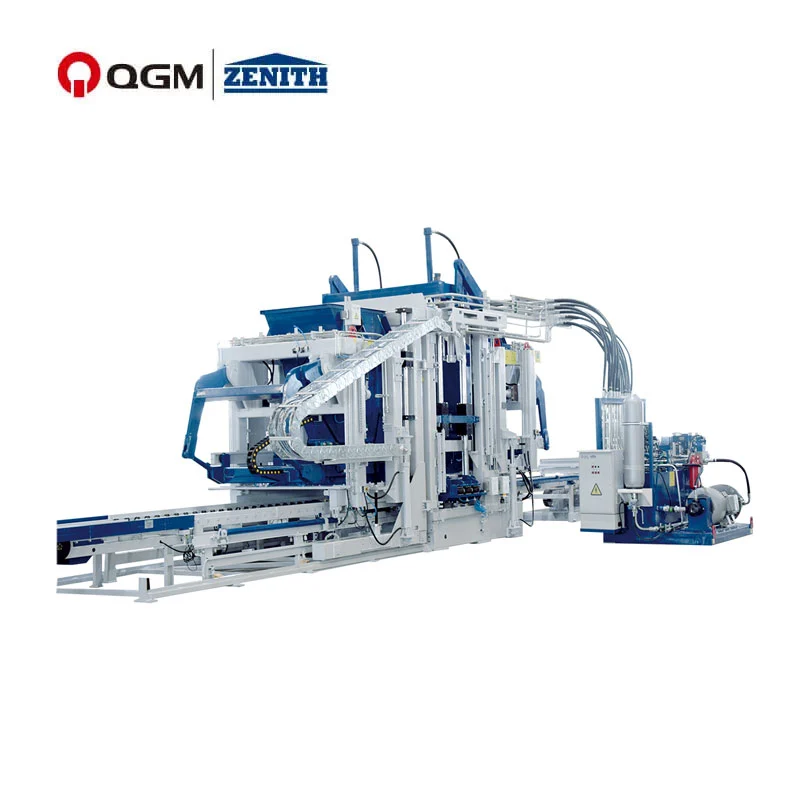
The Fully Automatic Brick Making Production Line is engineered around a heavy-duty framework that accommodates continuous three-shift cycles with minimal intervention. Raw materials flow through a precision weigh batching station before entering a high-shear mixer capable of homogenizing diverse aggregates and cementitious binders within seconds. The molded products are then transferred by a robotic setting system onto curing racks, where a controlled environment accelerates strength development while eliminating cracking associated with uneven drying. An automatic depalletizing and cubing module completes the line, palletizing finished bricks directly for forklift collection. Throughout the line, onboard sensors track vibration frequency, compaction pressure, and moisture levels, transmitting real-time feedback to the central HMI console for on-the-fly adjustments.
| Parameter | Specification |
|---|---|
| Total installed power | 185 kW (400V / 50Hz) |
| Maximum daily production (8-hour shift) | 38,000 – 48,000 standard hollow blocks |
| Product range | Hollow block, solid brick, paving stone, curbstone, interlocking block |
| Block size compatibility (L×W×H) | 390×190×190 mm, 390×140×190 mm, 400×200×200 mm (custom molds available) |
| Compaction strength | Up to 25 MPa depending on mix design |
| Cycle time (per board) | 15–18 seconds |
| Compressed air requirement | 0.8 MPa, 1.6 m³/min |
| Water circulation demand | 1.8 m³/h with closed-loop cooling option |
| Noise level at operator station | ≤82 dB(A) |
| Overall line dimension (L×W×H) | 48 m × 12 m × 9 m (typical layout) |
| Control system | Siemens PLC with remote access module and production data logging |
Material conveying infrastructure includes sealed belt conveyors with anti-spill skirts and intelligent diverters that route fresh mix directly to the press hopper without segregation. The robotic curing stacker maintains a FIFO (first in, first out) logic to ensure uniform aging across all products. An optional package includes automatic liquid color metering integrated into the mixing stage, enabling consistent pigmentation across batches. Service panels are positioned at ground level for all greasing points and wear-part inspections, reducing maintenance time by an estimated 30% compared to previous generations. Additionally, the integrated dust collection system (with a claimed capture efficiency of 99.5%) complies with OSHA and equivalent international respiratory protection standards, keeping the facility within permissible exposure limits.