As urban development and infrastructure investment continue to expand across South America, demand for concrete products is growing in road construction, municipal projects, port development, and industrial applications. For local building material manufacturers, improving concrete block production efficiency, reducing labor requirements, and maintaining consistent product quality have become important priorities for production upgrades.
Against this backdrop, automatic block making machines, concrete block molding machines, and automated concrete product production lines are becoming increasingly important for concrete product manufacturers seeking to upgrade their production capabilities in the South American market.
QGM has long focused on concrete product machinery and automated production technology. By continuously adapting its equipment solutions to different raw materials, operating environments, and production requirements, QGM provides concrete block production equipment designed to support large-scale manufacturing in South America.
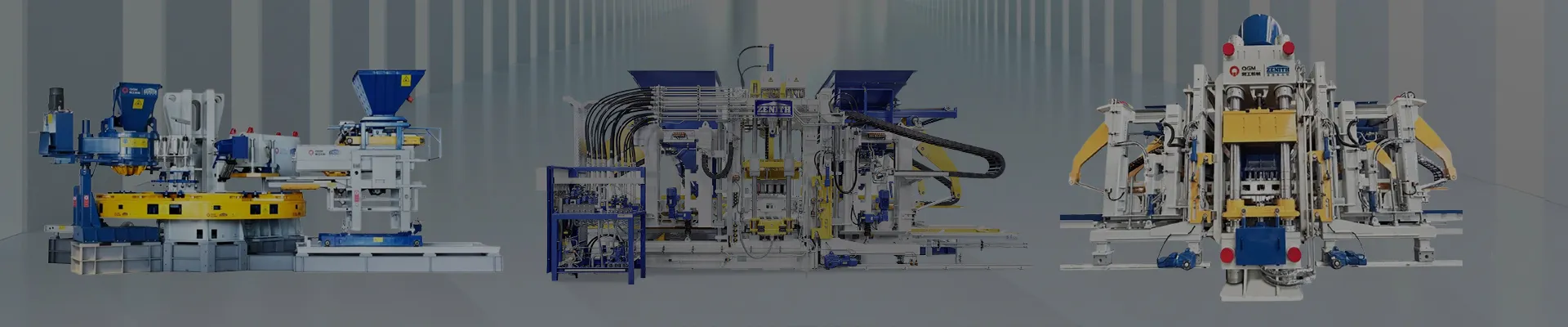
△ QGM ZN1000-2 Intelligent Automatic Block Making Machine in South America
South America is an emerging market with a strong resource-driven economy. Brazil, Chile, Peru, Argentina, and Colombia are among the region's major markets.
Market demand is closely linked to mining, agricultural engineering, and urban infrastructure development. The development of iron ore, copper, lithium, and other mineral resources continues to drive investment in supporting infrastructure, while road construction, port development, municipal projects, and urbanization are creating additional demand for concrete products.
For concrete product manufacturers, this growing demand is not only creating more market opportunities but also raising expectations for equipment productivity, reliability, and automation.
When production volumes increase, traditional manual or semi-automatic manufacturing methods can become limited by labor availability, production cycle consistency, and product uniformity. As a result, a more highly automated concrete block production line can help manufacturers improve overall production efficiency and process management.
South America is not a homogeneous market. Economic conditions, regulatory requirements, equipment certification, and infrastructure conditions vary significantly from one country to another.
In terms of market competition, international brands continue to have a strong presence in large-scale mining and high-end construction equipment, while Chinese manufacturers are expanding their market share through supply-chain advantages and competitive overall value. Used equipment also plays an important role in several local markets.
Market conditions differ considerably across individual countries. Chile and Peru generally offer relatively stable market environments, while Argentina has been affected by foreign-exchange conditions for an extended period. In Brazil, equipment suppliers and buyers also need to consider import tariffs and relevant requirements such as INMETRO and NR regulations.
Natural operating conditions are another important consideration for equipment selection.
Tropical areas may involve high temperatures, high humidity, and corrosive environments. The Andes region presents challenges associated with high altitude, low oxygen levels, and difficult transportation conditions. Some production areas may also operate under high-dust conditions for extended periods.
Therefore, when selecting an automatic block making machine, manufacturers should look beyond rated production capacity and consider equipment structure, hydraulic systems, electrical controls, wear-resistant components, and adaptability to local operating conditions.
For concrete product manufacturers, production efficiency and product quality need to be considered together.
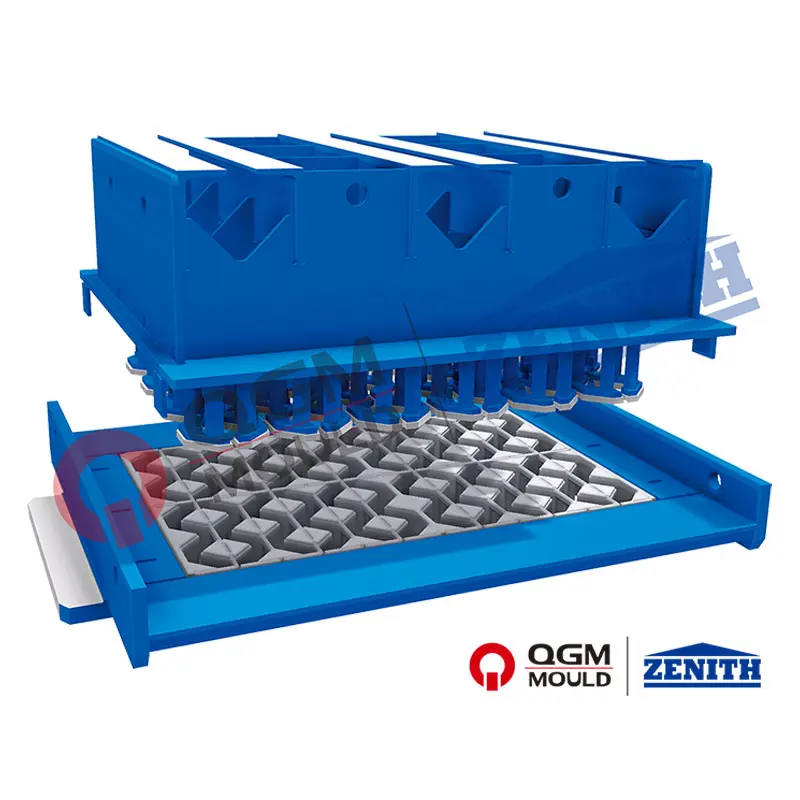
A reliable concrete block molding machine must maintain consistent feeding, vibration, and molding performance throughout continuous production. Stable production cycles help manufacturers achieve more consistent block density, dimensional accuracy, and overall product quality.
QGM continues to invest in the development of concrete product manufacturing equipment, incorporating technologies such as automated control, servo-driven systems, and intelligent monitoring to improve the operational stability and productivity of its block making machines.
During production, automated control systems can manage key operating parameters in a coordinated manner, reducing variations caused by different operators and helping standardize the manufacturing process.
For manufacturers producing concrete blocks, paving blocks, kerbstones, and other concrete products on a long-term basis, this type of production stability is important for maintaining product quality and controlling manufacturing costs.
As labor costs and production management requirements increase, automation is becoming an increasingly important direction for modern concrete product manufacturing.
A complete automated block production line can integrate multiple processes, including raw material batching, mixing, material feeding, vibration molding, demolding, conveying, palletizing, and curing.
If these processes are not properly coordinated, even a block making machine with high rated production capacity may fail to achieve its full potential because of bottlenecks in upstream or downstream processes.
For this reason, modern automatic block making machines are increasingly designed as part of an integrated production system rather than simply as high-speed individual machines.
By increasing the level of automation, manufacturers can reduce manual intervention while maintaining more consistent production cycles. For South American companies seeking to move from traditional manufacturing methods toward modern concrete product plants, this provides a more stable foundation for scalable production.
Raw material conditions vary considerably across South America. Sand, aggregates, and other production materials may differ in particle size, moisture content, and grading from one region to another.
For concrete block manufacturing equipment, changes in raw materials can affect material feeding, vibration molding, and finished-product quality. Therefore, equipment selection and production-line design should take local raw material conditions into account and ensure that batching, mixing, and molding processes are properly configured.
At the same time, construction waste, industrial by-products, and other suitable solid waste materials can provide alternative raw material sources for concrete product manufacturing.
When product performance requirements are met, incorporating suitable recycled or solid waste materials into concrete products can reduce the consumption of some conventional natural aggregates while improving overall resource utilization.
QGM continues to focus on solid waste recycling and green building material production technologies, providing equipment and process solutions for concrete product manufacturing under different raw material conditions.
For overseas block plants, equipment delivery is not the end of the production process. Installation and commissioning, operator training, preventive maintenance, troubleshooting, and spare-parts supply can all affect the long-term performance of a concrete block production line.
This is particularly important in high-altitude areas and regions with challenging transportation conditions. If equipment problems occur without timely technical support, downtime can increase and production schedules may be affected.
Therefore, when selecting an overseas block making machine supplier, manufacturers should evaluate not only equipment performance but also international service capabilities, including:
● Installation and commissioning support
● Operator training
● Remote technical support
● Equipment troubleshooting
● Spare-parts supply
● Maintenance guidance
● Long-term technical service
QGM continues to strengthen its technical support and service capabilities in international markets, providing equipment-related services for customers in different countries and regions.
For South American concrete product manufacturers planning long-term operations, a comprehensive service system can help reduce equipment maintenance requirements and the risks associated with unplanned downtime.
For concrete product manufacturers in South America, equipment selection should not be based solely on the purchase price of an individual block making machine. The entire production project should be evaluated as an integrated system.
First, manufacturers need to define their target products, such as concrete blocks, hollow blocks, solid blocks, paving blocks, and kerbstones. The next step is to determine the appropriate equipment configuration based on local raw materials, plant conditions, and target production capacity. Automation level, energy consumption, maintenance requirements, and after-sales service should also be considered.
A properly designed concrete block production line should integrate raw materials, equipment, production processes, labor, and technical support into a coordinated manufacturing system.
Only through this integrated approach can the rated capabilities of the equipment be effectively converted into stable production performance.
South America offers significant opportunities for concrete product manufacturers, driven by infrastructure development, resource-based industries, and urbanization. At the same time, differences between individual countries and challenging operating environments place higher demands on the reliability, automation, environmental adaptability, and technical support capabilities of block making machines.
QGM will continue to develop automatic block making machines, concrete block molding machines, and automated concrete product production lines based on the production requirements of different markets. Through automated control, intelligent technologies, and comprehensive technical services, QGM aims to support South American manufacturers in improving production efficiency and maintaining consistent concrete product quality.
For companies planning to enter the South American concrete products market or upgrade an existing production line, equipment selection should take into account local market demand, raw material conditions, production scale, equipment technology, and long-term service capabilities. This approach can provide a stronger foundation for building a stable and efficient concrete product manufacturing operation.
1. What should South American manufacturers consider when choosing a block making machine?
Manufacturers should consider the target products, local raw materials, production environment, required capacity, automation level, energy consumption, maintenance costs, and after-sales service.
2. What types of concrete products can an automatic block making machine produce?
Depending on the machine configuration and molds used, an automatic block making machine can produce concrete blocks, hollow blocks, solid blocks, paving blocks, curbstones, and other concrete products.
3. How does automation improve concrete block production efficiency?
Automation coordinates batching, mixing, material feeding, molding, demolding, conveying, palletizing, and curing, helping reduce manual intervention and improve production efficiency and consistency.
4. Can block making machines adapt to different raw materials and production conditions in South America?
Yes. The production system should be configured according to local aggregate properties, including particle size, moisture content, and grading. Equipment selection should also account for conditions such as high humidity, high temperatures, high altitude, and dusty environments.
5. Why is after-sales service important when purchasing a block making machine for South America?
Installation and commissioning, operator training, troubleshooting, spare-parts supply, and ongoing technical support are important for maintaining stable production and reducing downtime throughout the service life of a concrete block production line.
-