News

What Surface Coating Technologies Enhance Block Machine Mould Efficiency?

2026-03-03 0 Leave me a message

Surface coating technologies play a decisive role in improving durability, precision, wear resistance, and overall productivity of a Block Machine Mould. In modern concrete production environments where friction, vibration, and abrasive aggregates continuously attack the mould surface, advanced coatings significantly reduce wear, minimize sticking, improve demoulding smoothness, and extend service life. By optimizing hardness, reducing surface roughness, and increasing corrosion resistance, these technologies directly enhance mould efficiency and lower total operational costs.


At Quangong Machinery Co., Ltd., long-term field testing across high-output production lines has proven that the right coating system can increase mould lifespan by 30 to 200 percent depending on working conditions. Our engineering team focuses on combining premium base steel materials with advanced coating processes to ensure stable block dimensions, reduced maintenance downtime, and consistent product quality across millions of cycles.


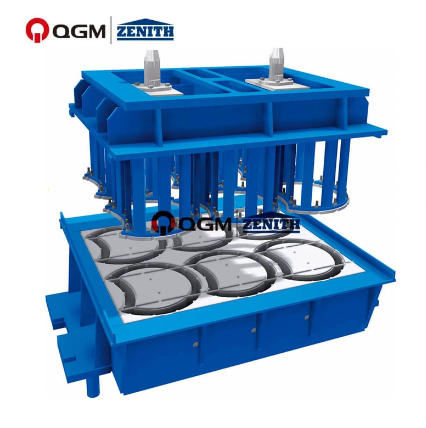
Retaining Wall Block Mold


Table of Contents


What Are the Most Effective Surface Coating Technologies for Block Machine Mould?

Choosing the right coating technology for a Block Machine Mould requires balancing hardness, toughness, adhesion strength, and resistance to abrasion and corrosion. In high-intensity block production, mould surfaces are exposed to cement slurry, sand aggregates, vibration forces, and moisture. Without proper treatment, even premium alloy steel can suffer premature wear.


1. Hard Chrome Plating

Hard chrome plating remains one of the most widely used coating technologies in concrete machinery applications. It creates a high-hardness outer layer that improves wear resistance and reduces friction between the mould cavity and concrete mixture.


  • Surface hardness up to HRC 60 to 65
  • Improved demoulding smoothness
  • Enhanced corrosion resistance
  • Lower surface roughness
  • Cost-effective for medium production volumes


In our factory, hard chrome plating is applied with strict thickness control to ensure uniform coating without compromising dimensional tolerance.


2. Nitriding Treatment

Nitriding is a thermochemical diffusion process that introduces nitrogen into the surface of alloy steel. Unlike plating, it modifies the surface structure internally.


  • Surface hardness up to HV 900 to 1200
  • Excellent fatigue resistance
  • No risk of peeling
  • Minimal dimensional distortion
  • Improved core toughness retention


For heavy-duty Block Machine Mould applications, nitriding significantly increases resistance to abrasive aggregates. Quangong Machinery Co., Ltd. applies controlled gas nitriding to maintain precise tolerances.


3. Carbide-Based Coatings

Carbide coatings such as tungsten carbide are applied using thermal spray technologies. These coatings are ideal for extreme wear environments.


  • Ultra-high hardness above HV 1200
  • Superior abrasion resistance
  • Long service life under high-frequency vibration
  • Reduced maintenance intervals


This technology is recommended for large-scale production plants operating 24-hour shifts.


4. PVD and CVD Coatings

Physical Vapor Deposition and Chemical Vapor Deposition create thin but extremely hard coatings with excellent adhesion.


  • Low friction coefficient
  • Enhanced surface smoothness
  • Improved resistance to cement chemical reactions
  • High precision for complex cavity shapes


Our engineering team evaluates the production environment before recommending PVD or CVD solutions.


5. Laser Cladding Technology

Laser cladding deposits high-performance alloy layers onto the mould surface.


  • Metallurgical bonding strength
  • Thicker protective layer
  • Repair and reinforcement capability
  • Extended mould refurbishment cycles


At Zenith, laser cladding is used for both new mould production and mould restoration projects, allowing customers to reduce replacement costs.


Why Do Advanced Coatings Directly Improve Block Machine Mould Production Efficiency?

Production efficiency in concrete block manufacturing is not determined solely by machine speed. The condition of the Block Machine Mould directly influences cycle time, product consistency, rejection rate, and maintenance downtime.


1. Reduced Friction and Faster Demoulding

Surface coatings reduce adhesion between wet concrete and cavity walls. Lower friction allows:


  • Shorter vibration cycles
  • Cleaner edge formation
  • Lower risk of product sticking
  • Improved surface finish of blocks


Our testing data shows that optimized coating selection can reduce demoulding resistance by up to 15 percent.


2. Extended Wear Resistance

Concrete aggregates act as abrasives during vibration compaction. Without adequate protection:


  • Cavity dimensions enlarge over time
  • Block size consistency decreases
  • Edge sharpness deteriorates
  • Maintenance frequency increases


Advanced coatings maintain dimensional accuracy, ensuring stable block geometry throughout long production cycles.


3. Lower Maintenance Costs

Every maintenance stop results in lost production hours. Coated mould surfaces offer:


  • Reduced polishing frequency
  • Fewer replacements
  • Lower labor costs
  • Improved ROI on mould investment


At Quangong Machinery Co., Ltd., our design philosophy prioritizes total lifecycle value rather than short-term cost savings.


4. Improved Corrosion Resistance

Moisture and cement alkalinity accelerate corrosion. Protective coatings:


  • Prevent pitting corrosion
  • Maintain smooth cavity surfaces
  • Reduce micro-crack formation
  • Ensure consistent block texture


Our factory performs corrosion simulation testing to verify long-term durability.


5. Enhanced Production Stability

Consistency is critical in high-volume plants. Coatings help maintain:


  • Stable vibration response
  • Uniform cavity pressure distribution
  • Consistent block weight
  • Predictable output capacity


This stability directly translates into improved efficiency across the entire production line.


How Do Our Technical Specifications and Manufacturing Standards Guarantee Long-Term Performance?

Surface coating efficiency depends not only on the coating itself but also on base material quality and precision machining. At Quangong Machinery Co., Ltd., our Block Machine Mould production follows strict quality control protocols.


Base Material Specifications

Material Type High Alloy Wear Resistant Steel
Hardness Before Coating HRC 50 to 55
Impact Toughness High fatigue resistance
Heat Treatment Vacuum quenching and tempering

Coating Performance Comparison

Coating Type Surface Hardness Wear Resistance Application Scenario
Hard Chrome HRC 60 to 65 Medium to High Standard production
Nitriding HV 900 to 1200 High Heavy duty use
Tungsten Carbide Above HV 1200 Very High Extreme abrasion
Laser Cladding Custom Alloy Very High Reinforcement and repair

Our production advantages include:

  • Precision CNC machining to micron-level tolerance
  • Controlled surface roughness finishing
  • Advanced coating thickness monitoring
  • Full dimensional inspection before delivery
  • Custom coating solutions based on client production data


Quangong Machinery Co., Ltd. integrates mould design, steel selection, heat treatment, coating application, and quality inspection under one roof. This integrated manufacturing system allows us to deliver consistent quality across every Block Machine Mould shipped from our factory. With decades of experience in block machinery engineering, we continuously optimize coating combinations to match evolving concrete mix designs and automation speeds.


Conclusion

Surface coating technologies significantly enhance Block Machine Mould efficiency by improving wear resistance, reducing friction, extending service life, and stabilizing production quality. From hard chrome plating to advanced carbide coatings and laser cladding, each technology serves a specific operational need. Selecting the right coating strategy ensures lower total cost of ownership and higher production stability.


At Quangong Machinery Co., Ltd., our commitment to material science, precision manufacturing, and coating innovation ensures that every mould delivers long-term performance under demanding industrial conditions. If you are looking to upgrade your mould durability and improve production efficiency, our technical team is ready to provide tailored recommendations based on your plant capacity and block specifications. Contact us today to discuss how our solutions can optimize your production line.


FAQ

Q1: What Surface Coating Technologies Enhance Block Machine Mould Efficiency?

Advanced technologies such as nitriding, hard chrome plating, carbide thermal spraying, PVD coatings, and laser cladding enhance efficiency by increasing hardness, reducing friction, improving corrosion resistance, and extending mould lifespan in high-wear concrete environments.

Q2: How does nitriding improve the lifespan of a Block Machine Mould?

Nitriding strengthens the steel surface through nitrogen diffusion, creating a hardened layer with excellent fatigue resistance. This reduces abrasion from aggregates and prevents peeling, significantly extending mould service life.

Q3: Why is tungsten carbide coating suitable for high-output production lines?

Tungsten carbide provides extremely high hardness and abrasion resistance, making it ideal for 24-hour continuous operation where mould surfaces face intense vibration and sand friction.

Q4: Can laser cladding repair worn mould surfaces?

Yes, laser cladding restores worn areas by adding metallurgically bonded alloy layers. It extends mould usability and reduces replacement costs while maintaining dimensional precision.

Q5: How do I choose the right coating for my production conditions?

The correct choice depends on production volume, aggregate abrasiveness, humidity levels, and required precision. Consulting with experienced manufacturers like Quangong Machinery Co., Ltd. ensures a tailored solution that balances cost and performance.

Related News
Leave me a message
X
We use cookies to offer you a better browsing experience, analyze site traffic and personalize content. By using this site, you agree to our use of cookies. Privacy Policy
Reject Accept