Autoclaved Aerated Concrete machine
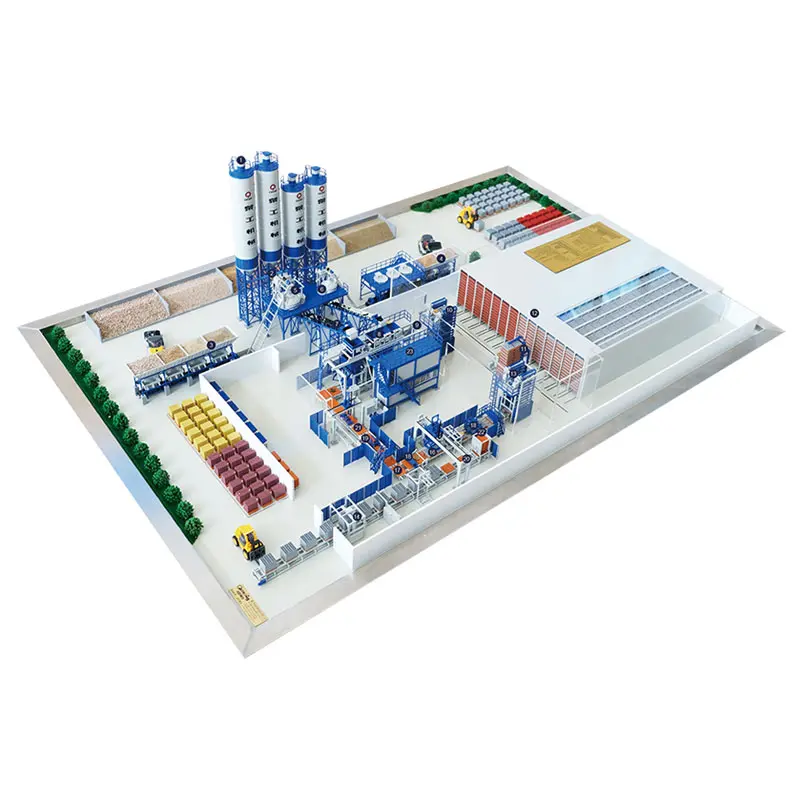
When evaluating modern construction solutions, the AAC block machine stands out as a transformative asset for manufacturers aiming to produce lightweight, high-insulation building materials. Our equipment integrates precision mixing, dosing, and cutting technologies to turn silica sand, cement, lime, and aluminum powder into consistently cured aerated concrete blocks. Designed as part of a complete AAC block production line, every component—from the slurry batching system to the horizontal band saw—is optimized for minimal raw material waste and maximum dimensional accuracy. For large-scale operators, the full AAC plant configuration includes steam curing autoclaves, tilting tables, and automated packing units, achieving outputs between 50,000 and 300,000 cubic meters per year. Whether you are expanding an existing facility or commissioning a new factory, our AAC production line delivers unmatched reliability through heavy-gauge steel frames, Siemens PLC controls, and wear-resistant mold carriages. Energy recovery systems preheat incoming slurry, cutting steam consumption by up to 18%, while the in-line density scanner ensures every block meets ±2% of target density before palletizing. This attention to engineering detail translates into a rapid return on investment, with typical payback periods ranging from 2.5 to 4 years depending on local market conditions.
Installing the <产品名字> redefines workflow efficiency, because every subsystem is tuned for continuous 24/7 operation without compromising block integrity. The pouring mixer uses a dual-speed turbine that homogenizes the aluminum suspension in fewer than 30 seconds, generating a stable pore structure that routinely reaches compressive strengths of 4.5–6.0 MPa. Once the green cake rises, a high-frequency vibrating frame releases it from the mold, and a flying cross cutter paired with a side cutter sculpts the mass into panels or blocks sized from 100 mm to 300 mm thickness with a clean, chip-free edge. Following pre-curing, the tilting crane transfers each cake to the autoclave cart, where a saturated steam regime of 1.2 MPa and 191 °C cures the calcium silicate hydrates to full strength within 8–10 hours. The key technical specifications that differentiate our offering are summarized below:
- Rated annual capacity: 30,000 m³ – 400,000 m³ (expandable in 50,000 m³ modules)
- Block dimensions (L × W × H): 600 × 200 × 100–300 mm; custom sizes accepted
- Panel dimensions: up to 6000 × 200 × 100–250 mm with tongue-and-groove profile
- Dry density range: 400–700 kg/m³, controlled within ±15 kg/m³
- Cutting accuracy: ±1 mm on all axes
- Installed power: 180–650 kW depending on capacity
- Autoclave working diameter: 2.0 m or 2.5 m, length up to 32 m
- Control system: Siemens S7-1500 with IoT-ready remote monitoring
To give a clearer picture of performance across standard models, the following table illustrates three typical configurations of the <产品名字>:
| Parameter |
Compact Model (80k m³/yr) |
Standard Model (150k m³/yr) |
Heavy-Duty Model (250k m³/yr) |
| Mixing capacity per batch |
3.5 m³ |
5.0 m³ |
7.5 m³ |
| Mold size (L×W×H) |
4200 × 1200 × 650 mm |
6000 × 1200 × 650 mm |
6000 × 1500 × 650 mm |
| Autoclave units |
3 (2.0 m × 26 m) |
6 (2.5 m × 30 m) |
8 (2.5 m × 32 m) |
| Steam consumption per m³ product |
18 kg |
16 kg |
14.5 kg |
| Cycle time per autoclave batch |
10 h |
9 h |
8.5 h |
| Workforce per shift |
8–10 operators |
12–15 operators |
18–22 operators |
| Connected load |
195 kW |
285 kW |
440 kW |
| Floor area (approx.) |
3,200 m² |
5,500 m² |
8,000 m² |