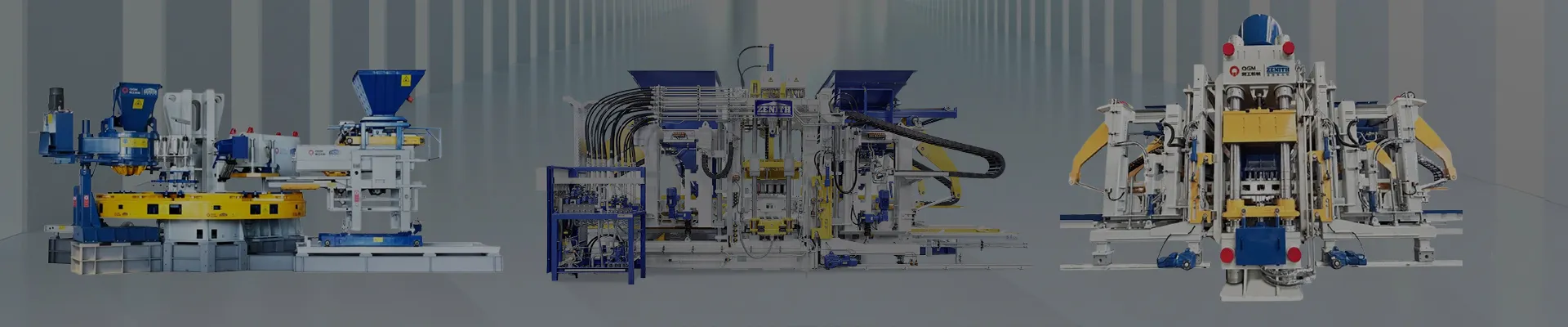
Cement Block Making Machinery
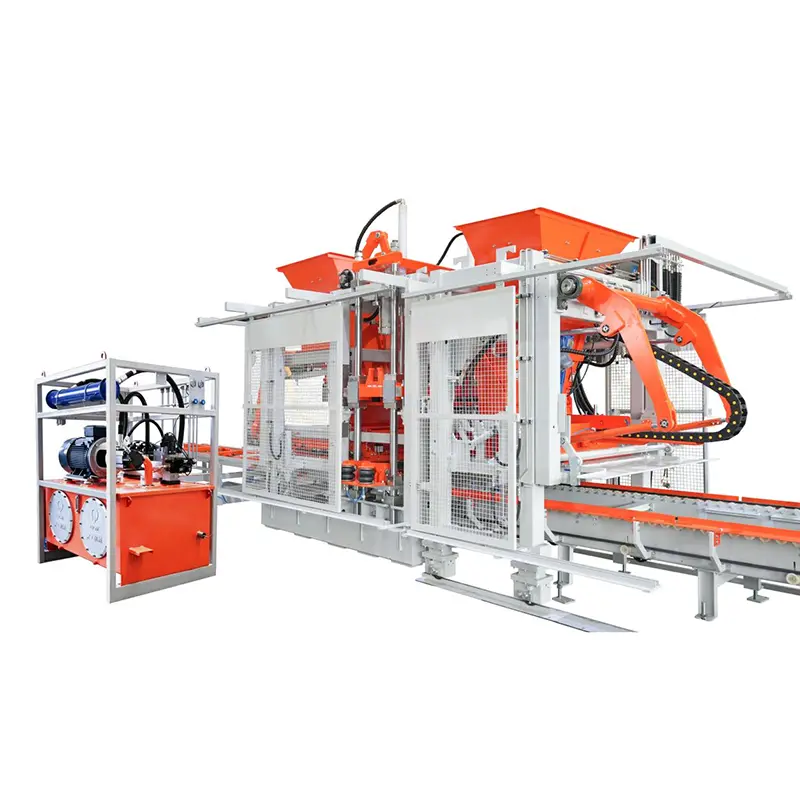
Modern construction relies heavily on the consistent output of high-quality blocks, and selecting the right equipment is fundamental to any operation’s success. Our flagship Concrete Block Brick Machine range integrates precision hydraulic pressing with intelligent dosing to produce solid and hollow blocks with minimal material waste. For producers scaling up their capacity, the dedicated Cement Block Making Machine platform delivers repeatable raw material compression and rapid cycle times on a heavy-duty welded frame. Customers requiring a fully automated production line will find the Concrete Block Brick Machinery series equipped with automatic stacking, cubing, and curing systems that drastically reduce hand labor. To address specialized paving and interlocking block demands, our industrial Block Machinery incorporates high-frequency vibration, synchronized mold shaking, and multi-axis pressure distribution, ensuring every unit meets compressive strength standards.
The Cement Block Making Machinery is built around a rigid vibration-isolated structure that directs all kinetic energy into the concrete mix rather than the surrounding floor, yielding blocks with superior density and edge sharpness. Its mold changeover system, which relies on a quick-clamp mechanism and modular side liners, allows operators to switch between block types in under 15 minutes without special tooling. An integrated PLC controller with a touchscreen interface maintains exact material feed rates, vibration frequency, and pressing force across hundreds of cycles, while the automatic fault-diagnosis panel flags any pressure or temperature anomalies before they affect production. Heavy-duty linear guides and chromium-plated guide columns extend service intervals, and the centralized lubrication network reaches every bearing point from a single pump station, making daily maintenance fast and foolproof. This machinery supports continuous three-shift operation and handles aggregates up to 10mm in size, making it suitable for local sand, crushed stone, and industrial by-products like fly ash.
Core Technical Highlights
- Synchronous vibration achieved through twin motor-driven eccentric shafts, delivering 3800–4500 vibration impacts per minute for maximum compaction.
- Proportional hydraulic control with 21 MPa working pressure, offering adjustable pressing force to suit different mix designs and mold cavities.
- Material feeding uses an inverse screw conveyor with load-cell batching, guaranteeing ±1.5% dosage consistency for cement, aggregates, and water.
- Mold box constructed from high-chromium alloy steel with replaceable wear plates, doubling service life compared to standard carbon-steel molds.
- Noise-dampened enclosure reducing sound levels to below 78 dB(A), meeting international occupational safety standards without sacrificing access for cleaning.
- Energy recovery circuit that redirects deceleration kinetic energy from the vibration table to the next compression cycle, cutting power draw by up to 18%.
Detailed Technical Specifications
| Model | Pallet Dimension (mm) | Molding Cycle (s) | Installed Power (kW) | Production Output (hollow blocks 390×190×190 mm per hour) | Overall Weight (t) |
|---|
| QT4-15 | 880×550 | 15–20 | 23.5 | 3,840 – 4,320 pcs | 5.6 |
| QT6-15 | 880×550 | 13–17 | 29.7 | 5,760 – 6,480 pcs | 6.8 |
| QT8-15 | 1020×550 | 12–16 | 36.8 | 7,680 – 8,640 pcs | 8.2 |
| QT10-15 | 1100×600 | 12–15 | 45.0 | 9,600 – 10,800 pcs | 10.5 |
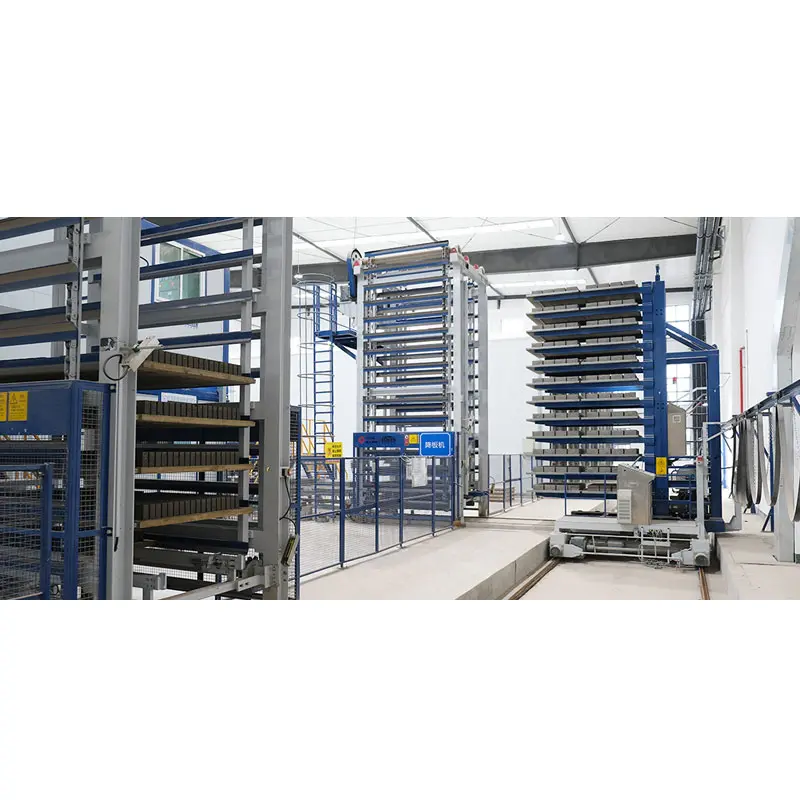
All models operate on a multi-layer block delivery configuration that stacks fresh blocks onto steel pallets before automatic transfer to the elevator. The curing rack capacity is matched to the machinery’s peak output, ensuring a continuous buffer even when downstream handling experiences short interruptions. Hydraulic fluid temperature is regulated by an air-oil cooler that maintains viscosity within the optimal 40–55°C window even in tropical ambient conditions. Electrical cabinets are fitted with dust seals and climate-control fans conforming to IP54 protection standards, and the main control software logs every cycle parameter for traceable quality reporting. Optional attachments include a color pigment dosing unit, a facing layer hopper for two-tone pavers, and robotic offloading arms that orient blocks for immediate palletizing without manual repositioning.