Choosing an automatic block making machine is often approached as a simple comparison of purchase price and production capacity. Customers may start by asking how much the machine costs or how many concrete blocks it can produce per hour.However, these figures only represent part of the investment decision.
For a concrete products manufacturer, the long-term value of a concrete block making machine depends on much more than its rated output. Raw material flexibility, automation capabilities, energy consumption, maintenance requirements, and technical support can all have a significant impact on production efficiency and operating costs over the equipment's service life.
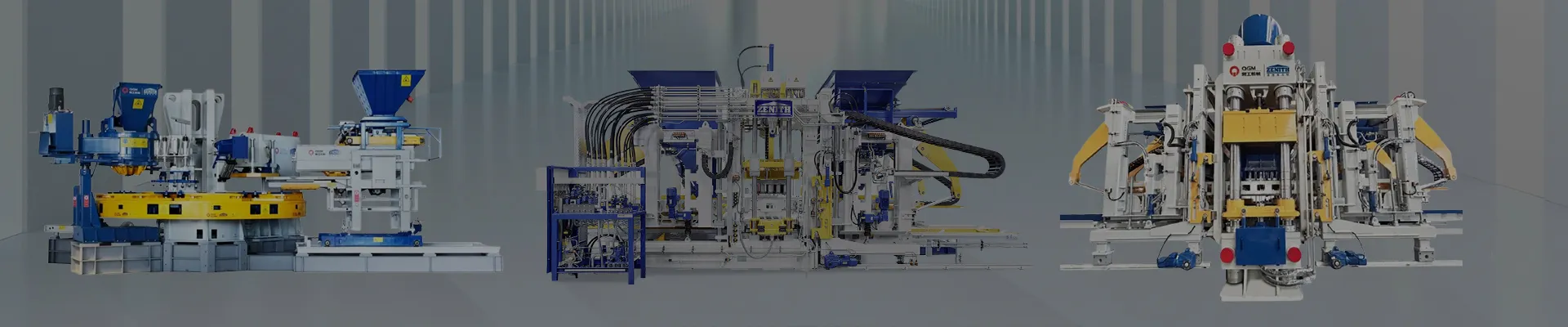
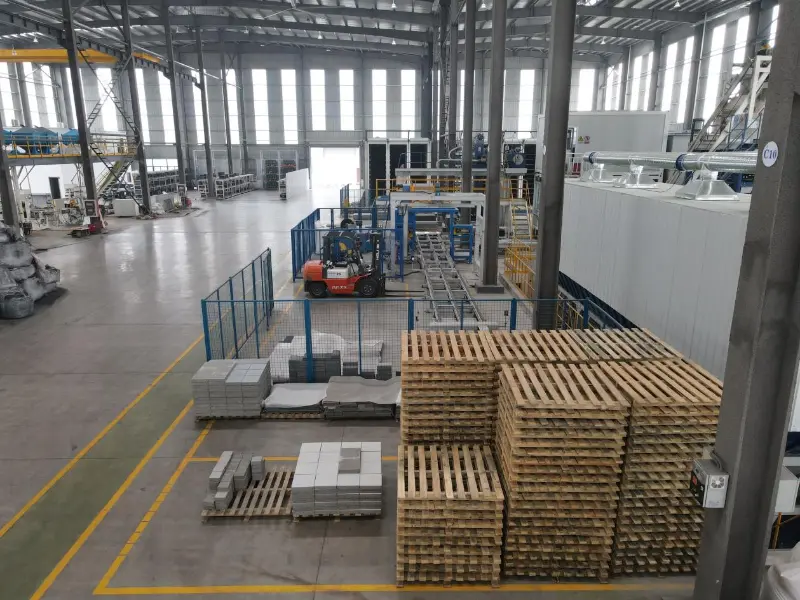
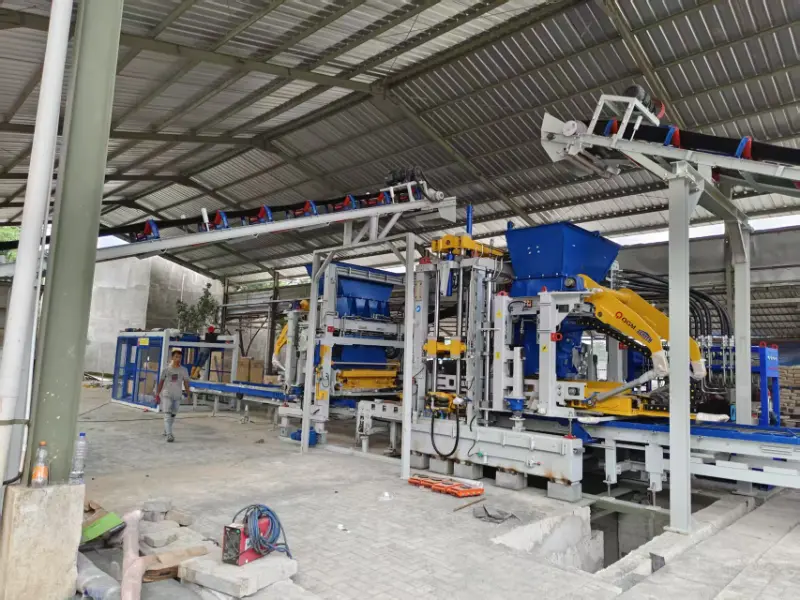
△QGM Concrete Block Production Line in a Global Customer Project
This is particularly important when investing in a complete concrete block production line. A machine that appears economical at the purchasing stage may become considerably more expensive if it requires higher-quality raw materials, more manual labor, frequent maintenance, or prolonged downtime.
For this reason, experienced block manufacturers tend to evaluate equipment from a broader perspective.
Here are three key factors worth considering before selecting an automatic block making machine.
One of the first questions Customers should ask is not simply how many blocks a machine can produce, but:What types of raw materials can the production system process reliably?
This question is becoming increasingly important as manufacturers look for ways to reduce material costs and incorporate industrial and construction waste into concrete products.
Depending on local conditions and product requirements, concrete block production may involve conventional aggregates as well as materials such as:
* Steel slag
* Coal gangue
* Tailings
* Fly ash
* Recycled construction materials
* Other industrial solid waste
However, these materials do not always have consistent characteristics. Particle size, moisture content, grading, density, and material composition can vary significantly.
If the batching and mixing system is not sufficiently adaptable, manufacturers may need to limit the proportion of recycled materials or rely more heavily on conventional aggregates and cement.This can reduce the economic benefits of solid waste recycling.
A well-designed block making machine should work as part of an integrated material-processing system rather than operate independently from the upstream batching and mixing processes.
Accurate batching, effective mixing, stable material feeding, and appropriate vibration and compaction all contribute to producing concrete blocks with consistent density and strength.
For manufacturers using locally available industrial by-products, greater material flexibility can also reduce dependence on conventional raw materials.
QGM, for example, has developed block manufacturing solutions for applications involving industrial solid waste and other alternative materials. In specific projects, resource utilization rates have exceeded 90%, depending on the characteristics of the material and the production process.
The actual results, however, will always depend on the raw materials, mix design, product specifications, and local production conditions.
A showroom demonstration using standardized aggregates does not necessarily reflect the performance you will achieve in your own plant.
A better approach is to provide the manufacturer with representative samples of your actual local materials and request a production or mix-design test.
Pay particular attention to:
* Aggregate particle size and grading
* Moisture content
* Material consistency
* Proportion of recycled materials
* Green block density
* Finished block strength
* Surface quality
The objective is not simply to determine whether the machine can produce blocks.
It is to determine whether the entire concrete block production system can consistently handle the materials available in your market.
Automation has become a standard feature of modern block production equipment.
Most contemporary automatic block making machines include PLC-based control systems, operator interfaces, sensors, and automated material handling.
But the presence of a PLC or touchscreen does not necessarily mean that a production line provides a high level of intelligent manufacturing.
The more important question is:How effectively can the system control, monitor, record, and optimize production?
A modern automated block production line may integrate technologies such as servo-driven systems, automated material dosing, production monitoring, equipment diagnostics, and digital service platforms.
Together, these technologies can help reduce process variability and improve production repeatability.
Concrete products are sensitive to changes in material proportions, moisture, compaction, vibration, molding pressure, and production parameters.
When these variables depend heavily on manual adjustment, production quality can vary between operators or production shifts.
An intelligent control system can help standardize these parameters and make it easier for operators to maintain consistent production conditions.
This becomes particularly valuable when manufacturing products with strict requirements for:
* Dimensional accuracy
* Density
* Compressive strength
* Surface finish
* Product consistency
For example, QGM's automated block production solutions combine machine automation with digital equipment management technologies.
In one ZN900CG fully automatic production line project developed for a strategic customer in Southwest China, project data indicated approximately 30% lower labor requirements, a 5% increase in finished-product yield, and a 12% reduction in unit energy consumption.
Such results should be understood as project-specific outcomes rather than universal performance guarantees, since actual performance depends on product type, raw materials, operating conditions, and production configuration.
When evaluating an automatic concrete block production line, Customers should look beyond the control cabinet.
Ask the equipment manufacturer:
A capable control system should allow operators and managers to review relevant production information rather than relying entirely on manual records.
Material blockage, foreign objects, sensor faults, or other abnormalities should trigger appropriate alarms and protective responses to reduce the risk of equipment damage and production interruptions.
Remote diagnostics can be particularly valuable for block plants operating far from the equipment manufacturer's service center.
When engineers can access relevant machine information remotely, some issues may be identified or resolved without immediately sending an engineer to the site.
Automation, therefore, should be evaluated according to the practical value it creates—not simply by the number of digital features listed in the specification sheet.
Purchase price is one of the most visible costs when buying a block making machine, but it is not necessarily the largest cost over the equipment lifecycle.
For a production-oriented manufacturer, the more useful metric is Total Cost of Ownership (TCO).TCO considers the costs associated with operating and maintaining the equipment throughout its service life.
For a concrete block production line, these costs may include:
* Energy consumption
* Labor requirements
* Routine maintenance
* Wear parts
* Spare parts
* Service and technical support
* Production downtime
* Equipment lifespan
Energy efficiency is an important consideration because block production equipment can operate for long production cycles.
Technologies such as servo vibration, efficient hydraulic systems, optimized material feeding, and intelligent control can potentially reduce energy consumption while maintaining production performance.
For example, project data associated with a Zenith 1500 automatic production line indicated improvements in green-block strength, energy consumption, and labor requirements through the integration of servo vibration, digital diagnostics, and intelligent mix optimization.
However, energy consumption should always be evaluated under comparable production conditions.
A machine's actual energy performance can vary according to product type, production cycle, material characteristics, operating hours, and line configuration.
Another important component of TCO is unplanned downtime.
Consider two machines with different purchase prices.The first machine costs less initially but requires frequent repairs and has limited access to spare parts.The second machine costs more but provides greater reliability, standardized components, technical support, and faster access to replacement parts.
The difference in purchase price may appear significant at the beginning.But if the lower-cost machine experiences repeated production interruptions, the resulting loss of output, labor utilization, and delivery capacity can quickly offset the initial savings.
For a continuous-production concrete block manufacturing plant, production continuity should therefore be considered alongside machine price.
Technical support is particularly important when a block making machine is exported to another country.
Before purchasing, Customers should clarify:
* Where is the manufacturer's service network located?
* How quickly can technical support be provided?
* Are genuine spare parts readily available?
* Which components are considered wear parts?
* What are their expected replacement intervals?
* Can remote technical assistance be provided?
* What support is available during installation and commissioning?
For equipment operating in international markets, these questions can have a direct impact on long-term operating costs.
QGM equipment is used in more than 150 countries and regions, supported by international service resources and spare-parts capabilities.
For manufacturers operating a continuous production line, reliable after-sales support can be just as important as the machine's initial technical specifications.
A practical equipment evaluation should combine technical performance with operating economics.
Instead of comparing machines only by purchase price and rated output, Customers can create a broader evaluation framework covering four areas.
Can the equipment handle the aggregates and alternative materials available locally?
Can the machine maintain stable molding, compaction, product dimensions, and production cycles?
Can the system reduce manual intervention, monitor production conditions, and provide useful operational data?
What will the equipment cost to operate, maintain, repair, and support over its expected service life?
This approach provides a more realistic basis for comparing different concrete block machines and production technologies.
Selecting a fully automatic block making machine should not be reduced to finding the lowest quotation or the highest advertised production capacity.
A production line needs to work as a complete system.
The raw material preparation system must be compatible with the available materials.
The batching and mixing process must provide stable material quality.
The molding machine must provide consistent compaction and product quality.
The automation system must maintain repeatable production parameters.
And the service network must be capable of supporting the equipment throughout its operating life.
From this perspective, three factors deserve particular attention:
Raw material flexibility determines how effectively manufacturers can manage material costs and utilize locally available resources.
Automation capability influences production consistency, labor efficiency, monitoring, and equipment management.
Total Cost of Ownership determines whether the equipment remains economically competitive after years of operation.
A machine with a higher initial price can sometimes deliver better long-term value if it provides greater reliability, lower operating costs, and stronger technical support.
Conversely, a machine with a lower purchase price may not be the most economical choice if its operating and maintenance costs are significantly higher.
The best automatic block making machine is not necessarily the one with the lowest purchase price or the highest headline production capacity.
It is the equipment that matches your raw materials, product requirements, production volume, labor conditions, maintenance capabilities, and long-term business objectives.
Before making a final decision, evaluate the machine through three essential questions:
*Can it process the materials available in my market?
*Can it maintain stable and efficient production with an appropriate level of automation?
*What will the equipment really cost throughout its service life?
By looking beyond the initial quotation and evaluating the complete production system, manufacturers can make more informed equipment investments, reduce operational risks, and build a more reliable and efficient concrete block manufacturing operation.
Key factors include raw material compatibility, automation level, production requirements, energy consumption, labor requirements, maintenance costs, spare parts availability, and after-sales technical support. The machine should be evaluated based on its total cost of ownership rather than purchase price alone.
Yes, depending on the machine configuration, mix design, and characteristics of the raw materials. Materials such as steel slag, coal gangue, tailings, and construction waste may be used in concrete products when the production system can effectively handle variations in particle size, moisture content, and material properties. Material testing before equipment selection is recommended.
Not necessarily. A genuinely intelligent block making machine should provide more than basic PLC control. Features such as production data recording, equipment status monitoring, abnormal-condition alerts, remote diagnostics, and software or program updates can provide greater value for automated block production.
The initial purchase price represents only part of the overall investment. Total Cost of Ownership should also include energy consumption, labor, routine maintenance, wear parts, spare parts, technical support, potential downtime, and equipment service life. A machine with a higher initial price may deliver better long-term value if it operates more efficiently and reliably.
A concrete block production line is a continuous-production system, so unexpected downtime can directly affect output and revenue. Reliable after-sales support, remote diagnostics, spare-parts availability, and timely technical assistance can help reduce downtime and maintain stable production, particularly when equipment is installed overseas.
-