News

Concrete Block Compressive Strength: Standards, Influencing Factors & Manufacturing Solutions

2026-09-03 0 Leave me a message

Understanding the Right Strength Standard for Concrete Block Manufacturing

In the concrete products industry, compressive strength is one of the most important performance indicators for evaluating block quality. However, the ideal strength of a concrete block is not simply the highest value achievable. Instead, it represents the optimal balance between load-bearing capacity, durability, material efficiency, production cost, and application requirements.

For modern concrete block manufacturing, manufacturers need to select the appropriate strength level based on product type, construction environment, and market demand. A high-performance block machine plays a critical role in achieving stable strength, because consistent vibration, precise pressure control, and intelligent production management directly influence the final block performance.

Concrete Block Compressive Strength: Key Factors at a Glance

Compressive Strength Formula:

Strength (MPa) = Maximum Load ÷ Loaded Area

The final strength of concrete blocks depends on multiple production factors:

Influencing Factor

Impact on Block Strength

Raw material ratio

Determines bonding and structural density

Aggregate grading

Controls internal voids and compactness

Water-cement ratio

Affects hydration and durability

Vibration efficiency

Improves material compaction

Forming pressure

Ensures density consistency

Curing conditions

Determines final strength development

Key Principle:

The best concrete block is not the strongest block, but the block with the most suitable strength for its intended application.

Typical Concrete Block Strength Requirements by Application

Different construction applications require different compressive strength levels.

1. Non-Load-Bearing Concrete Blocks

Typical Strength Range: 3.5–7.5 MPa

Common applications:

●Interior partition walls

●Lightweight construction projects

●Thermal insulation applications

Main requirements:

●Lower weight

●Cost efficiency

●Good dimensional stability

2. Load-Bearing Concrete Blocks

Typical Strength Range: 7.5–15 MPa

Common applications:

●Structural walls

●Commercial buildings

●Residential construction

Main requirements:

●Stable load capacity

●High durability

●Long service life

3. Heavy-Duty and High-Performance Blocks

Typical Strength Range: 15–25 MPa or Higher

Common applications:

●Infrastructure projects

●Industrial buildings

●High-strength paving applications

Main requirements:

●Excellent compression resistance

●High wear resistance

●Long-term structural reliability

Strength Comparison Chart

Application                 Strength Range

Partition Block             3.5 — 7.5 MPa

Load-Bearing Block          7.5—15 MPa

Heavy-Duty Block           15—25+ MPa

The required strength depends on engineering standards, regional regulations, and end-use conditions.

How QGM Automatic Block Machines Improve Block Strength Consistency

Achieving stable compressive strength requires more than quality materials. The production equipment must provide precise control throughout the entire forming process.

As a professional block machine manufacturer, QGM integrates advanced forming technologies into its automatic block machine solutions to help customers achieve reliable and repeatable concrete product quality.

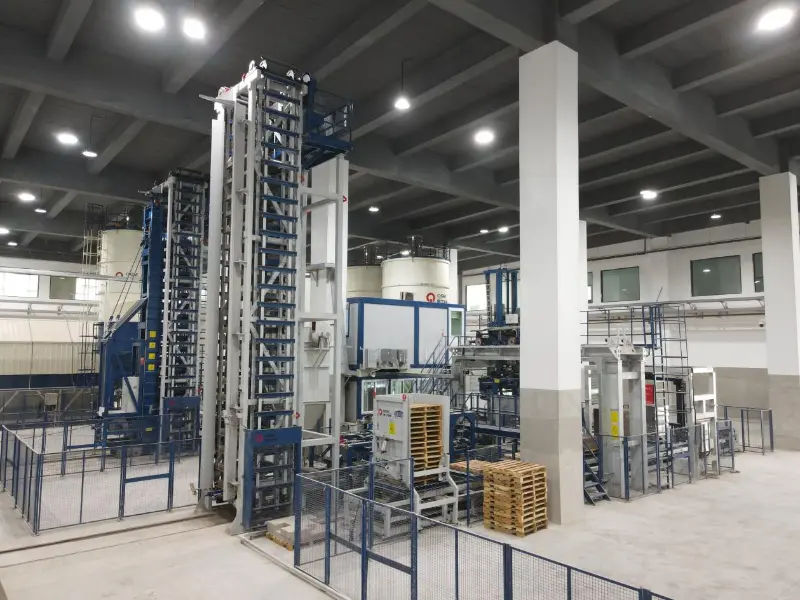
△QGM Automatic Block Machine Operating in Block Factory

1. Zenith Ultra Dynamic Vibration System for Superior Compaction

The vibration process directly affects concrete density and internal structure.

QGM’s Zenith ultra dynamic vibration system applies advanced servo vibration technology to achieve:

●High-speed vibration response

●Precise amplitude adjustment

●Optimized mold filling performance

●Improved material compaction efficiency

By accurately controlling vibration parameters, the system reduces internal voids and enhances block density, helping manufacturers produce higher-quality:

●hollow blocks

●paving blocks

●concrete paving blocks

●landscaping products

2. Hydraulic System Ensures Stable Forming Pressure

Stable forming pressure is essential for maintaining consistent block strength.

QGM automatic block machines utilize advanced hydraulic control technology to provide:

●Accurate pressure regulation

●Smooth mold movement

●Stable forming cycles

●Reduced product variation

A reliable hydraulic system ensures that every production cycle delivers consistent compression performance, which is especially important for large-scale concrete block production line operations.

3. SIEMENS PLC Intelligent Control System for Production Stability

Modern smart block machine technology depends on accurate data control.


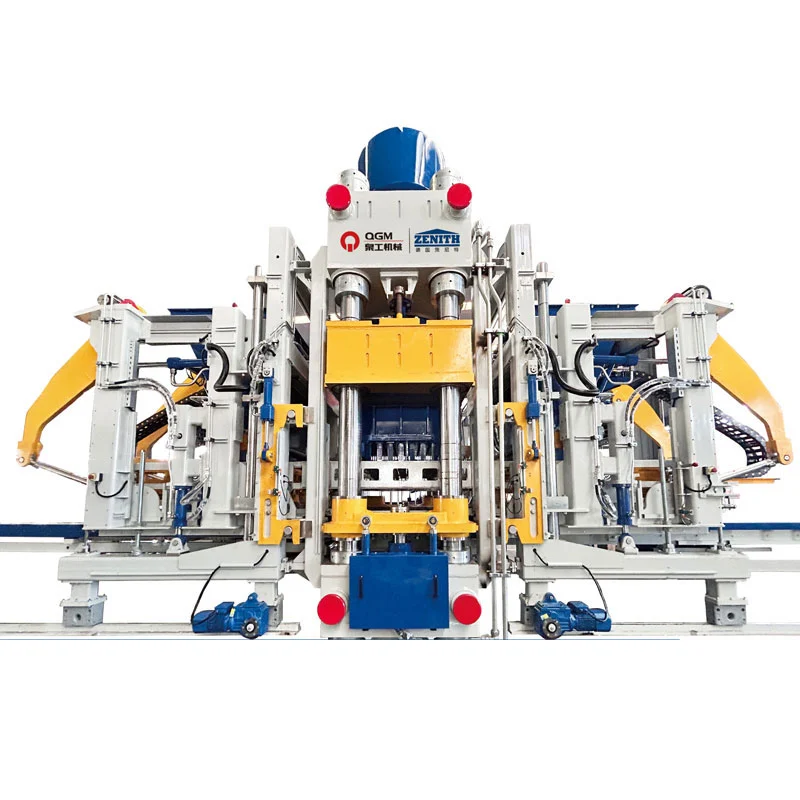
△QGM Automatic Block Machine Performance Intelligent Control System with SIEMENS PLC

QGM integrates SIEMENS PLC control systems with advanced human-machine interfaces to monitor and manage:

●Vibration parameters

●Hydraulic pressure

●Production cycles

●Equipment operating status

Combined with IoT block machine remote monitoring, operators can analyze production data, improve efficiency, and reduce unexpected downtime.

This digital management approach supports the development of:

●intelligent concrete block machine systems

●digital concrete manufacturing system

●automatic block production line

4. Precision Mold Technology Maintains Product Accuracy

The mold directly determines:

●Block dimensions

●Surface quality

●Product appearance

●Production consistency

QGM applies precision mold solutions designed for different products, including:

●concrete blocks

●cement paving blocks

●paver blocks

●landscaping bricks

●customized concrete products

High-precision molds help maintain stable quality during long-term industrial production.

Optimizing Strength Without Increasing Production Cost 

A common misconception is that higher strength requires more cement. In reality, advanced manufacturing technology allows manufacturers to improve strength through better process control.

Optimized production achieves:

Traditional Production

QGM Intelligent Production

Higher cement dependency

Better material utilization

Manual parameter adjustment

Digital process control

Strength fluctuation

Stable product quality

Higher labor requirements

Automated production management

Through efficient vibration, precise hydraulic control, and intelligent automation, QGM helps customers achieve high-strength blocks while maintaining competitive production costs.

The Role of Advanced Block Machines in Modern Concrete Manufacturing

The future of concrete block manufacturing is moving from simple production capacity toward intelligent and sustainable manufacturing.

A modern automatic block production line integrates:

●Raw material batching

●Mixing systems

●Block forming equipment

●Curing solutions

●Automatic cubing systems

●Digital monitoring platforms

QGM provides complete concrete block production line solutions, supporting manufacturers producing:

●hollow block

●solid block

●paving block

●concrete paving block

●curbstone

●ecological landscaping products

●other standard concrete products

Conclusion: Precision Creates Long-Term Block Quality

The ideal compressive strength of concrete blocks is determined by application requirements and manufacturing accuracy. Producing reliable blocks requires the combination of optimized materials, advanced forming technology, intelligent control, and stable production processes.

As a global concrete block machine manufacturer, QGM focuses on delivering high-performance block making machine solutions through advanced vibration technology, intelligent control systems, and complete production line integration.

Whether you are planning a new paving block making machine, upgrading an existing concrete block production line, or building a fully automated smart factory, QGM provides professional equipment solutions and technical support.

For automatic block machine, concrete products equipment, or complete production line requirements, get a free quote today!

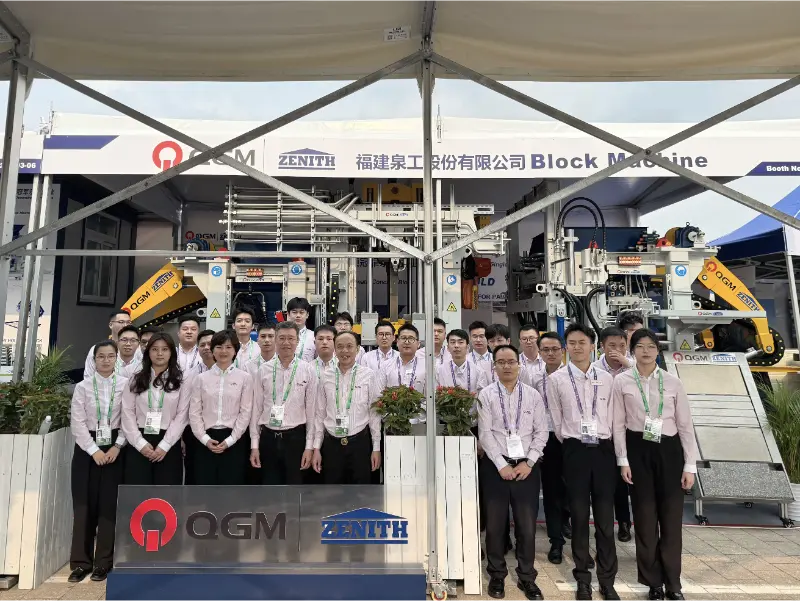
△Block Production Applications

FAQ: Compressive Strength of Concrete Blocks

1. What is the ideal compressive strength for concrete blocks?

The ideal compressive strength depends on the application.

Non-load-bearing blocks typically require 3.5–7.5 MPa, load-bearing blocks require around 7.5–15 MPa, while heavy-duty concrete products may require 15 MPa or higher. The best strength level should match construction requirements rather than simply pursuing maximum strength.

2.How does an automatic block machine improve concrete block strength?

An advanced automatic block machine improves block strength through optimized vibration, stable hydraulic pressure, precise molding control, and consistent production processes. Technologies such as Zenith ultra dynamic vibration system help achieve higher density, better compaction, and more uniform concrete block quality.

3.What factors affect concrete block compressive strength?

The main factors include:raw material mix ratio,aggregate grading,water-cement ratio,vibration efficiency,forming pressure,curing conditions,mold precision.

A complete concrete block manufacturing process requires accurate control of all these factors.

4. Why is intelligent control important for block production?

Intelligent control systems, such as QGM’s SIEMENS PLC-based control system and IoT remote monitoring technology, help manufacturers monitor production data, optimize machine parameters, reduce human errors, and maintain stable block quality in large-scale concrete block production line operations.

5.How can QGM help improve concrete block production efficiency?

As a professional concrete block machine manufacturer, QGM provides complete solutions including automatic block machine, paving block machine, smart control systems, precision molds, and digital production management platforms to help customers achieve higher efficiency, stable quality, and intelligent manufacturing.

Related News
Leave me a message
X
We use cookies to offer you a better browsing experience, analyze site traffic and personalize content. By using this site, you agree to our use of cookies.Privacy Policy