Setting up a concrete block manufacturing plant involves more than purchasing a block making machine. The total investment typically covers land and factory construction, production equipment, raw material storage and handling, utilities, installation, labor, permits, and initial working capital.
The actual concrete block manufacturing plant cost depends on several factors: the planned production capacity, product range, level of automation, local construction costs, raw material availability, and the scope of equipment included in the production line.
For a new investor, the important question is not simply how much a concrete block factory costs to build. It is how to allocate the investment across the entire production process, choose equipment that matches real manufacturing requirements, and avoid paying for capacity or functions that the business does not yet need.
This guide breaks down the major investment categories, explains the factors that influence equipment costs, and outlines a practical approach to planning a concrete block production plant.
Before requesting equipment quotations, investors should establish a complete project budget. A concrete block factory is an interconnected production operation, and overlooking supporting facilities can lead to unexpected expenses after equipment arrives.
The main investment categories are outlined below.
1.1 Land Purchase or Factory Site Preparation
The location of a concrete block manufacturing plant affects both initial investment and long-term operating expenses.
If the investor already owns suitable industrial land, the project may only require site preparation and infrastructure improvements. Otherwise, land purchase or leasing becomes part of the initial capital requirement.
Site-related expenses may include:
•Industrial land purchase or lease.
•Ground leveling and soil preparation.
•Foundation and drainage construction.
•Internal roads and truck access.
•Raw material storage areas.
•Finished product storage and loading zones.
The site should also provide sufficient space for production equipment, material storage, curing, finished product handling, and potential future expansion.
A low-cost site is not necessarily an economical choice if it creates difficulties with transportation, drainage, utilities, or logistics.
1.2 Factory Buildings and Civil Engineering Works
The factory layout must accommodate more than the main block molding machine. Batching, mixing, molding, product handling, curing, and storage all require appropriate working areas.
Construction costs may include:
•Production workshop construction.
•Equipment foundations and installation bases.
•Raw material storage facilities.
•Cement silos and supporting structures.
•Curing areas or curing chambers.
•Electrical rooms and control facilities.
•Drainage, ventilation, and lighting systems.
The required building size depends on the production process and the selected equipment configuration.
For example, a production line with an automated curing and handling system may require a different workshop layout from a compact production arrangement using simpler material transfer methods.
Investment consideration: Finalize the preliminary production layout before committing to major civil engineering work. Changing foundations, workshop dimensions, or equipment access routes after construction can create avoidable costs.
1.3 Concrete Block Making Machines and Production Line Equipment
Production equipment is usually one of the most important parts of the initial investment.
However, a concrete block manufacturing plant does not consist of a block machine alone. A complete production process may require several interconnected systems.
|
Equipment Category |
Main Function |
|
Batching system |
Measures and proportions aggregates and other raw materials |
|
Mixing system |
Produces a uniform concrete mixture |
|
Block making machine |
Forms concrete blocks through molding and compaction |
|
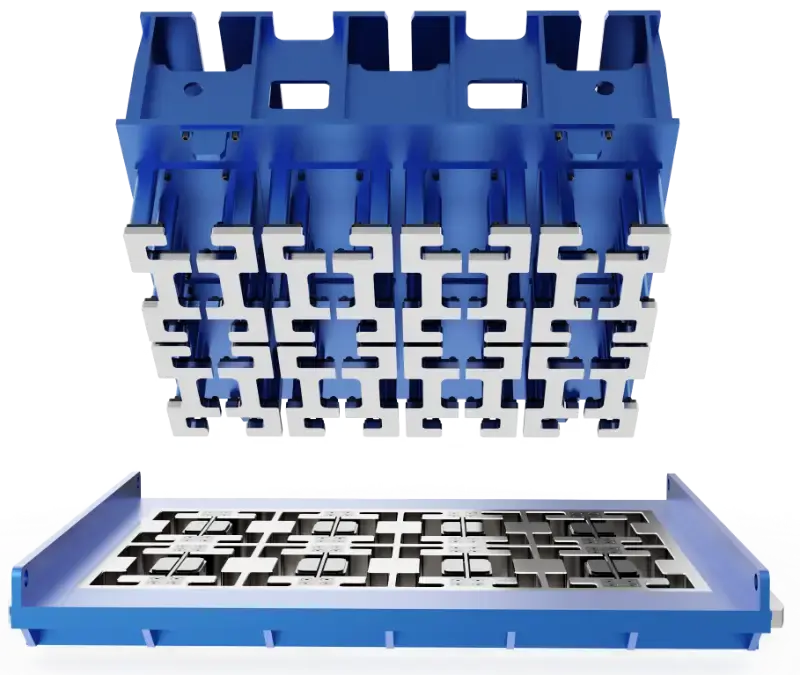
Molds |
Determine product dimensions, shapes, and configurations |
|
Pallet system |
Supports product transfer and handling where applicable |
|
Conveyor system |
Transfers materials or products between production stages |
|
Curing system |
Provides the required conditions for concrete product curing |
|
Cubing and packaging system |
Organizes finished products for storage and transportation |
|
Electrical and control system |
Coordinates production equipment and operating processes |
*Not every plant requires every component in the same configuration. The necessary equipment depends on the production method, product range, target output, and desired automation level.
1.4 Raw Materials and Initial Inventory
A concrete block factory needs a reliable supply of suitable raw materials before production can begin.
Common materials include:
•Cement.
•Sand.
•Crushed stone and aggregates.
•Stone powder or other suitable mineral materials.
•Pigments for colored concrete products, where required.
•Admixtures, depending on the concrete mix design.
The initial inventory investment depends on local material prices, transportation distances, supplier payment terms, and the planned production schedule.
Raw material quality also matters. Variations in aggregate grading, moisture content, and material composition can affect concrete mixing and the consistency of finished products.
It is therefore important to evaluate local raw material sources before selecting the production equipment and finalizing the factory's operating budget.
1.5 Electricity, Water, and Other Utilities
Utilities are part of both the initial project cost and ongoing operating expenses.
The initial investment may include:
•Electrical connection and distribution facilities.
•Transformers and supporting electrical infrastructure, if required.
•Industrial water supply.
•Water storage and distribution systems.
•Compressed air equipment, where required.
•Lighting and other workshop utilities.
The required electrical capacity should be assessed against the total installed power of the production line and its operating characteristics, rather than the main block machine alone.
Water requirements also depend on the concrete mix, cleaning operations, and the selected production process.
For investors comparing different block machine configurations, utility requirements should be included in the technical and financial evaluation from the beginning.
1.6 Installation, Commissioning, and Operator Training
Equipment purchase is only one part of the project. The production line must also be transported, installed, commissioned, and operated correctly.
Related expenses may include:
•International or domestic freight.
•Shipping insurance and customs-related charges.
•Equipment unloading and positioning.
•Installation and commissioning.
•Electrical and mechanical connection.
•Operator and maintenance training.
•Initial production testing.
The scope of installation support should be clarified when evaluating suppliers. It is important to understand which services are included in the equipment quotation and which must be arranged locally.
1.7 Labor, Maintenance, and Spare Parts
A concrete block production plant needs personnel for production operation, material handling, quality inspection, equipment maintenance, and warehouse management.
The number of employees depends on the production line's automation level and factory organization.
Investors should also consider the cost of:
•Operator recruitment and training.
•Maintenance personnel.
•Routine equipment inspection.
•Lubricants and consumables.
•Replacement parts.
•Mold maintenance and replacement.
•Equipment servicing.
A machine with a lower purchase price may not necessarily result in a lower total project cost if it requires more manual handling, frequent maintenance, or additional labor.
1.8 Permits, Environmental Compliance, and Safety Facilities
Depending on local regulations, a concrete block factory may need to account for industrial construction approvals, environmental requirements, occupational safety measures, and other operating permits.
Potential expenses include:
•Business and industrial operating permits.
•Environmental assessments and approvals.
•Dust collection systems.
•Noise control measures.
•Wastewater management, where applicable.
•Fire protection and workplace safety facilities.
Requirements vary significantly by country and industrial zone. Investors should confirm local regulatory obligations before finalizing the project budget.
1.9 Working Capital and Contingency Budget
A factory needs sufficient funds not only to complete construction but also to maintain operations during the initial production period.
Working capital may cover:
•Raw material purchases.
•Employee salaries.
•Electricity and water bills.
•Transportation and distribution.
•Maintenance and spare parts.
•Customer credit periods and receivables.
•General operating expenses.
It is also sensible to reserve a contingency budget for unexpected construction work, equipment installation adjustments, material price changes, or project delays.
After identifying the main cost categories, investors need to understand why the total investment can vary considerably between projects.
2.1 Production Capacity: How Much Do You Actually Need to Produce?
Production capacity is one of the main factors influencing equipment selection and factory investment.
A plant designed to supply a local construction market may have very different requirements from a large manufacturer serving multiple distributors or infrastructure projects.
Before selecting a machine, estimate:
•Expected daily and annual product demand.
•Planned operating hours and shifts.
•Product mix and changes between product types.
•Seasonal demand fluctuations.
•Expected business growth.
Avoid selecting equipment solely because it offers the highest advertised output. A production line with excessive capacity may increase the initial investment, utility requirements, staffing needs, and storage demand without generating corresponding sales.
On the other hand, insufficient capacity can restrict business development and make future expansion more complicated.
The objective is to match the production line with realistic market demand and a reasonable growth plan.
2.2 Product Range: Different Blocks Require Different Configurations
The type of concrete products you plan to manufacture directly affects the equipment and mold requirements.
For example:
|
Target Product |
Key Equipment Considerations |
|
Hollow blocks |
Suitable molding machine, molds, and material feeding system |
|
Solid concrete blocks |
Product dimensions, mold configuration, and compaction requirements |
|
Concrete paving blocks |
Surface requirements, color handling, and suitable molds |
|
Curbstones |
Product dimensions, mold design, and handling arrangements |
|
Grass pavers |
Product geometry and specialized mold configuration |
|
Decorative concrete products |
Required surface appearance and additional finishing processes |
A manufacturer producing several types of concrete products may need a more flexible machine configuration and additional molds.
However, offering more products does not automatically mean investing in the most complex production line. The product range should be prioritized according to market demand, production feasibility, and expected sales.
2.3 Automation Level: Balance Labor Costs and Capital Investment
Automation has a direct influence on the configuration and investment of a concrete block production line.
A production plant may use a relatively simple setup with more manual handling, or a more integrated arrangement involving automated batching, material transfer, product handling, curing, and stacking.
Higher automation can reduce certain manual handling requirements and improve coordination between production stages. However, it may also require a larger initial investment, more sophisticated controls, and suitable technical personnel.
The right choice depends on local labor costs, production targets, operating experience, and available capital.
For a new investor, a phased automation strategy may be worth considering: establish the essential production process first, then evaluate additional automation when demand and operating conditions justify the investment.
2.4 Raw Material Conditions and Local Production Environment
A production line should be designed around the materials that are actually available to the factory.
Aggregate moisture, particle size distribution, material consistency, and cement characteristics can all influence the concrete mix and production process.
Local environmental conditions should also be considered. High temperatures, humidity, rainfall, and seasonal changes may affect raw material storage, production organization, and curing arrangements.
Ignoring these factors during equipment planning can create problems after installation, even if the selected machine appears suitable on paper.
2.5 Factory Layout and Future Expansion
The available site area and workshop arrangement influence how efficiently the production line can be installed and operated.
A well-planned layout should account for:
•Raw material delivery and storage.
•Batching and mixing operations.
•Main machine installation.
•Product transfer and curing.
•Finished product stacking.
•Truck loading and dispatch.
•Maintenance access and safety zones.
It is also worth considering whether the site can accommodate additional molds, handling equipment, or a future production line.
Planning for expansion does not mean purchasing all future equipment immediately. It means avoiding unnecessary layout restrictions that could make later investment more expensive.
Knowing the cost categories is only the first step. The next challenge is deciding where to invest, where to simplify, and where cutting costs may create bigger problems later.
3.1 Start with Market Demand, Not Machine Specifications
Before comparing concrete block making machines, identify the products that customers in your target market actually purchase.
Investigate local demand for hollow blocks, solid blocks, paving blocks, curbstones, and other concrete products. Consider the number of potential buyers, competing suppliers, transportation costs, and expected selling prices.
This market assessment helps establish a realistic production target.
A machine's technical capability is valuable only when it supports products that the factory can manufacture and sell.
3.2 Select Equipment According to Your Actual Production Process
A concrete block production line should be evaluated as a connected system.
For example, choosing a high-capacity block machine without sufficient batching, mixing, curing, or product handling capacity may create bottlenecks elsewhere in the factory.
Likewise, investing in a fully automated handling system may not be economically justified when the planned output is relatively modest.
Instead of purchasing equipment based on isolated specifications, compare the capacity and operating requirements of each production stage.
3.3 Evaluate Total Cost of Ownership, Not Just the Purchase Price
The initial quotation is only one part of the financial picture.
A more complete equipment evaluation should consider the total cost of ownership (TCO), including:
- Initial equipment purchase.
•Freight, installation, and commissioning.
•Electricity and other utility consumption.
•Labor requirements.
•Routine maintenance.
•Spare parts and consumables.
•Mold costs.
•Expected service and support requirements.
Two machines with similar purchase prices may have different operating requirements. Conversely, a more expensive configuration may not be the right choice if its additional functions are not needed by the factory.
A meaningful comparison should therefore use the same production assumptions, product specifications, operating hours, and cost categories.
3.4 Avoid Buying Automation That Your Business Cannot Fully Utilize
Automation should solve a specific production problem.
If labor is expensive or the factory needs consistent output across multiple shifts, additional automation may be justified. If production volume is still developing, a simpler configuration may be more appropriate.
Before adding automated curing, stacking, or conveying systems, consider:
•Whether the production target requires them.
•Whether the factory has enough space.
•Whether local operators can maintain the equipment.
•Whether the additional investment can be supported by actual business demand.
The best configuration is not necessarily the most automated one. It is the one that fits the factory's operating conditions and business plan.
3.5 Do Not Underestimate Molds and Product Changeovers
Molds are essential to concrete block production because they determine the shape and dimensions of finished products.
A factory planning to manufacture several product types should include mold investment in its budget from the beginning.
However, purchasing too many molds before confirming market demand can tie up capital unnecessarily.
Start with the products that have the strongest commercial potential. Additional molds can be introduced as the product portfolio expands.
3.6 Plan the Factory Layout Before Ordering Equipment
A practical production layout can reduce material transfer distances, avoid unnecessary handling, and simplify maintenance access.
It should also account for future expansion, truck movement, raw material delivery, finished product storage, and worker safety.
A layout designed only around the dimensions of the main machine may overlook the space required by supporting systems.
Coordinating equipment selection with the factory layout before construction is generally more economical than modifying the site after installation.
Once the investment framework is clear, equipment selection becomes the next major decision.
This is where a manufacturer's engineering experience and ability to configure a complete production solution matter. A quotation based only on a machine model cannot fully reflect the actual requirements of a concrete block manufacturing project.
QGM (Quangong Machinery Co., Ltd.) has more than 40 years of experience in concrete block making equipment manufacturing. Founded in 1979, the company provides block making machines and integrated production solutions for manufacturers in different markets.
Following its full acquisition of Germany's Zenith Maschinenfabrik GmbH in 2014, QGM further strengthened its technical capabilities through the integration of German engineering expertise and manufacturing resources.
More importantly, equipment selection should begin with the customer's production conditions rather than a predetermined machine model.
4.1 Equipment Configuration Based on Four Key Project Requirements
QGM evaluates the production requirements of each project through several important factors.
1) Raw Materials
The available cement, sand, aggregates, stone powder, and other suitable materials need to be considered when planning the batching and mixing system.
Differences in material characteristics and local supply conditions can influence the production process and equipment configuration.
2)Target Products
The intended product range determines the molding machine requirements, mold configuration, and related handling arrangements.
Whether a factory produces hollow blocks, solid blocks, concrete paving blocks, curbstones, or multiple product types, the proposed equipment should reflect those requirements.
3) Production Capacity
The expected production volume, operating hours, and business development plan help determine the appropriate machine model and supporting equipment capacity.
The objective is to establish a production arrangement that matches the customer's actual demand rather than simply selecting the largest available machine.
4) Automation Requirements
QGM can evaluate the appropriate level of automation according to the factory's labor conditions, investment budget, production targets, and operating capabilities.
Depending on the project, the proposed configuration may include batching and mixing systems, automatic material transfer, curing arrangements, product handling, and stacking systems.
By considering these factors together, the equipment proposal can be developed around the customer's actual manufacturing requirements.
4.2 Different Production Solutions for Different Investment Plans
Not every concrete block factory needs the same production arrangement.
For some projects, a relatively compact production line may be sufficient to serve a local market. Other manufacturers may require a more integrated system to support multiple product categories, higher output, or reduced manual handling.
QGM offers equipment options across different production requirements, including:
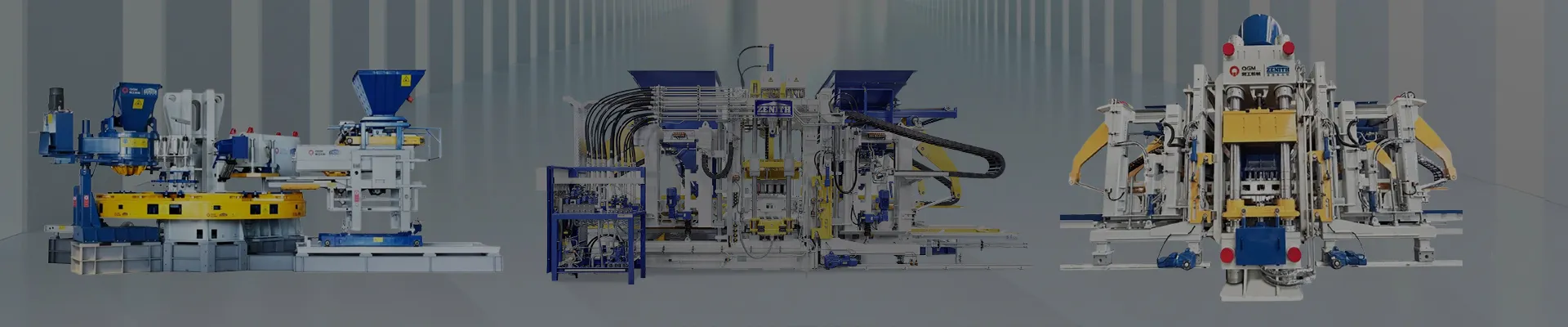
- T Series: Automatic block making equipment for projects requiring an appropriate production configuration based on their target output and product range.
- ZN Series: Automatic concrete block making machines designed for flexible production and different concrete product applications.
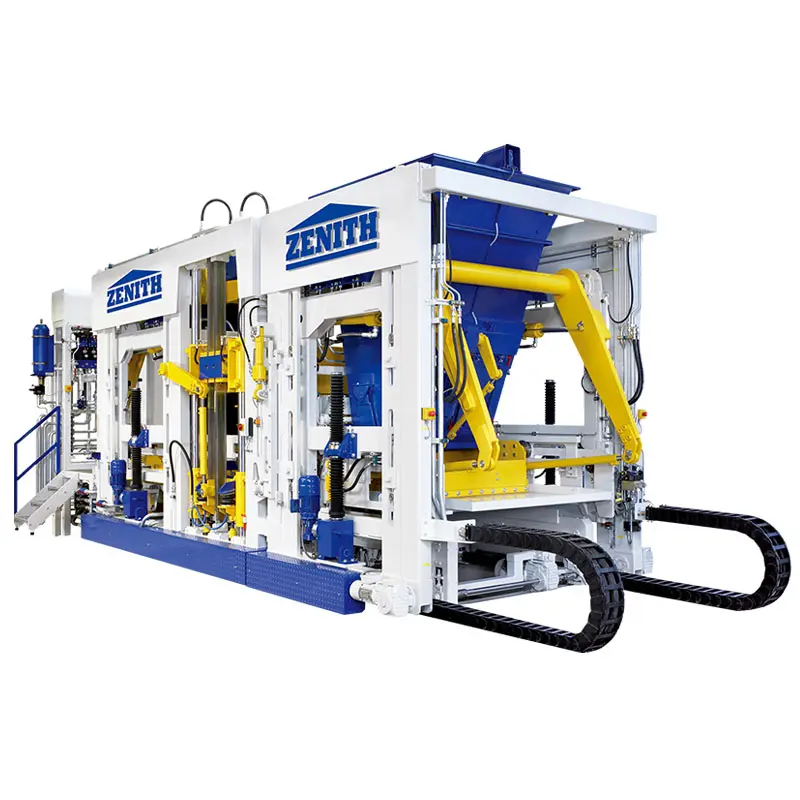
- ZENITH Series: German-engineered concrete block production equipment for projects requiring specific machine capabilities and production configurations.
The appropriate series and supporting equipment should be determined after evaluating the project, rather than assuming that one machine model is suitable for every factory.
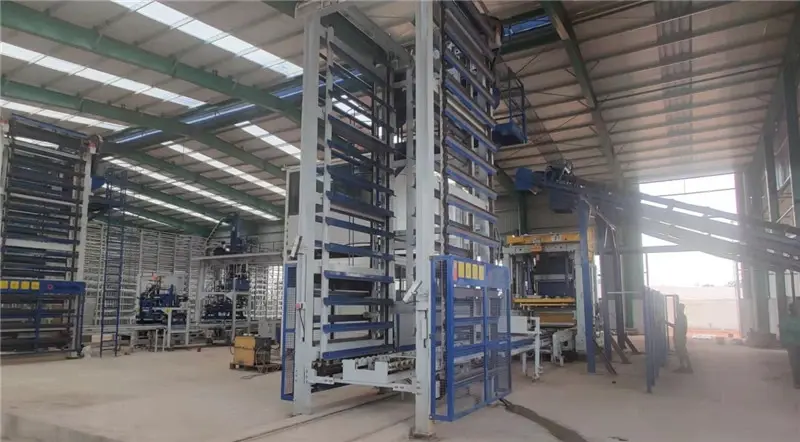
4.3 Overseas Project Example: Zenith 1500-2 Production Line in Mali
A practical example of project-based equipment configuration can be seen in QGM's Zenith 1500-2 installation in Mali.
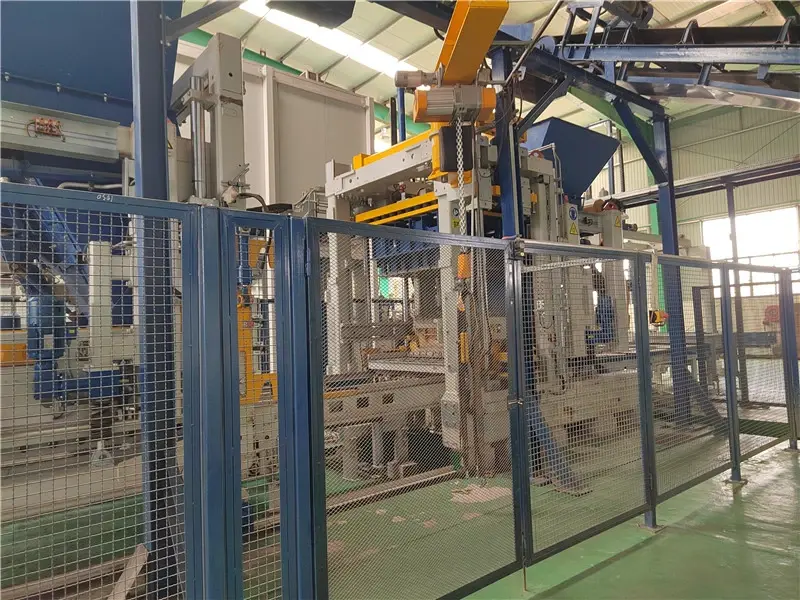
For this project, the customer selected the Zenith 1500-2 as the core block making machine, together with a batching and mixing system, finger car system, product delivery equipment, and cubing system developed and manufactured by QGM.
The ZENITH 1500 block making machine offers versatile production capabilities, allowing manufacturers to switch between different concrete products simply by changing the mould and adjusting machine parameters. From paving blocks and hollow blocks to solid blocks and curbstones, the production line accommodates a wide range of manufacturing requirements. Its user-friendly operation also makes product changeovers more convenient and efficient. The customer expressed repeated appreciation for the machine’s flexibility and ease of operation.
Read more: [Zenith 1500-2 Concrete Block Machine Project Put into Operation in Mali]
The cost of building a concrete block manufacturing plant cannot be determined by the price of a block making machine alone. Land, construction, production equipment, raw materials, utilities, installation, labor, compliance, and working capital all contribute to the overall investment.
The most effective way to control these costs is to plan the entire production process before purchasing equipment.
Start by understanding your local market and target products. Then evaluate raw material availability, establish a realistic production target, determine the appropriate automation level, and select equipment that matches the factory's actual operating conditions.
For investors who are still comparing suppliers or preparing a new project, QGM can help assess the production requirements and develop an equipment configuration based on raw materials, target products, expected capacity, and automation needs.
Planning a new concrete block manufacturing plant?
Share your project location, available raw materials, target products, expected production capacity, and automation preferences with QGM. These details provide a practical starting point for discussing equipment selection, production line configuration, and the investment scope of your project.
A well-planned factory does not necessarily require the largest machine or the highest automation level. It requires the right combination of equipment, production capacity, and supporting systems for the business you intend to build.
1. How much does it cost to build a concrete block manufacturing plant?
The total cost varies according to land prices, factory construction, production capacity, equipment configuration, automation level, raw material costs, installation, and working capital. There is no single price that applies to every project. A reliable estimate requires a defined production target, product range, site conditions, and equipment scope.
2. What equipment is needed to start a concrete block factory?
A typical concrete block production plant may require a batching system, concrete mixer, block making machine, molds, material handling equipment, curing arrangements, and finished product handling or cubing equipment. The exact configuration depends on the products, production capacity, and automation requirements.
3. What factors affect the price of a concrete block making machine?
The main factors include machine model, production capacity, automation level, vibration and hydraulic systems, mold requirements, control configuration, and supporting equipment. The final quotation also depends on the scope of supply and project-specific requirements.
4. Is a fully automatic concrete block production line worth the investment?
It depends on production volume, labor costs, operating hours, available capital, and the factory's technical capabilities. A fully automatic line may be appropriate for manufacturers requiring higher output and integrated material handling. For smaller or developing operations, a more compact configuration may be a better starting point.
5. How can I reduce the initial investment in a concrete block manufacturing plant?
Begin with realistic market demand and prioritize the products with the strongest sales potential. Select a suitable machine capacity, avoid unnecessary automation, plan the factory layout before construction, and purchase molds according to actual product requirements. It is also important to consider maintenance, utilities, and working capital rather than focusing only on the initial equipment price.
6. Can a concrete block production line manufacture different types of products?
Yes, depending on the machine configuration and compatible molds. Many concrete block machines can be configured to produce different concrete products, such as hollow blocks, solid blocks, paving blocks, and curbstones. Product dimensions, mold design, concrete mix, and changeover requirements should be evaluated before confirming the configuration.
7. How does QGM determine the right production line configuration?
QGM evaluates the customer's available raw materials, target products, expected production capacity, and automation requirements. These factors help determine the appropriate machine model and supporting systems, including batching, mixing, conveying, curing, and product handling equipment where required.