China mobile brick making machinery Manufacturer, Supplier, Factory
Mobile brick making machinery redefines on-site production by merging portability with industrial-grade output. Designed to operate in remote locations, these units eliminate the need for fixed infrastructure while delivering consistent block quality. The core advantage lies in their hydraulic pressing system, which compacts raw materials at pressures exceeding 20 MPa, producing bricks with compressive strength from 15 to 30 MPa depending on the mix design. Operators can switch between standard solid bricks, hollow blocks, and paving stones within minutes using quick-change molds. For facilities seeking higher automation, our range includes electric brick making machinery that integrates PLC controls to regulate feed rate, vibration frequency, and pressing cycles with 0.1-second precision. Those targeting decorative applications will find the Imitation Stone Brick Machinery series replicates natural stone textures through synchronized mold vibration and pigmentation layers. A standout in this category is the Intelligent Imitation Stone Brick Machine, which uses sensor-based feedback to adjust compression force based on material moisture content, virtually eliminating rejects. The broader Intelligent Imitation Stone Brick Machinery lineup extends this with self-diagnostic modules that predict wear on wearing parts like mixer blades and mold liners, scheduling maintenance automatically.
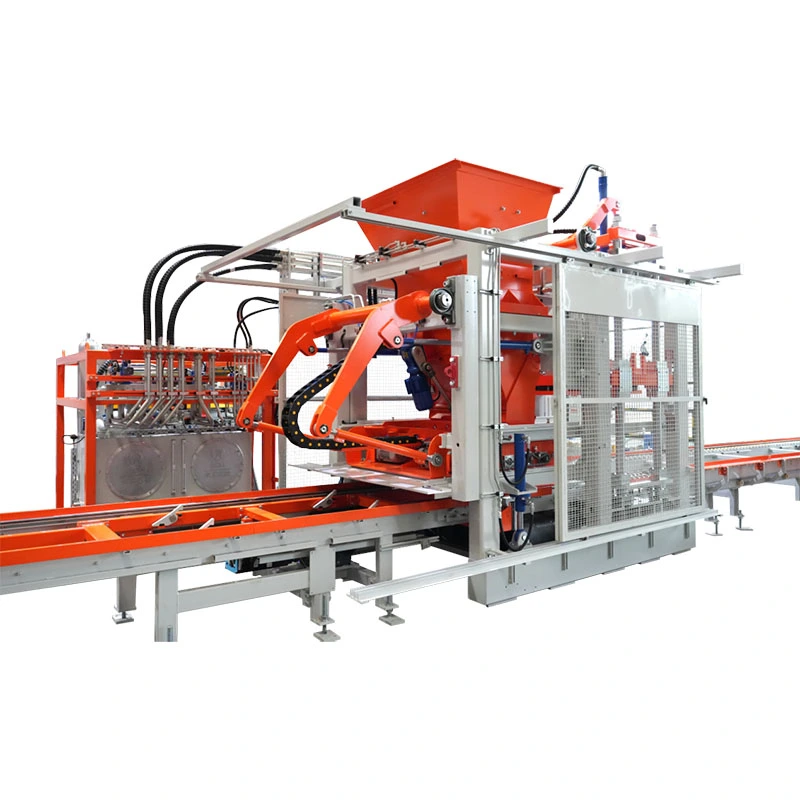
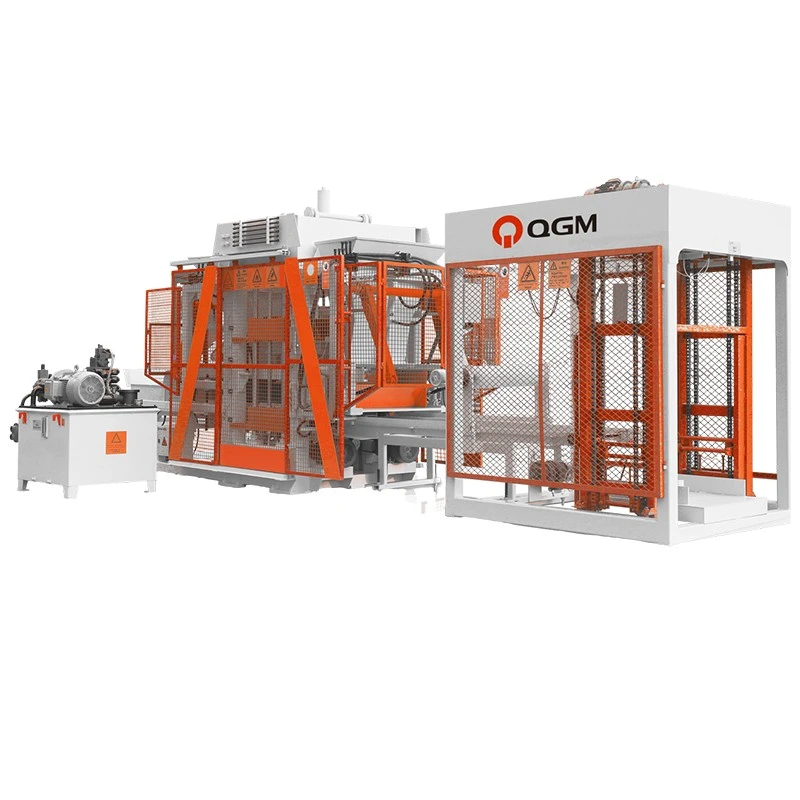
The mobile brick making machinery offers rapid setup, typically requiring under two hours from trailer to first brick. A 4-wheel trailer chassis with torsion axle suspension allows transport behind standard pickups on paved and unpaved roads. Power comes from a liquid-cooled diesel engine (optional electric motor with VFD) driving a load-sensing hydraulic pump. The hopper holds 0.4 cubic meters of premixed material, feeding a twin-shaft compulsory mixer that ensures uniform moisture distribution. A servo-driven mold table handles molds up to 1,100mm by 600mm, with a vertical stroke of 400mm. Cycle time ranges from 15 to 22 seconds, translating to output rates between 1,440 and 2,880 bricks per 8-hour shift for standard 240x115x53mm units. Vibration is generated by two counter-rotating eccentric shafts producing 4,200 rpm and 18 kN centrifugal force, applied directly through the mold box.
Key performance indicators are listed below to illustrate the machine's capabilities across typical materials:
- Clay brick compressive strength: 18–25 MPa with 10–12% water content
- Fly ash brick: 12–18 MPa using 60% fly ash, 30% sand, 10% cement binder
- Quarry dust block: 15–22 MPa with aggregate size <6mm
- Paver interlock: 55–70 MPa utilizing zero-slump concrete
- Hydraulic oil operating temperature: 45–65 °C (cooler rated to 28 kW heat rejection)
- Noise level: 76 dB(A) at operator position, compliant with EU Directive 2000/14/EC
Technical specifications are summarized in the table below, covering the diesel-driven and electric-driven variants side by side for direct comparison:
| Parameter | Diesel Model (MBM-260D) | Electric Model (MBM-260E) |
|---|
| Engine / Motor | 4-cylinder turbo diesel, 74 hp | 37 kW, 400 V, 3-phase |
| Hydraulic system pressure (max) | 25 MPa | 25 MPa |
| Mold size (LxW) | 1,100 x 600 mm | 1,100 x 600 mm |
| Vibration frequency | 4,200 rpm | 4,200 rpm (VFD controlled) |
| Production capacity (solid brick) | 2,880 pcs/8h | 3,120 pcs/8h |
| Fuel / Power consumption | 4.2 L/h diesel | 22 kWh |
| Machine weight | 4.8 tonnes | 4.5 tonnes |
| Dimensions (LxWxH, operating) | 5.2 x 2.2 x 2.4 m | 5.2 x 2.2 x 2.4 m |
Routine serviceability receives attention through centralized grease banks, tool-less mold change levers, and an integrated pressure gauge test port. The frame uses structural steel with bolt-on crossmembers, allowing replacement of individual sections if damaged. All hydraulic hoses are wrapped in abrasion-resistant sleeve and routed away from pinch points. A water spray system suppresses dust during mixing while also assisting mold release. The control station includes e-stop buttons on both sides, a manual override for the mold stroke, and a real-time production counter with USB export. Optional upgrades include a batch weighing system accurate to ±50 grams, a color pigment metering unit, and a stacker conveyor with clamp turnover. When operated as part of a mobile unit fleet, the machinery reduces transport costs by eliminating double handling of finished product and allowing immediate quality inspection at the job site. The combination of portability, robust engineering, and high output positions this equipment as a strategic asset for road contractors, rural housing developers, and rental service providers who need to adapt to shifting project locations while maintaining tight production schedules.