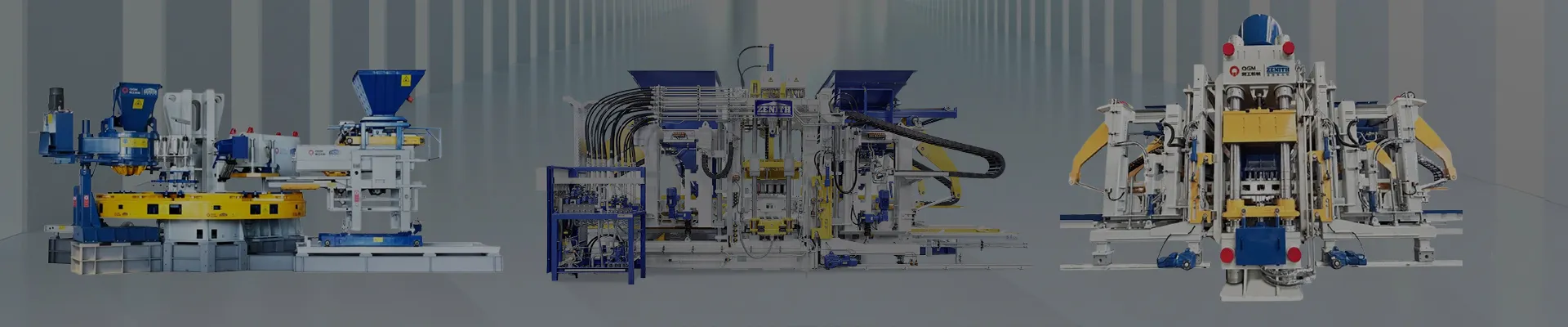
China Solid waste brick making machine Manufacturer, Supplier, Factory
The solid waste brick making machine transforms modern construction by repurposing materials like fly ash, slag, and demolition debris into high-strength bricks. This sustainable solution complements traditional setups, working alongside a cement brick machine when projects demand precise cement blends. For large-scale automated production that eliminates the need for kiln firing, the Fully automatic no-burning brick machine provides a comparable workflow with enhanced material handling. The core compression technology mirrors the reliability of a Static press brick machine, using substantial hydraulic force to compact loose waste into uniform blocks. Manufacturers also integrate it with Cement Block Machinery to diversify output, producing hollow blocks, solid bricks, and interlocking pavers on a single line. The design prioritizes energy efficiency, reducing operational costs while meeting strict environmental regulations. Features include quick-change molds for various profiles, a robust frame that minimizes vibration, and a smart monitoring panel that tracks cycle times, material feed, and output volumes in real time.
The Solid waste brick making machine is engineered for demanding production environments, offering exceptional adaptability and durability. Detailed technical specifications are listed below to guide equipment selection:
- Waste Processing Rate: 4–8 cubic meters per hour, depending on material density
- Brick Dimensions: 240x115x53mm, 200x100x60mm, 390x190x190mm, and custom profiles
- Forming Pressure: 180–220 tons, hydraulically adjustable for different raw mixes
- Installed Power: 30 kW, three-phase 380V/50Hz with soft-start protection
- Overall Weight: 9.2 tons, seated on vibration-dampening mounts
- Cycle Time: 10–15 seconds per pallet, yielding consistent block geometry
- Mold Construction: Heat-treated steel with replaceable wear liners
- Control Architecture: Siemens PLC with touchscreen HMI for recipe storage and fault diagnostics
A comparative overview of standard models is provided in the table below:
| Model | Daily Output (pieces) | Molding Cycle (seconds) | Pallet Size (mm) | Main Motor (kW) | Hydraulic Station (L) |
|---|
| SWB-4 | 4,000–5,500 | 14–18 | 900x550 | 18.5 | 120 |
| SWB-6 | 6,000–8,000 | 12–15 | 1100x550 | 22 | 160 |
| SWB-10 | 10,000–12,000 | 10–12 | 1200x600 | 30 | 200 |
| SWB-15 | 15,000–18,000 | 8–10 | 1400x700 | 37 | 250 |
The Solid waste brick making machine incorporates a centralized hydraulic system with proportional valves for precise speed control, ensuring uniform density across all bricks. A pre-feeding mixer and conveyor belt homogenize waste streams before compaction. Safety provisions include emergency stop circuits, overload sensors, and enclosed guarding for moving parts. After forming, bricks are automatically stacked for air curing or low-pressure steam curing, achieving compressive strengths of 18–25 MPa within 28 days. Maintenance access points are strategically placed, and the modular control cabinet simplifies troubleshooting. With low binder consumption and the ability to process up to 85% recycled content, this equipment delivers consistent output even under continuous operation, making it a practical choice for expanding production capacity while lowering environmental impact.