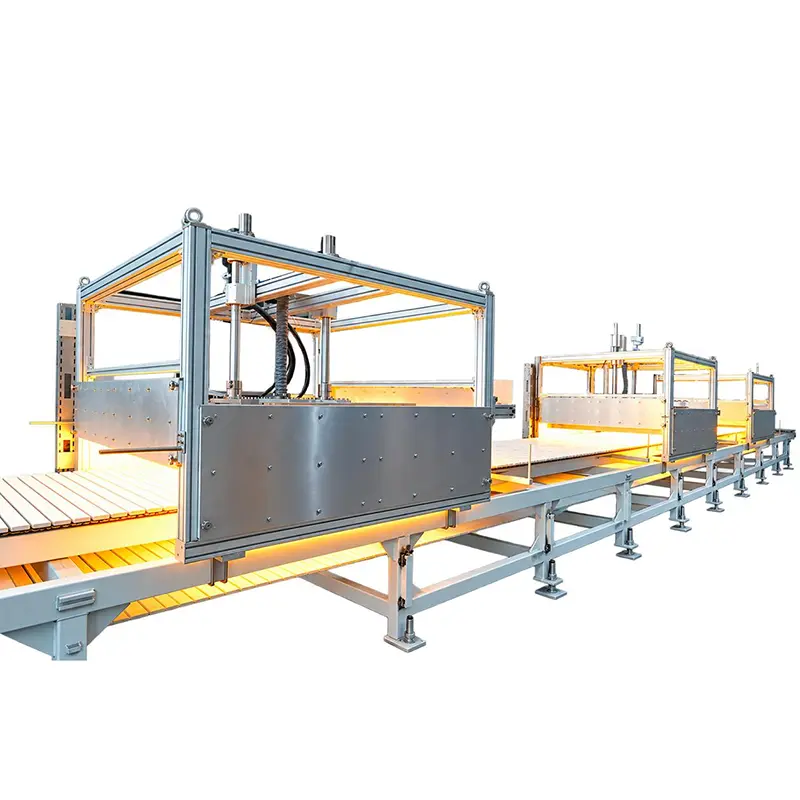
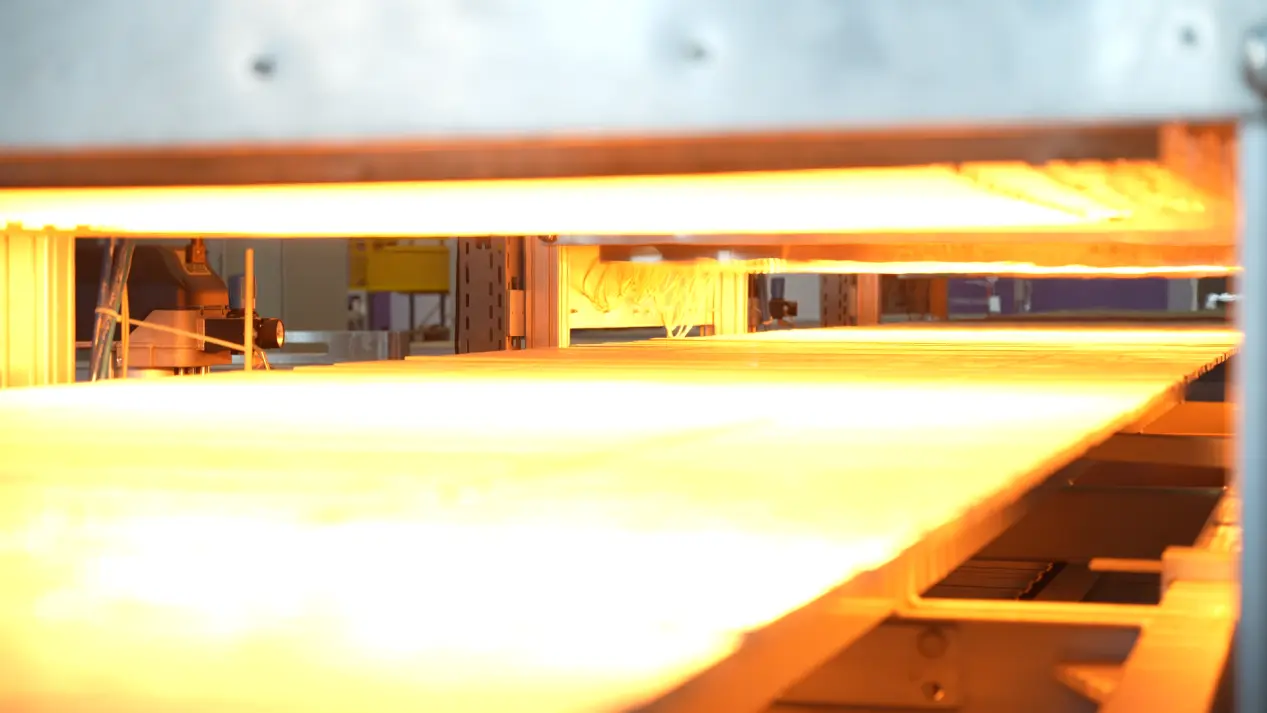
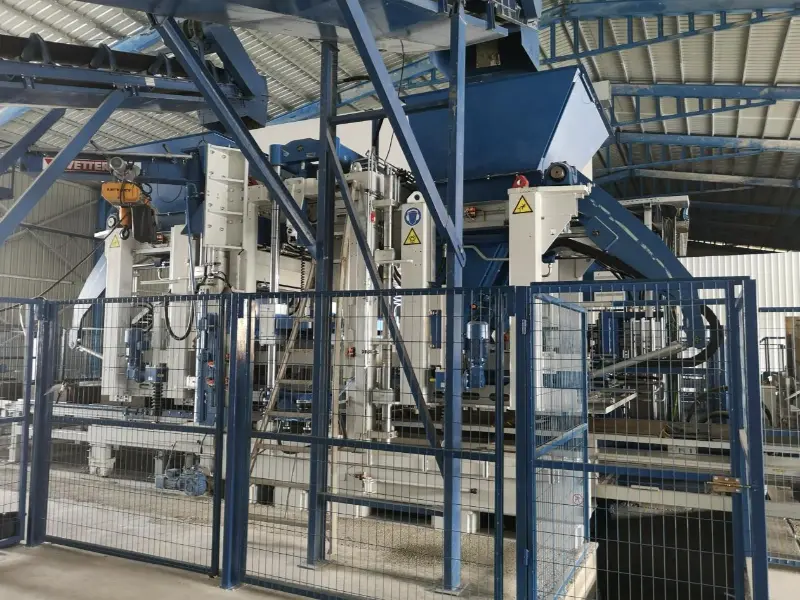
The Concrete Mold Release Agent Spraying System uses low-pressure spraying and coaxial atomization to apply release agent evenly across mold surfaces. Adjustable spray settings support different mold designs and concrete block, paver, and wall panel production.
In concrete product manufacturing, applying mold release agents before concrete forming and demolding is an important part of the production process. The Concrete Mold Release Agent Spraying System is designed to provide controlled release-agent application while avoiding unnecessary material consumption.
Developed for concrete blocks, paving stones, wall panels, and other concrete products, the Concrete Mold Release Agent Spraying System uses low-pressure spraying and coaxial atomization to distribute release agents across mold surfaces. Key spraying parameters, including pressure, flow rate, nozzle spacing, and spray height, can be adjusted according to mold geometry, product requirements, and release-agent properties.
Proper release-agent application helps reduce demolding resistance and the risk of mold-surface wear and corrosion. By using controlled spraying instead of manual brush application or conventional high-pressure spraying, the system provides an alternative approach to mold surface treatment.
For manufacturers working with multiple mold configurations, adjustable nozzle positioning and spraying parameters make the Concrete Mold Release Agent Spraying System suitable for establishing a repeatable release-agent application process across different production requirements.
Technical Specifications
Parameter
Concrete Blocks
Paving Stones
Wall Panels
AAC Blocks
Beam-to-mold distance
35 cm
20 cm
20 cm
Twin-V frame
Nozzle spacing
10 cm
5 cm
5 cm
5 faces
Mold speed
200 mm/s
200 mm/s
200 mm/s
4 circuits
Hyd / Air pressure
0.5 / 0.5 bar
12 / 1 bar
0.5 / 0.5 bar
Separate
Technical Advantages
1. Controlled Release-Agent Application
Low-pressure spraying combined with precise flow control helps limit excessive release-agent application.
The system is intended to reduce material waste compared with conventional high-pressure spraying, brush application, and manual spraying. According to the supplied product information, release-agent consumption can be reduced by up to approximately 70%.
The actual result depends on the existing application method and production conditions.
2. Coaxial Atomization for Mold Coverage
The release agent and atomizing air are supplied through separate channels and mix at the nozzle outlet.
This arrangement produces the spray used to cover the mold surface. Nozzle spacing, arrangement, and spray height can be configured to suit the mold geometry and intended application area.
3. Independent Nozzle Operation
Control valves provide rapid activation and shutoff, while independent nozzle control allows spraying to be managed at individual nozzle positions.
This helps reduce dripping and unnecessary material delivery, supporting more controlled application around the mold.
4. Support for Demolding and Mold Maintenance
A uniform release-agent coating helps reduce resistance during demolding and the risk of mold-surface wear and corrosion.
The release agent and operating parameters should be selected according to the mold material and actual working conditions. Appropriate application is part of mold maintenance, but the spraying system does not replace inspection, cleaning, or other required maintenance procedures.
5. Reduced Oil-Mist Dispersion
Low-pressure spraying and controlled release-agent delivery help reduce oil-mist dispersion and excessive application.
By limiting unnecessary spraying, the system can also help reduce release-agent accumulation around the application area and contribute to improved workplace cleanliness.
6. Adaptation to Different Mold Geometries
The spray beam, nozzle quantity, nozzle spacing, and nozzle arrangement can be engineered for different mold dimensions and product types.
This makes it possible to evaluate the system for a range of concrete manufacturing applications without assuming that one fixed nozzle arrangement is suitable for every mold.
Applications
The QGM system is designed for mold release-agent application in manufacturing processes involving:
•Concrete blocks.
•Concrete paving stones.
•Concrete wall panels.
•AAC blocks.
The appropriate configuration should be selected according to mold structure, dimensions, production-line speed, and release-agent characteristics.
A Controlled Approach to Mold Release
The QGM Concrete Mold Release and Coating System combines low-pressure spraying, coaxial atomization, rapid valve control, and configurable nozzle arrangements.
These features support controlled release-agent application, help reduce excessive spraying, and contribute to mold protection during concrete product manufacturing.
For a technical evaluation, provide QGM with the mold material, mold dimensions, release-agent specifications, and application requirements.
If you have any enquiry about quotation or cooperation, please feel free to email or use the following inquiry form. Our sales representative will contact you within 24 hours.
We use cookies to offer you a better browsing experience, analyze site traffic and personalize content. By using this site, you agree to our use of cookies. Privacy Policy