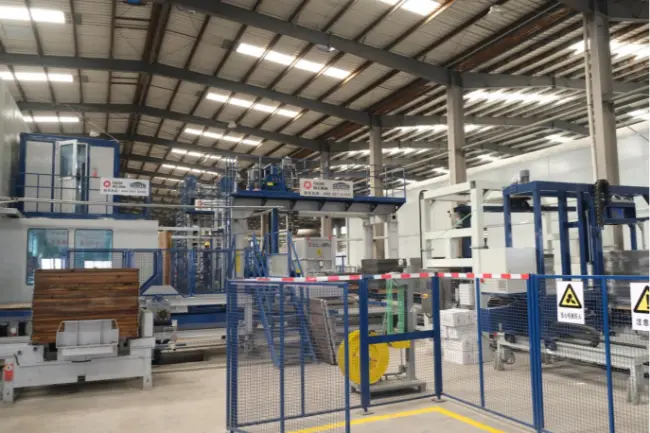
A modern concrete block production line consists of several interconnected systems: raw material storage and batching, concrete mixing, material conveying, block forming, pallet handling, curing, finished-product cubing and packaging, and centralized control. Together, these systems transform aggregates, cement, water, and other suitable materials into finished concrete blocks and paving products through a coordinated manufacturing process.
However, a production line is not simply a collection of machines installed in the same factory. Each system must operate at a compatible speed, handle the required material volume, and meet the production demands of the next stage. A high-performance block making machine, for example, cannot deliver its expected output if the mixer supplies concrete too slowly or the curing system cannot process the molded products in time.

For manufacturers planning a new factory or upgrading an existing facility, understanding how these systems work together is the first step toward selecting the right concrete block production line.
A complete production line can generally be divided into eight functional systems. The exact configuration depends on the target products, required output, automation level, factory layout, and investment plan.
1.1 Raw Material Storage and Batching System
Every concrete product starts with raw materials. Their quality, consistency, and proportions directly affect the properties of the finished blocks.
A typical raw material handling and batching system includes:
•Aggregate storage bins for sand, crushed stone, and other aggregates.
•Cement silos for bulk cement storage.
•Screw conveyors for transferring cement into the batching equipment.
•Aggregate batching equipment for measuring different material fractions.
•Water and admixture dosing units for controlling the concrete mix.
The batching system measures the required quantities of each ingredient before they enter the mixer. Accurate proportioning helps maintain consistent mix characteristics from one production batch to another.
For manufacturers working with locally available aggregates or recycled materials, material characteristics deserve particular attention. Moisture content, particle size distribution, grading, and material variability can all influence the batching process.
What should Customers consider?
When evaluating a concrete batching system for block production, consider the number of aggregate types, required batching accuracy, storage capacity, and compatibility with the intended mixer.
If the plant plans to use industrial by-products such as fly ash or steel slag, the batching configuration should also account for their handling characteristics and mix-design requirements. Not every secondary material is suitable for every concrete product.
1.2 Concrete Mixing System
Once the raw materials have been measured, they move to the mixing system.
The purpose of this stage is to distribute cement, aggregates, water, and other approved ingredients evenly throughout the mixture. Unlike conventional ready-mix concrete applications, many concrete block production processes use relatively low-slump or semi-dry concrete mixtures.
The mixing system may include:
•Main-material concrete mixers.
•Face-mix mixers for products requiring a separate surface layer.
•Mixing platforms and feeding equipment.
•Water and admixture dosing systems.
•Conveyors or bucket elevators for transferring mixed concrete.
Some production lines also incorporate a separate pigment mixing system for manufacturing colored paving blocks and other decorative concrete products.
Mixing quality affects more than the appearance of the finished block. An inconsistent mixture can lead to variations in material distribution, compaction behavior, dimensions, and product strength.
What should Customers consider?
The concrete mixer for block making machine should be selected according to the required production cycle, batch volume, concrete formulation, and product range.
It is also important to distinguish between the mixing capacity stated in a specification sheet and the actual amount of usable concrete supplied to the block machine. The mixer must prepare and discharge material quickly enough to support continuous forming operations.
1.3 Material Conveying and Distribution System
After mixing, fresh concrete must be delivered to the forming machine without unnecessary delays or material segregation.
This is the role of the conveying and distribution system.
Depending on the production layout, it may include:
•Belt conveyors for aggregate and mixed concrete.
•Bucket elevators for vertical material transfer.
•Concrete transfer hoppers.
•Face-mix and base-mix distribution devices.
•Feeding frames and material distribution mechanisms.
For two-layer paving block production, the base material and face material may require separate mixing and feeding arrangements.
A well-designed conveying system keeps the material supply synchronized with the block machine. It also reduces unnecessary manual handling and helps maintain a more organized production flow.
This part of the line is sometimes underestimated during factory planning. Yet even a capable mixer and molding machine cannot work continuously if material transfer becomes a recurring bottleneck.
What should Customers consider?
When planning a fully automatic concrete block production line, examine the distance between the mixer and the forming machine, conveyor capacity, transfer points, and the number of material streams.
The layout should minimize unnecessary transfers while allowing sufficient access for inspection, cleaning, and maintenance.
1.4 Main Block Forming System
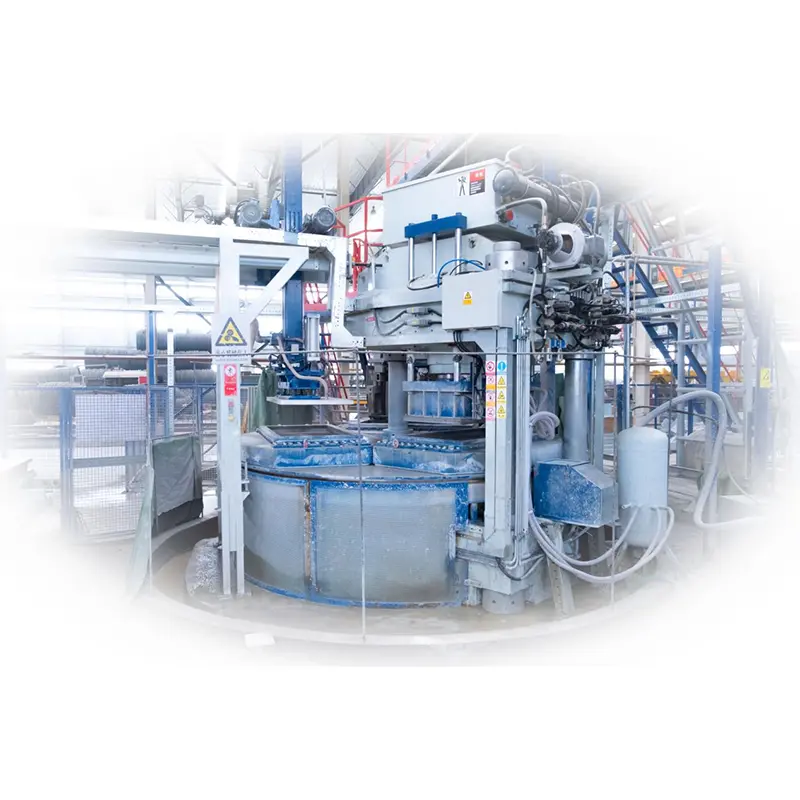
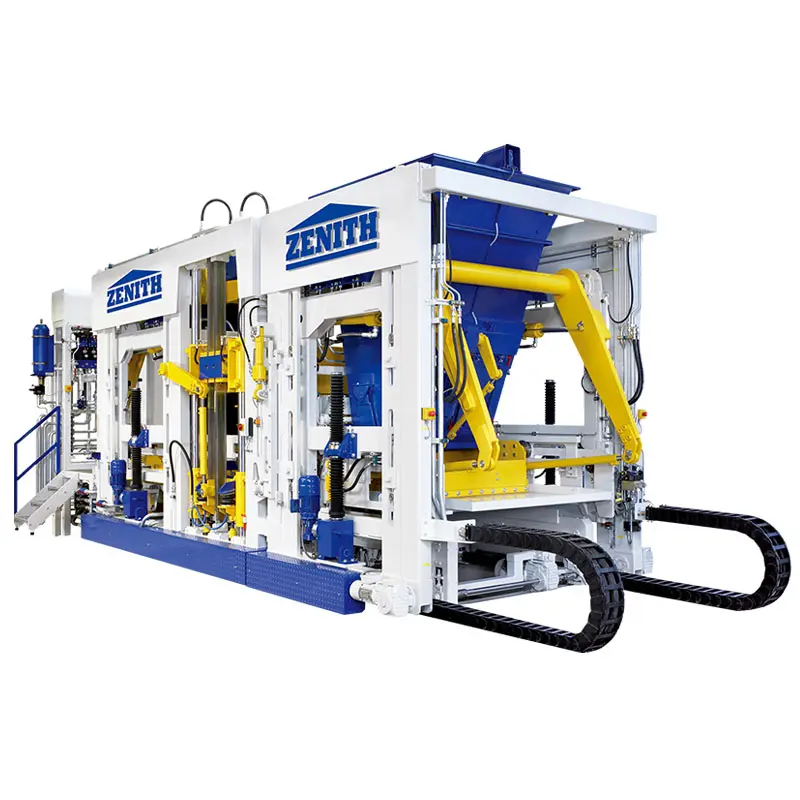
The block making machine is the central forming unit of the production line. It converts prepared concrete mixtures into products with defined dimensions, shapes, and surface characteristics.
Most modern automatic concrete block machines use a combination of mold systems, vibration, hydraulic pressure, and controlled material feeding to form concrete products.
A typical forming system includes:
•The main machine frame.
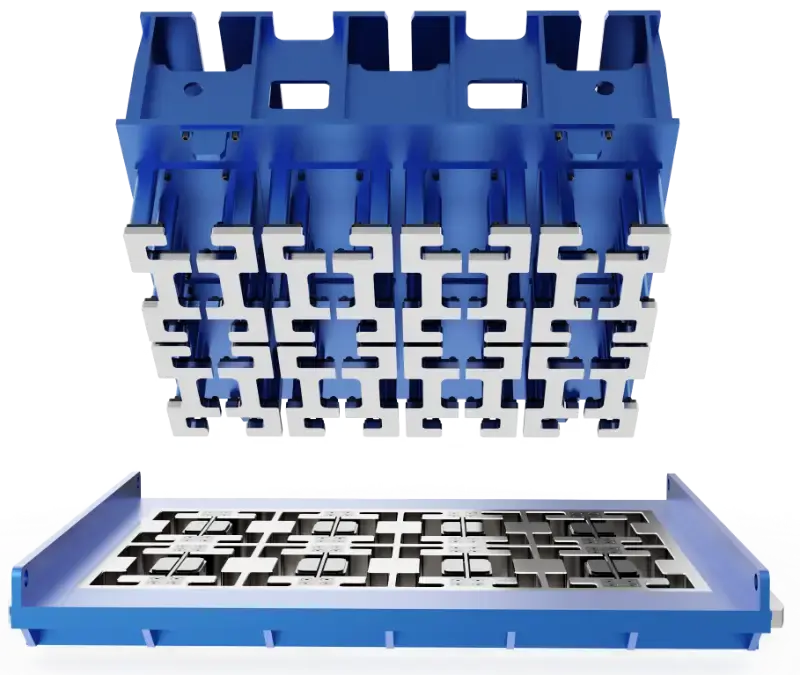
•Mold and tamper head assemblies.
•Vibration system.
•Hydraulic system.
•Material feeding system.
•Pallet feeding and positioning mechanism.
•Electrical and automation controls.
During production, the required concrete mixture is distributed into the mold cavities. Vibration and pressing then compact the material into the specified product shape. The freshly molded products are subsequently transferred to the next stage.
Different mold configurations allow one machine platform to manufacture various products, subject to the machine's operating range and compatible equipment setup.
Common applications include:
•Hollow concrete blocks.
•Solid concrete blocks.
•Concrete paving blocks.
•Curbstones and kerbstones.
•Grass pavers and permeable pavers.
•Slope protection blocks.
•Other precast concrete products.
The machine's vibration technology, mold design, feeding arrangement, and operating parameters all influence forming performance.
What should Customers consider?
When choosing an automatic concrete block making machine, do not focus exclusively on its advertised cycle time.
Check the actual product dimensions, number of products per mold, available mold configurations, vibration system, maximum product height, and compatibility with your intended concrete mix.
A machine suitable for standard hollow blocks may require different tooling or configuration to manufacture large paving products or specialized concrete units.
1.5 Pallet Handling and Circulation System
Production pallets play an important role in automated concrete block manufacturing.
They provide the supporting surface during molding and carry freshly formed products through subsequent handling and curing stages. In many automated production lines, the same pallets circulate back to the forming machine for reuse.
A typical pallet handling system may include:
•Automatic pallet feeders.
•Pallet positioning devices.
•Wet-block conveyors.
•Elevators and lowerators.
•Finger cars or transfer cars.
•Empty pallet return conveyors.
•Pallet collection and buffering equipment.
The circulation process generally follows this sequence:
①An empty pallet is supplied and positioned at the block machine.
②Freshly molded products are transferred on the pallet.
③The pallet and green blocks move toward the curing area.
④After curing, the finished products are separated from the pallet.
⑤The empty pallet returns to the forming machine for another production cycle.
This is a continuous loop rather than a one-way transportation process.
Pallet specifications also matter. Dimensions, flatness, stiffness, weight, and resistance to repeated vibration should match the block machine and handling equipment.
What should Customers consider?
When selecting a concrete block machine pallet handling system, evaluate the number of pallets required for the complete circulation cycle, transfer speed, pallet material, and handling method.
Insufficient pallet quantities can interrupt production even when the main machine and curing equipment have adequate capacity.
1.6 Curing and Green-Block Handling System
Freshly molded concrete blocks are not immediately ready for handling, stacking, or delivery. They need appropriate curing conditions to develop the required strength and durability.
The curing system manages the movement, storage, and curing of freshly formed products.
Depending on the plant's production scale and layout, common configurations include:
Curing racks
Fresh products on pallets are transferred into designated rack positions. This arrangement organizes curing space and supports systematic pallet circulation.
Finger-car curing systems
A finger car transfers pallets between the production area and curing positions. It is commonly used in automated production lines with organized curing racks or chambers.
High-level curing systems
Elevators, finger cars, and automated storage arrangements move pallets through multi-level curing areas. These systems can help make use of available factory space.
Floor or yard curing
Some production facilities use designated floor areas for curing and temporary product storage. This approach may involve more manual handling, depending on the degree of automation.
The appropriate curing method depends on the product type, production volume, available space, local climate, and required handling efficiency.
It is worth remembering that curing is not simply a storage operation. Temperature, humidity, curing duration, and product handling conditions all influence the development of concrete strength.
What should Customers consider?
When evaluating a concrete block curing system, look beyond the number of available storage positions.
Consider the complete pallet circulation cycle, curing capacity, environmental conditions, product handling requirements, and how cured pallets return to the unloading and cubing stage.
The curing system must be able to accommodate the output of the forming machine without creating a backlog of fresh products.
1.7 Finished-Product Cubing and Packaging System
After curing, concrete products are transferred to the finished-product handling section.
The main purpose of this system is to separate the products from their pallets, arrange them into stable stacks, and prepare them for storage or transportation.
Typical equipment includes:
•Automatic cubers.
•Block separators.
•Product conveyors.
•Pallet return systems.
•Strapping or wrapping machines.
•Finished-product transfer equipment.
An automatic cubing system arranges cured blocks into designated stack configurations. Depending on the equipment design, it can also separate products from their production pallets and return empty pallets to the circulation system.
Packaging equipment then secures the finished stacks for storage, handling, or delivery.
For manufacturers supplying distributors, construction contractors, and infrastructure projects, the finished-product section is particularly important. Poorly organized stacking or handling can damage products after they have completed the forming and curing processes.
What should Customers consider?
When selecting an automatic concrete block cubing and packaging system, confirm its compatibility with product dimensions, stack configurations, handling requirements, and the output of the main machine.
There is little value in increasing molding capacity if the cubing and packaging equipment cannot process the finished products at a comparable rate.
1.8 Centralized Electrical Control and Automation System
The final system connects the different production stages and coordinates their operation.
Modern automatic production lines commonly use PLC-based control systems, industrial touch panels, sensors, and communication networks to manage equipment movements and production sequences.
Depending on the configuration, the control system can coordinate:
•Aggregate batching and material dosing.
•Mixer operation and material discharge.
•Material feeding and distribution.
•Block machine movements and forming cycles.
•Pallet transfer and curing operations.
•Finished-product handling.
•Equipment status monitoring and production data collection.
A centralized control arrangement helps operators monitor the production process from a coordinated interface rather than managing every machine independently.
Digital monitoring capabilities can also support maintenance planning by providing access to equipment operating information and identifying conditions that require attention.
What should Customers consider?
When evaluating a PLC control system for an automatic block production line, check the control platform, equipment communication requirements, available operating data, alarm functions, and the scope of remote monitoring.
The control system should also allow appropriate access for troubleshooting, parameter adjustment, and routine maintenance.
Understanding each system individually is useful. But for a factory investor, the more important question is how the equipment works as one production process.
A typical automatic concrete block production workflow can be summarized as follows:Raw Material Storage → Batching → Mixing → Material Conveying → Block Forming → Pallet Transfer → Curing → Cubing → Packaging → Finished Product Storage
The empty pallets then return to the forming machine, completing the circulation cycle.Each stage depends on the performance of the preceding and following stages.
For example, if the batching and mixing systems cannot supply enough concrete, the block machine may have to wait for material. If pallet transfer is too slow, freshly molded products may accumulate around the machine. If the curing system lacks sufficient capacity, the entire production flow can become restricted.
This is why the overall performance of a complete concrete block production line should be evaluated as a coordinated system rather than by comparing individual machine specifications.
Which System Has the Greatest Influence on Production Capacity?
There is no single answer for every factory.
The main block machine establishes the forming capability, but actual production output depends on the capacity and operating rhythm of the entire line.
Several factors deserve particular attention:
•Batching and mixing: Can the system provide enough concrete at the required intervals?
•Block forming: Can the machine achieve the required cycle time and product quantity per mold?
•Pallet circulation: Are enough pallets available to maintain continuous production?
•Curing: Can the system accommodate the required volume of green products?
•Cubing and packaging: Can finished products be processed without creating a downstream backlog?
A useful way to approach equipment selection is to identify the potential bottleneck at every stage before finalizing the production line configuration.
Not every manufacturer needs a fully automated, high-capacity factory. The right production line is the one that matches the business's actual production requirements and can support its future development without unnecessary investment.
Before requesting quotations, Customers should clarify several key factors.
3.1 Define Your Target Products
Start with the products you intend to manufacture.Are you mainly producing hollow blocks and solid blocks for building construction? Do you plan to manufacture paving blocks, curbstones, grass pavers, or decorative concrete products?
Different products may require different molds, material formulations, feeding arrangements, and forming parameters.
A production line designed around a clearly defined product portfolio is easier to configure and evaluate.
3.2 Calculate Realistic Production Requirements
Do not select a machine solely because its advertised capacity appears attractive.Instead, calculate the required daily or shift output based on expected orders, operating hours, product dimensions, and mold configurations.
Ask suppliers to clarify:
•Product dimensions used for the capacity calculation.
•Number of products per mold.
•Machine cycle time.
•Expected operating hours.
•Production assumptions and operating conditions.
•Whether the quoted output refers to the main machine or the complete production line.
These details make supplier comparisons more meaningful.
3.3 Evaluate Raw Materials and Local Conditions
Raw material availability varies significantly between regions.
Some manufacturers rely mainly on natural sand and aggregates, while others use suitable industrial by-products or recycled materials as part of their concrete formulations.
Climate conditions also matter. High temperatures, humidity, rainfall, and seasonal changes may affect material storage, moisture control, curing arrangements, and factory operation.
A suitable concrete block manufacturing plant configuration should therefore be based on actual local production conditions rather than a standard equipment package alone.
3.4 Choose an Appropriate Automation Level
Automation should solve a real operational requirement.
A semi-automatic line may be suitable for manufacturers with lower production targets, available labor, or a limited initial investment budget.
A fully automatic production line may be more appropriate when production volume, product variety, pallet circulation, and labor management justify a higher level of integration.
When comparing configurations, consider the complete investment scope, including material handling, pallet circulation, curing, cubing, packaging, and control systems.
3.5 Plan the Factory Layout Before Ordering Equipment
Factory space and equipment arrangement influence material flow, product handling, and future expansion.
Before confirming a production line, review:
•Available factory floor area and building height.
•Raw material storage and delivery access.
•Equipment foundations and installation requirements.
•Conveyor routes and transfer points.
•Curing and finished-product storage capacity.
•Electrical supply, water, and compressed-air requirements.
•Maintenance access and potential expansion space.
A well-planned layout reduces unnecessary material movement and makes daily operation more manageable.
It is tempting to focus most of the investment budget on the main block making machine. After all, it is the most visible piece of equipment and the center of the forming process.
But a production line is only as effective as its weakest operational link.
Consider a factory with a high-speed molding machine but an undersized mixer. The machine may have to wait for concrete. Another factory may have sufficient mixing and forming capacity but too few production pallets, limiting the number of products that can move through curing.
These are not isolated equipment problems. They are system-level configuration issues.
A balanced production line should achieve three things:
Consistent material supply: Batching, mixing, and conveying must support the forming machine's production rhythm.
Continuous product circulation: Pallet feeding, wet-block handling, curing, and pallet return must work as a coordinated loop.
Matched downstream capacity: Cubing, packaging, and finished-product handling must keep pace with the volume of cured products.
For Customers, this means comparing complete production configurations rather than looking at the price or rated capacity of one machine in isolation.
Once the basic systems and their relationships are clear, the next step is to identify an equipment manufacturer capable of matching the production line to the factory's actual requirements.
With more than 40 years of experience in the concrete products machinery industry, QGM (Quangong Machinery Co., Ltd.) provides concrete block making equipment and production-line solutions for manufacturers serving different markets and product applications.
In 2014, QGM fully acquired Germany's Zenith Maschinenfabrik GmbH, a company with more than 60 years of engineering history at the time, and established a technology research and development center in Germany. This brought German engineering expertise into QGM's broader equipment development and manufacturing capabilities.
Rather than treating every project as an identical equipment package, production line planning should take into account the intended products, raw materials, production targets, factory layout, and required automation level.
5.1 Equipment Options for Different Production Requirements
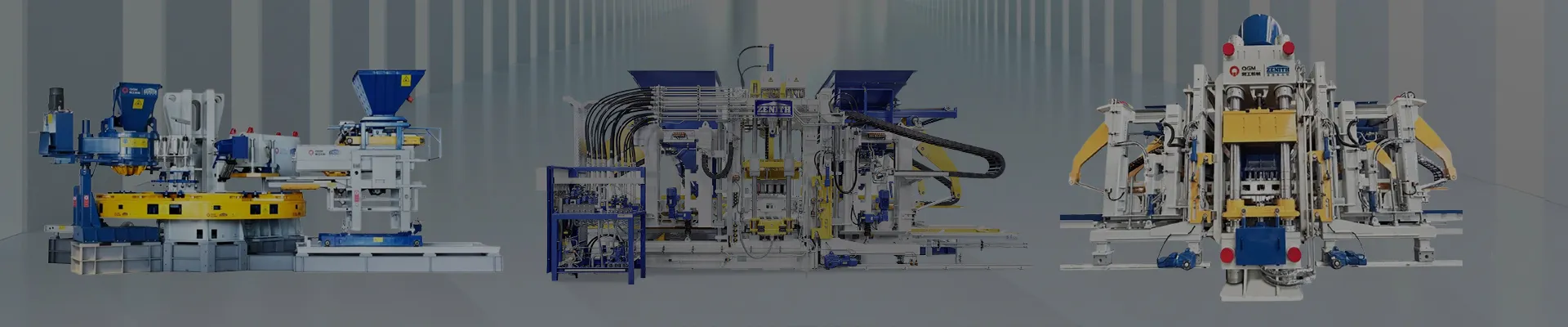
QGM's equipment portfolio includes several machine series designed for different concrete product manufacturing applications.
•ZN Series: Fully automatic block making machines featuring servo-driven vibration technology and flexible production configurations.
•T Series: Designed for multi-product molding applications, with adjustable production parameters and configurations for different concrete products.
•ZENITH Series: German-engineered equipment solutions, including established multilayer production technology such as the ZENITH 940.
The appropriate machine depends on the target products, required output, mold configuration, and the production process.
For example, a manufacturer focusing on multiple block and paving product categories may prioritize flexible mold configurations and adjustable vibration parameters. A project requiring multilayer production may evaluate a different machine concept and material-handling arrangement.
5.2 Integrating Forming Technology with Production-Line Automation
The main machine is only one part of the complete manufacturing solution.
Depending on the project configuration, production-line planning can also involve batching and mixing equipment, material transfer, pallet handling, curing arrangements, cubing, and related automation systems.
QGM's Intelligent Equipment Cloud Service Platform provides digital equipment management capabilities, including online equipment monitoring, remote upgrades, fault prediction and diagnosis, equipment health assessments, and operating status reports.
These functions help manufacturers access equipment operating information and support more systematic maintenance management.
For plants seeking to improve production visibility, digital monitoring can complement the mechanical and electrical automation already integrated into the production process.
5.3 Configuration Should Start with the Customer's Production Requirements
A suitable production line is not necessarily the largest or most automated one.
For a new factory, the priority may be establishing a practical production process with room for future expansion. For an existing manufacturer, the focus may be improving material handling, introducing additional product types, or upgrading selected production stages.
When discussing a project with QGM, manufacturers should prepare information about:
•Target concrete products and their dimensions.
•Required production output per shift or day.
•Available raw materials and mix characteristics.
•Factory dimensions and site conditions.
•Desired automation level.
•Existing equipment, if the project involves an upgrade.
This information provides a more useful starting point for evaluating the appropriate automatic concrete block production line configuration.
6. Final Thoughts: Build the Production System Around Your Business
A modern concrete block production line is an integrated manufacturing system. Raw material handling, batching, mixing, forming, pallet circulation, curing, cubing, packaging, and automation all contribute to the final production result.
For Customers, the most important decision is not simply which block making machine to purchase. It is how to configure the complete production process around the products they intend to manufacture, the materials available to them, and the output their market requires.
QGM combines concrete block manufacturing experience with its ZN, T, and ZENITH equipment series to serve different production applications.
Planning a new concrete block factory or upgrading an existing production line? Contact QGM to discuss your target products, production requirements, and equipment configuration. A well-matched production system starts with understanding the needs of your factory.
1. What equipment is needed for a complete concrete block production line?
A complete concrete block production line typically includes a raw material storage and batching system, concrete mixer, material conveying equipment, block making machine, pallet handling system, curing system, automatic cuber, packaging equipment, and centralized control system. The exact configuration depends on production capacity, product range, and automation requirements.
2. What is the role of the block making machine in a production line?
The block making machine is the central forming unit. It uses molds, vibration, pressing, and controlled material feeding to shape concrete mixtures into products such as hollow blocks, solid blocks, paving blocks, and curbstones.
3. Why is a curing system important in concrete block manufacturing?
Curing allows freshly molded concrete products to develop the required strength and durability under appropriate conditions. A properly configured curing system also manages product storage, pallet circulation, and the movement of green and cured blocks through the production line.
4. Does every concrete block production line need automatic pallet handling and cubing systems?
Not necessarily. Smaller or semi-automatic plants may use manual or forklift-based handling. Larger automated facilities often incorporate automatic pallet feeders, conveyors, curing transfer systems, cubers, and packaging equipment to reduce manual handling and coordinate product movement.
5. How do I choose the right automatic concrete block production line?
Start by defining your target products, required production output, available raw materials, factory layout, and automation requirements. Then evaluate the capacity of each production stage, including batching, mixing, forming, pallet circulation, curing, and cubing. The complete configuration should match your operating requirements rather than relying on the rated capacity of the main machine alone.
-