The quality of finished concrete blocks is determined long before the products leave the curing yard. From raw material preparation and vibration efficiency to hydraulic pressure and intelligent process control, every stage of concrete block manufacturing influences the final strength, dimensional accuracy and appearance of each block.
Whether you operate a block machine for standard masonry units or a high-capacity paving block machine for infrastructure projects, production consistency directly affects operating costs, customer satisfaction and long-term profitability.
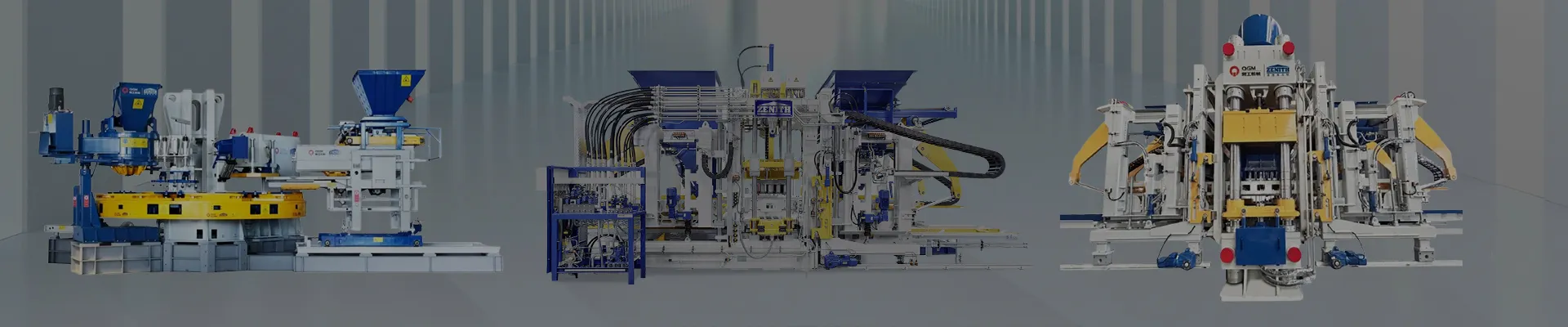
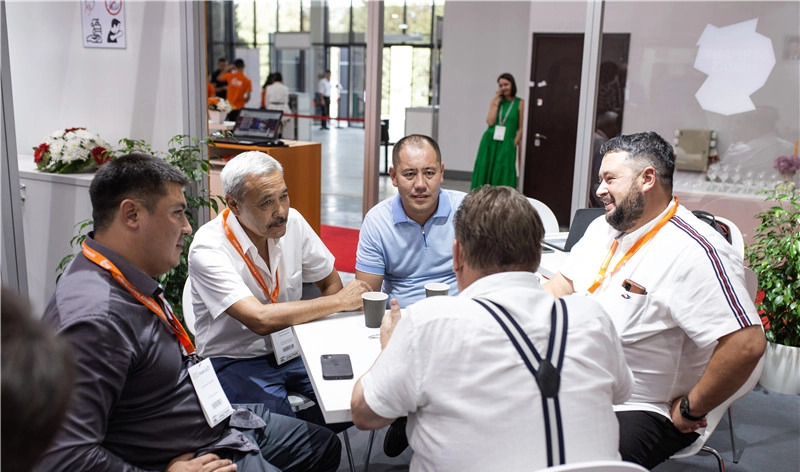
△QGM Block Machine Customer Cases: Smart Solutions for Efficient Concrete Block Manufacturing
Many manufacturers assume that poor-quality blocks are caused by a single equipment failure. In reality, most quality issues develop gradually through multiple process deviations. Understanding these root causes is the first step toward improving production efficiency and reducing reject rates.
This article explains the seven most common causes of poor concrete block quality and shares practical solutions that help manufacturers optimize every stage of production.
Every successful concrete block manufacturing process begins with consistent raw materials. Even small variations in aggregate grading, cement quality or moisture content can affect density and compressive strength.
Typical problems include:
●Excessive moisture in aggregates
●Poor particle size distribution
●Inconsistent cement quality
●Incorrect water-cement ratio
To minimize quality fluctuations, manufacturers should establish strict material inspection procedures, regularly test aggregates and adjust mix proportions according to actual moisture conditions. Stable raw materials create the foundation for reliable production.
Compaction determines whether concrete particles are densely bonded inside each block. When vibration energy is uneven, air pockets remain trapped inside the product, reducing strength and shortening service life.
This issue is especially common in older paver block machine equipment where vibration performance gradually declines after long operating hours.
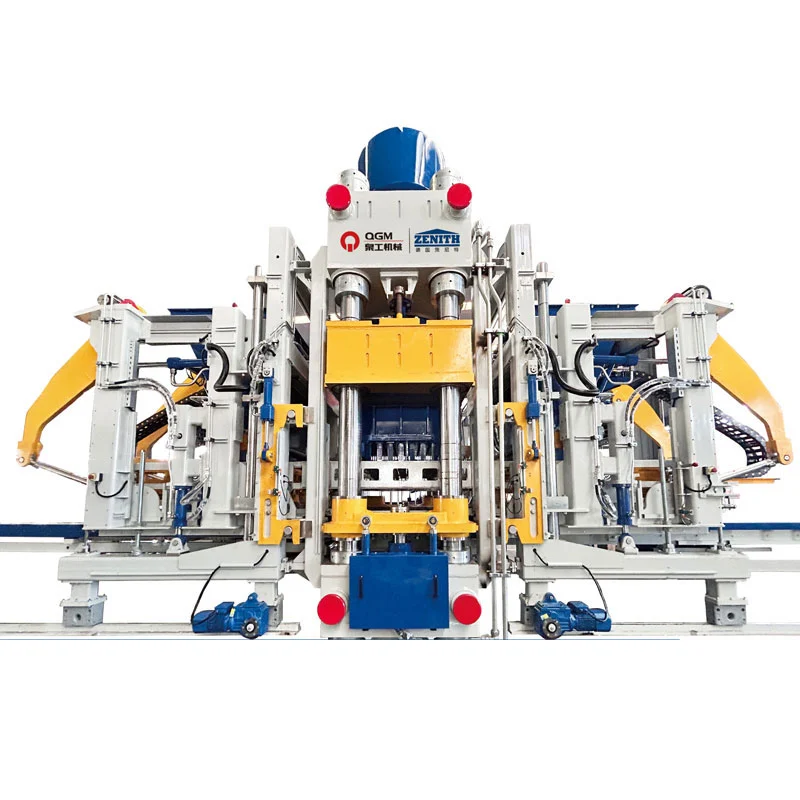
QGM addresses this challenge with the Zenith ultra dynamic vibration system, delivering high-frequency vibration with optimized energy distribution. The advanced vibration technology improves concrete density, enhances surface finish and helps reduce cement consumption while maintaining excellent product quality.
For manufacturers producing concrete paving block machine products or hollow blocks, stable vibration performance is one of the most important factors affecting production consistency.
Hydraulic pressure controls mold movement, pressing force and forming stability. Pressure fluctuations often cause differences in block height, density and appearance during continuous production.
To improve operational stability, QGM integrates premium hydraulic components with optimized control logic, allowing smooth pressure regulation under both standard and high-capacity production conditions.
Routine inspection of hydraulic valves, pumps and seals also helps prevent pressure loss and unexpected downtime, ensuring every production cycle maintains consistent forming quality.
Many factories still rely heavily on operator experience for machine adjustment. As different operators apply different settings, production quality naturally becomes inconsistent.
Modern cement paving block making machine lines require intelligent process management instead of manual judgment.
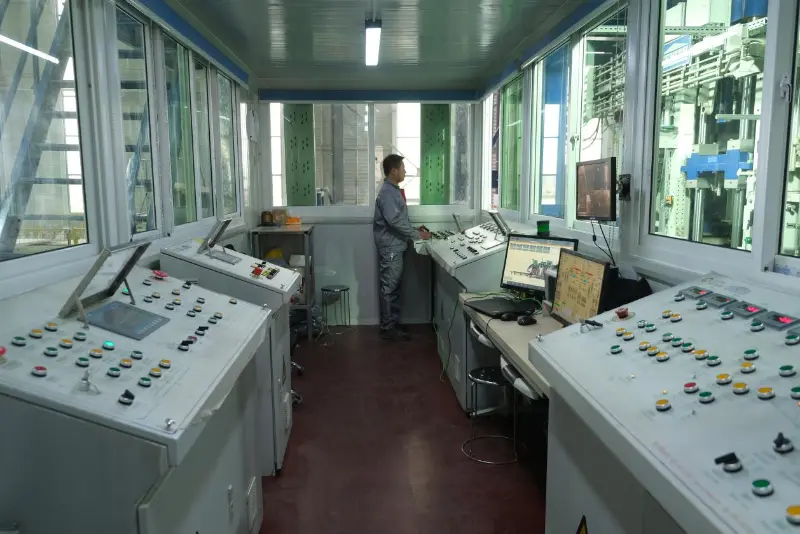
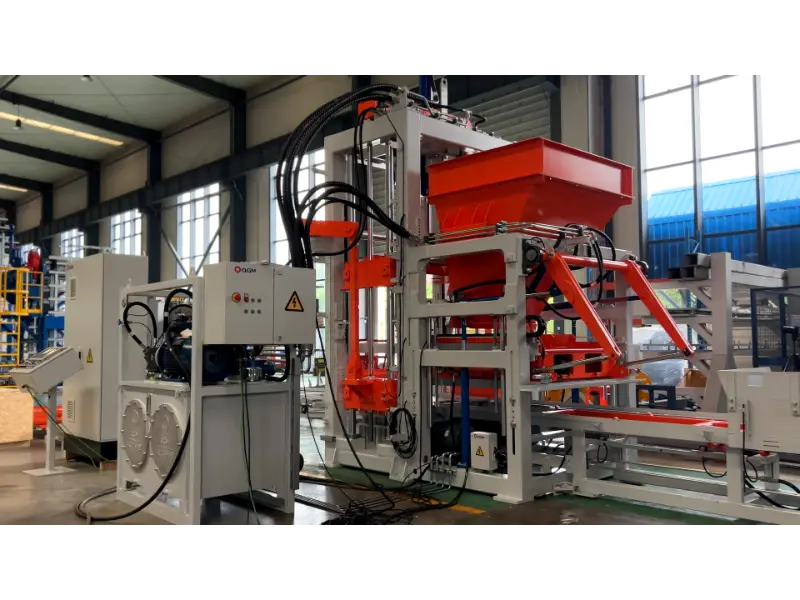
△QGM SIEMENS S7-1500 PLC Intelligent Control System Enhances Block Machine Automation
QGM utilizes the SIEMENS S7-1500 PLC control platform together with a user-friendly HMI and remote diagnostic functions. Operators can monitor production status in real time, adjust machine parameters accurately and respond quickly to abnormal conditions.
With intelligent automation, production becomes data-driven rather than experience-dependent, significantly reducing human error.
Even the most advanced block machine cannot produce high-quality blocks if mold precision deteriorates.
Common symptoms include:
●Rounded block edges
●Surface defects
●Uneven dimensions
●Poor interlocking performance
QGM manufactures precision-engineered molds using heat-treated steel and advanced machining technology. Regular inspection, cleaning and timely replacement help maintain dimensional accuracy throughout long production cycles.
For manufacturers producing paving products, accurate molds are particularly important for ensuring installation quality and appearance.
Many production defects actually occur after blocks leave the machine.
Without proper curing conditions, cement hydration remains incomplete, resulting in lower compressive strength, surface cracking and poor durability.
Effective curing management includes:
●Stable curing temperature
●Proper humidity control
●Standardized curing duration
●Careful handling before transportation
Whether manufacturing standard blocks or products using a concrete paving block making machine, controlled curing is essential for achieving consistent performance.
High-quality products depend on more than individual equipment. Material batching, mixing, conveying, vibration, pressing and curing must work together as one integrated production system.
When production stages operate independently, problems quickly emerge:
●Uneven material feeding
●Unsynchronized vibration and pressing
●Bottlenecks between forming and curing
●Reduced production efficiency
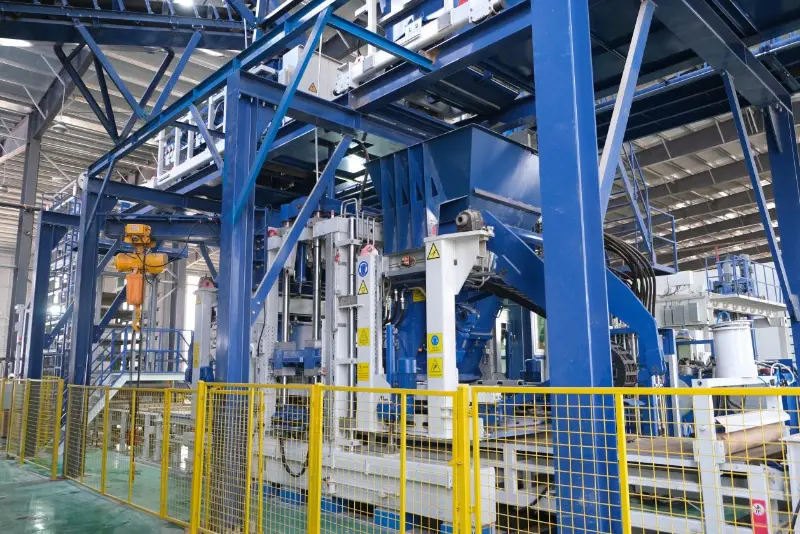
QGM provides integrated production solutions that coordinate every stage of the manufacturing process, allowing different systems to operate seamlessly while improving productivity and product consistency.
Whether producing hollow blocks, solid blocks or paving products with a cement paving block machine, integrated automation delivers measurable improvements in both quality and operational efficiency.
Today's construction industry demands higher quality standards while controlling production costs. Investing in a reliable block machine is only one part of the solution.
A complete production system combines:
●Stable raw material preparation
●Efficient batching and mixing
●Zenith ultra dynamic vibration system
●Precision hydraulic control
●SIEMENS S7-1500 PLC intelligent automation
●High-precision molds
●Controlled curing
●Automated handling and packaging
When these technologies work together, manufacturers can achieve higher productivity, lower material consumption and more consistent finished products across every production batch.
Poor-quality concrete blocks are rarely caused by a single equipment failure. They usually result from multiple production variables working against each other. Improving concrete block manufacturing requires a systematic approach that combines advanced equipment, intelligent control and standardized production management.
Whether you are investing in a paving block making machine, concrete paving block machine, cement paving block making machine, paver block machine, or a fully automatic block machine production line, selecting reliable technology is the key to long-term operational success.
QGM provides complete concrete block production solutions designed to improve production efficiency, product consistency and factory profitability. If you are planning a new production line or upgrading your existing equipment, contact QGM today. Our engineering team will recommend the most suitable solution based on your production capacity, product requirements and project budget.
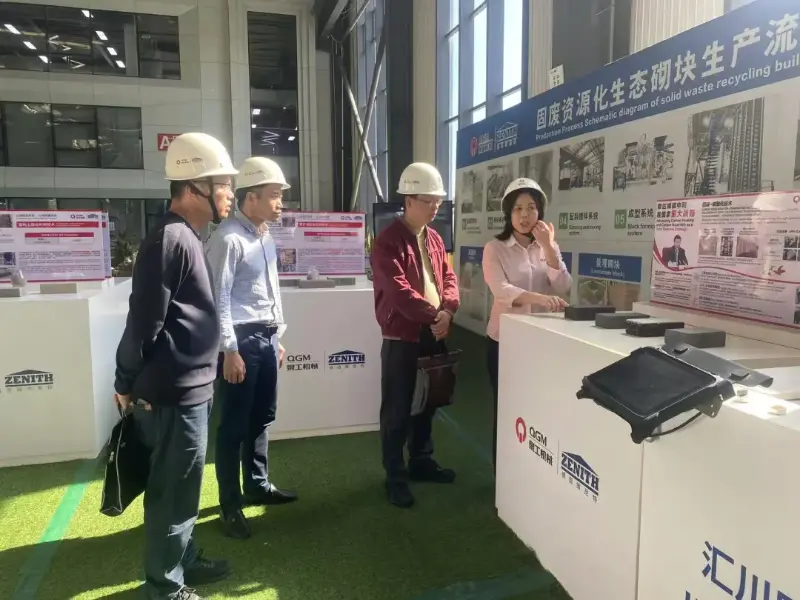
△Block Production Applications
Poor-quality concrete blocks are usually caused by inconsistent raw materials, inadequate compaction, unstable hydraulic pressure, worn molds, improper curing, insufficient process control, and poor coordination throughout the concrete block manufacturing process. Modern automated production lines can significantly reduce these issues by maintaining consistent operating parameters.
A high-performance block machine improves product quality by combining stable vibration, precise hydraulic control, intelligent automation, and durable molds. QGM machines equipped with the Zenith ultra dynamic vibration system and SIEMENS S7-1500 PLC help manufacturers produce blocks with consistent density, accurate dimensions, and excellent compressive strength while reducing material waste.
The ideal equipment depends on your production capacity and product requirements. A modern paving block machine, concrete paving block machine, or paver block machine should provide high compaction force, precise mold positioning, and intelligent process control to ensure uniform paving blocks with excellent surface finish and dimensional accuracy.
Intelligent automation minimizes operator-related errors and ensures consistent production across every cycle. With the SIEMENS S7-1500 PLC control system, operators can monitor machine performance in real time, optimize production parameters, and improve overall efficiency. This is especially important for large-scale cement paving block making machine and concrete paving block making machine production lines where consistency is critical.
When selecting equipment for concrete block manufacturing, consider production capacity, product range, automation level, vibration technology, hydraulic performance, mold quality, after-sales support, and long-term operating costs. Whether you need a cement paving block machine, paving block making machine, or a fully automatic block machine production line, choosing an integrated solution from an experienced manufacturer like QGM can improve productivity, reduce maintenance costs, and ensure stable product quality over the long term.